Loading…


Loading…
Loading…
Loading…
AQA GCSE Food Preparation and Nutrition · 8585
AQA 8585 Check the specification (PDF) (opens in a new tab)
A cake can taste good but still be damaged if part of it sticks to the tin. Preparing equipment carefully helps the food release cleanly, keeping its shape, surface and edges intact. Greasing, oiling, lining and flouring are ways of reducing sticking, but the correct choice depends on the recipe and the product you want to make.
Read the recipe before starting and use the tin size it specifies. Have the equipment ready before making the mixture: a prepared tin allows cake batter to be transferred promptly, rather than waiting while you cut paper or spread fat.
Greasing means spreading a thin layer of fat over a cooking surface. Oiling uses liquid oil for the same purpose. Softened butter can be spread using a small piece of greaseproof paper; oil can also be spread into a thin coating.
Work across the base and around the sides, paying attention to the join between them and any corners. The aim is complete, even coverage, rather than a thick coating in some places and bare patches in others. Bare patches can allow sticking; too much fat can fry the outside of a cake and affect its surface.
Choose the fat and the areas to coat according to the recipe. Preparing a tin well is about getting the right finish, not using as much fat as possible.
Flouring adds a light dusting of flour over the fat. Sprinkle a small amount into the greased tin, then tilt and rotate it so that flour reaches the base and sides. Turn the tin upside down and gently tap out the loose excess. What remains should be a thin, even coating.
For example, a coconut and lemon semolina cake can be prepared in a tin coated with oil and then dusted with flour. After the excess flour is removed, the batter is spooned into the tin and levelled evenly. This connects equipment preparation with presentation: the coating helps the cake release, while an evenly distributed mixture gives a more even starting surface.
Lining means fitting suitable paper inside the tin. Non-stick baking parchment works well because it separates the mixture from the tin. Paper must fit neatly rather than bunching up against the food.
To line the base, place the tin on the paper, draw around it and cut out the circle. If the recipe also needs lined sides, measure around the tin with string and use that length to cut a strip of paper to fit.
Fold the lower edge of the strip upwards by about 2.5 cm. Unfold it, then make snips up to the fold at roughly 2.5 cm intervals. These create tabs that can lie flat around the curved base instead of forcing the paper into large folds.
Spread a very thin layer of butter over the tin’s base and sides to help hold the lining in place. Fit the strip around the inside, with its tabs lying flat on the base. Put the paper circle over the tabs. Check that the lining sits neatly against the tin before adding the mixture.
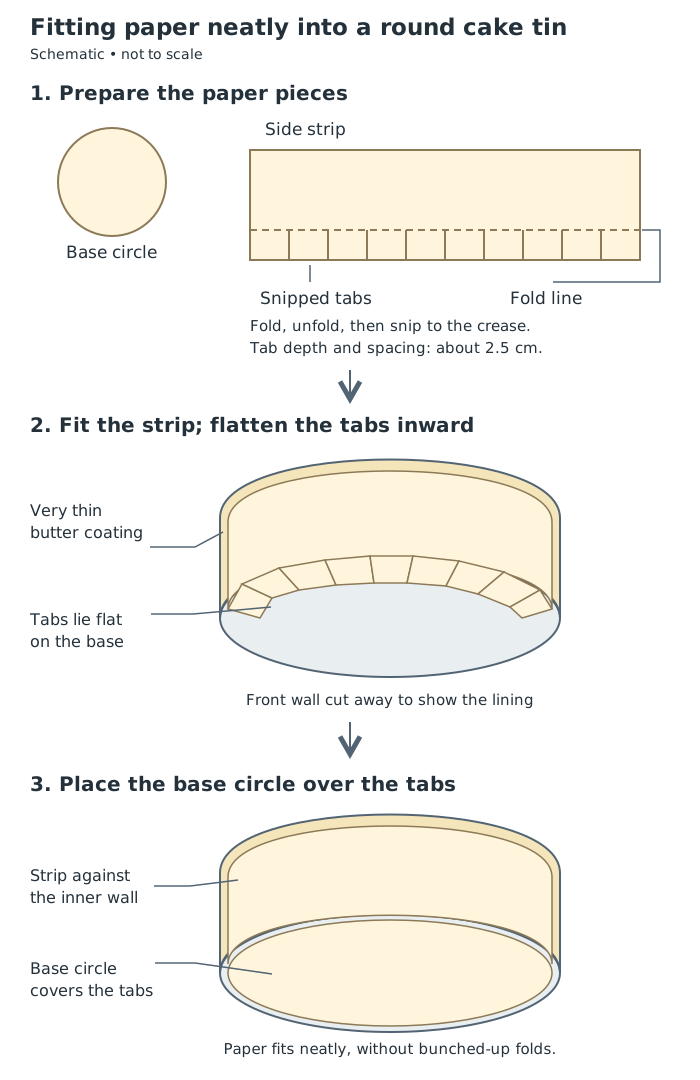
Snipped tabs allow the side lining to fit the curved tin; the base circle covers the tabs.
Ingredient preparation also follows the recipe. For a cake made by creaming butter and sugar, butter generally needs to be at room temperature: hard butter straight from the fridge does not cream well. Where instructed, sift flour and other dry ingredients together to mix them, add air and make them easier to incorporate.
Before filling a tin, check the coating or lining for gaps, loose flour and bunched-up paper. Then distribute and level the mixture as directed. Careful preparation supports a product that can be removed without tearing and presented with a neat, even finish.
Get unlimited access to all revision notes, key terms, and exam tips.
Cut base circle → cut side strip → fold and snip its lower edge into tabs → lightly grease tin → fit strip with tabs flat → place circle over tabs.
Follow the recipe’s tin size, coating and lining instructions. Prepare the tin before mixing, prepare ingredients as directed, and level the mixture evenly. Aim for clean release, an intact shape and neat edges.
Get unlimited access to all revision notes, key terms, and exam tips.
Link each preparation method to the finished product: preventing sticking helps a cake retain its shape and neat edges when removed.
Describe even coverage of the base, sides and corners, not simply ‘grease the tin’.
After flouring a greased tin, tip out the excess flour. A thick, loose layer is not the aim.
Follow the recipe’s preparation instructions: greasing, lining and flouring are not automatically all needed for every product.
Greasing
Coating a cooking surface with a thin, even layer of fat, such as softened butter, to help prevent food sticking.
Oiling
Coating a cooking surface with a thin, even layer of oil to help prevent food sticking.
Lining
Fitting suitable paper, such as baking parchment, against the inside of a tin to separate the food from the tin and help it release.
Flouring
Dusting a greased cooking surface with flour, distributing it evenly and removing the excess to help prevent sticking.
Put your knowledge into practice — try past paper questions for Food Preparation and Nutrition
Greasing
Coating a cooking surface with a thin, even layer of fat, such as softened butter, to help prevent food sticking.
Oiling
Coating a cooking surface with a thin, even layer of oil to help prevent food sticking.
Lining
Fitting suitable paper, such as baking parchment, against the inside of a tin to separate the food from the tin and help it release.
Flouring
Dusting a greased cooking surface with flour, distributing it evenly and removing the excess to help prevent sticking.