Loading…


Loading…
Loading…
Loading…
AQA GCSE Food Preparation and Nutrition · 8585
AQA 8585 Check the specification (PDF) (opens in a new tab)
Preparing meat, fish and alternatives involves more than cutting them into smaller pieces. You may need to separate flesh from bones, divide a whole chicken into portions, trim unwanted fat or rind, or make accurate slices. The aim is to produce usable pieces without wasting good flesh.
Choose a sharp knife of a suitable size for the food and task. A small knife gives control when trimming; a flexible filleting knife helps follow the bones of a fish. Work on a stable chopping board and keep your supporting hand clear of the blade’s path. Carry knives with the blade pointing downwards and store them safely after use.
Clean knives and other equipment after preparing raw meat or fish, before using them for cooked food or ready-to-eat ingredients. Otherwise, harmful microorganisms can be transferred between foods: this is cross-contamination.
A chicken breast fillet is breast meat removed from the carcass. Filleting a breast therefore means separating it from the bones, rather than simply slicing a boneless breast.
Locate the breastbone running down the centre of the bird. Cut alongside it, then follow the angle of the breastbone with the knife. Gently draw the breast meat away as you cut its attachments to the carcass. Keeping the blade close to the bones helps remove the breast intact while leaving less meat behind. Repeat on the other side.
The detached breast can then be trimmed and cut into slices or smaller portions for a recipe. These are separate operations: first remove the breast from the bones, then divide it if needed.
Portioning divides a chicken into pieces suitable for cooking or serving. Jointing uses the bird’s natural joints to separate the wings and legs; it is not a matter of chopping straight through every bone.
This gives two breasts, two thighs, two drumsticks and two wings. The remaining carcass can be used to make stock, helping reduce waste.
Trimming removes unwanted material while retaining as much usable meat as possible. Excess fat and tough rind can be cut away with a small, sharp knife.
Identify the boundary between the unwanted layer and the meat. Lift the edge of the fat or rind, keeping your fingers out of the cutting path, and make controlled cuts along that boundary. Work gradually rather than taking a large cut that removes good meat as well. Check the cut surface as you work so that you can see what remains to be removed.
Filleting separates the edible flesh from the fish’s skeleton. A round fish, such as mackerel or sea bass, normally produces two main fillets: one from each side. A flat fish, such as plaice or sole, can be prepared as four fillets.
For a round fish, use a chopping board, a large knife for removing the head, a sharp flexible filleting knife and tweezers or pliers for removing pin bones.
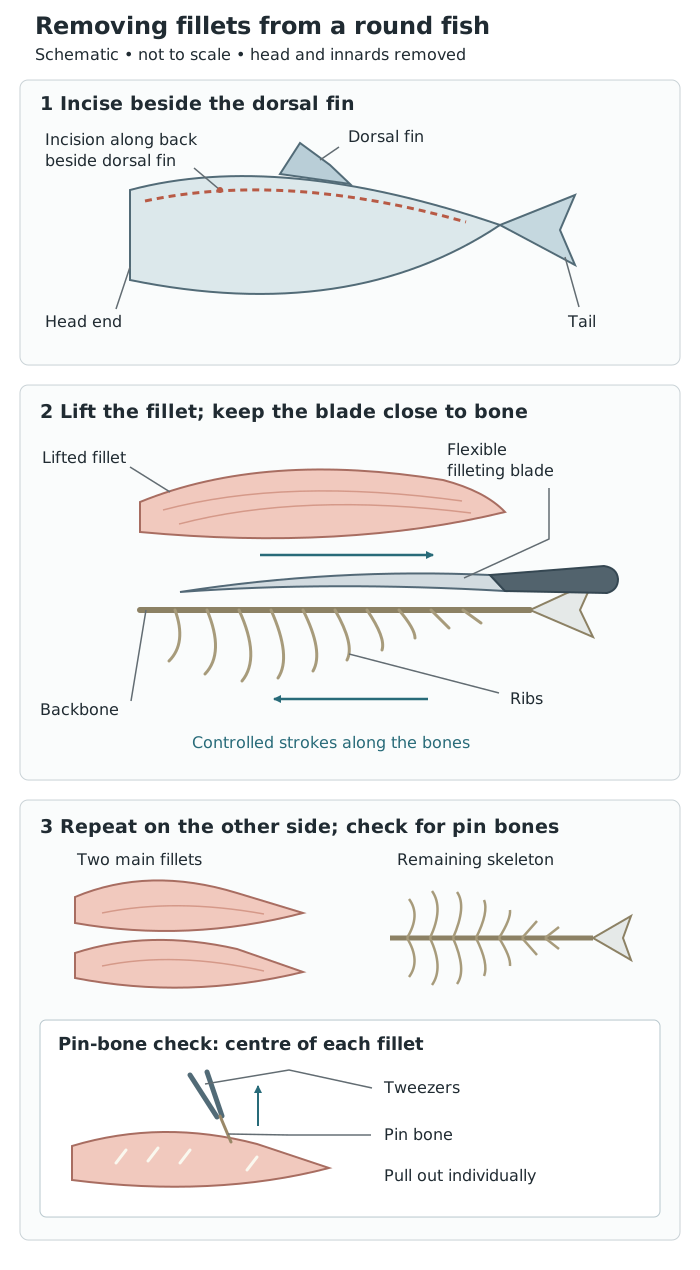
A round fish gives two main fillets. Following the bones reduces waste; pin bones must still be checked and removed.
The bones guide the blade. Cutting too far away from them leaves usable flesh on the skeleton; forcing the knife through the flesh can damage the fillet. Removing the main skeleton does not guarantee that every small bone has been removed, which is why checking for pin bones matters.
Raw and cooked meat, fish, tofu and halloumi can all be cut into even slices or cubes. Decide on the required thickness before starting, then use the first piece as a guide for subsequent cuts.
Place the food securely on the board and use controlled strokes without crushing or tearing it. Reposition your supporting hand as you work, keeping fingers clear of the cutting edge. For cubes, make even slices first, cut these into strips, then cut across the strips at equal intervals.
For example, tofu cubes for a stir-fry should be similar in size, while halloumi slices for grilling should have a consistent thickness. Even pieces are easier to cook consistently and give a more uniform presentation. When slicing cooked meat or fish, use clean equipment so that careful cutting does not introduce contamination.
Get unlimited access to all revision notes, key terms, and exam tips.
Get unlimited access to all revision notes, key terms, and exam tips.
Distinguish filleting from portioning: filleting removes meat or fish flesh from bones; portioning divides food into pieces for cooking or serving.
For chicken, demonstrate portioning a whole bird, not just cutting a detached breast into smaller pieces.
Aim for clean cuts, little flesh left on the bones and slices of consistent thickness. Use clean equipment when moving from raw food to cooked food.
Filleting
Removing meat or fish flesh from the bones to produce a fillet.
Portioning
Dividing food into pieces suitable for cooking or serving.
Jointing
Separating a whole bird into portions by cutting at its joints and removing the breasts.
Trimming
Cutting away unwanted parts of food, such as excess fat or rind.
Rind
The tough outer skin layer on some cuts of meat, particularly pork.
Pin bone
A small bone remaining within a fish fillet after it has been removed from the main skeleton.
Cross-contamination
The transfer of harmful microorganisms from one food, surface or piece of equipment to another.
Put your knowledge into practice — try past paper questions for Food Preparation and Nutrition
Filleting
Removing meat or fish flesh from the bones to produce a fillet.
Portioning
Dividing food into pieces suitable for cooking or serving.
Jointing
Separating a whole bird into portions by cutting at its joints and removing the breasts.
Trimming
Cutting away unwanted parts of food, such as excess fat or rind.
Rind
The tough outer skin layer on some cuts of meat, particularly pork.
Pin bone
A small bone remaining within a fish fillet after it has been removed from the main skeleton.
Cross-contamination
The transfer of harmful microorganisms from one food, surface or piece of equipment to another.