

Loading…
Loading…
Loading…
Edexcel GCSE Physical Education · 1PE0
Edexcel 1PE0 · 3.5.5 Check the specification (PDF) (opens in a new tab)
Evaluate the positive and negative effects of performance-enhancing drugs (PEDs) on both sporting performance and the overall lifestyle of the performer.
Identify the specific effects and usage contexts of various PEDs, including anabolic steroids, beta-blockers, diuretics, narcotic analgesics, peptide hormones (such as EPO and GH), stimulants, and blood doping techniques.
Performance-enhancing drugs (PEDs) are substances used to improve sporting performance. They do not all work in the same way: a substance that helps a performer develop greater strength may offer little advantage in a sport where accuracy matters more. Blood doping is also studied alongside PEDs, although it is a method rather than a drug.
The attraction is often the possibility of training more effectively, beating opponents and winning medals. At professional level, success may also bring prize money, sponsorship and fame. Pressure to succeed, a ‘win at all costs’ attitude, or a belief that rivals are already doping can make the potential rewards seem worth the risk.
These are reasons for the temptation, not justifications for cheating. Using banned substances gives an unfair advantage over competitors who follow the rules. It also exposes the performer to health risks and potentially serious consequences for their career and everyday life.
Anabolic steroids promote muscle growth, increase muscle mass and help performers recover more quickly from training. Faster recovery can allow them to train again sooner, while greater strength can support more powerful movements.
These effects explain their attraction in strength and power activities such as weightlifting, sprinting and shot put. For a shot-putter, greater muscular strength can help generate the force needed to propel the shot. Simply developing larger muscles is not the main performance requirement of a marathon runner.
However, anabolic steroid misuse can cause liver, heart and kidney problems and high blood pressure. It can also cause mood swings, aggression and depression. These effects matter beyond competition: poor physical health can limit daily activity, while changes in mood and behaviour can damage relationships.
Growth hormone (GH) is a peptide hormone that promotes tissue growth. Performers may misuse it to encourage muscle growth and speed up recovery, making it attractive in strength and power sports such as rugby and discus throwing.
Its risks include swollen, painful joints, abnormal bone and tissue growth, high cholesterol, diabetes and long-term heart problems. A performer seeking stronger muscles may therefore develop problems that interfere with both sporting participation and ordinary movement.
Endurance activities, such as marathon running and long-distance cycling, require the working muscles to receive oxygen for aerobic energy release. Red blood cells contain haemoglobin, which carries oxygen. Increasing the number of red blood cells can increase oxygen transport, helping a performer sustain aerobic work for longer before fatigue.
Erythropoietin (EPO) is a hormone that stimulates red blood cell production. Athletes may misuse a synthetic version to increase the blood’s oxygen-carrying capacity and improve endurance. EPO and GH are both peptide hormones, but their intended performance effects are different: EPO improves oxygen transport, whereas GH promotes tissue growth and recovery.
Blood doping achieves a similar intended benefit through a different method. In one method, blood is removed and stored. The body replaces the removed blood, and the stored blood is later returned by transfusion. This increases the number of red blood cells available to carry oxygen.
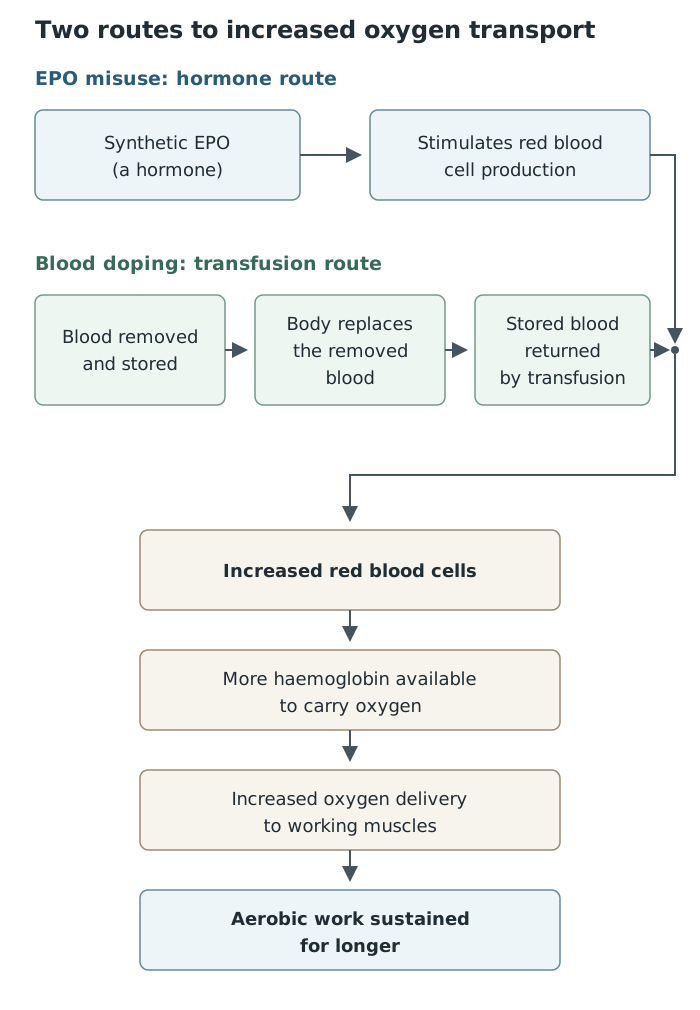
EPO and blood doping use different methods to increase red blood cells and improve oxygen transport.
Both approaches can help a performer work aerobically for longer and recover more quickly from endurance activity. Their advantage is therefore closely linked to the demands of endurance sports, rather than to an increase in muscle size.
Increasing red blood cells also makes the blood thicker. EPO misuse can cause high blood pressure and increase the risk of blood clots, heart attack and stroke. The intended improvement in oxygen transport therefore comes with potentially life-threatening risks.
Beta blockers reduce the effects of adrenaline, lowering heart rate and helping a performer remain calm. Reduced anxiety and greater steadiness can improve fine motor control: the small, precise movements needed to aim accurately.
This explains their attraction in precision activities such as shooting and archery. For an archer, keeping the bow steady while aiming matters more than developing larger muscles. A drug’s potential advantage therefore depends on the task the performer needs to complete.
Negative effects include fatigue, dizziness, cold hands and feet, and an excessively slow heart rate. Fatigue or dizziness can interfere with both training and daily activities, so feeling calmer does not mean the drug has only beneficial effects.
Diuretics increase urine production, causing the body to lose water and reducing body mass quickly. A boxer may be tempted to use them to meet a weight-category limit. This is temporary fluid loss, not a gain in fitness or a loss of body fat.
Diuretics may also be misused to try to mask the presence of another drug, such as an anabolic steroid, in a urine test. Here, the intended advantage is concealing doping rather than directly improving strength, speed or endurance.
The main risk is severe dehydration. Losing too much water can undermine safe participation and health, so achieving a lower weigh-in mass does not necessarily leave the performer better able to compete.
Stimulants increase alertness and reduce feelings of fatigue. A performer may feel more attentive and able to continue working when they would otherwise feel tired. These effects can attract performers in sports requiring quick reactions or sustained concentration, and in contact sports such as rugby.
However, misuse can cause addiction and increase the risk of heart attack or stroke. Disrupted sleep can also affect recovery and everyday life. Feeling less tired does not mean that the body is protected from harm.
Narcotic analgesics are pain-relieving drugs. A performer with an injury may use them to mask pain and continue training or competing. For example, an injured runner might be able to tolerate a race that would otherwise be too painful.
The important distinction is between reducing pain and healing an injury. Masking pain does not repair damaged tissue. Continuing to load the injured area can make the injury worse, potentially leading to a longer absence from sport. Narcotic analgesics should not be treated as interchangeable with every ordinary painkiller.
The potential benefits of PED misuse can appear substantial: better performance may bring selection, medals, income and recognition. Some effects, such as faster recovery, may also allow more training in the short term.
Against these gains are drug-specific health risks and the consequences of breaking sporting rules. A performer can face a ban, lose titles and prize money, and suffer damage to their reputation. Sponsors may withdraw their support, reducing income. Losing the ability to compete can threaten a career, while illness or addiction can affect life long after competition ends.
Cyclist Lance Armstrong illustrates the difference between apparent success and lasting achievement. His doping led to titles being removed and severe damage to his reputation: results gained through doping did not remain secure accomplishments.
A justified judgement must consider more than whether a substance can improve performance. Although the short-term rewards explain why some performers are tempted, the risks to health, career and fair competition provide strong reasons to reject banned PED use.
| Substance or method | Intended benefit and context | Main risks |
|---|---|---|
| Anabolic steroids | Muscle growth, strength and faster recovery; weightlifting, sprinting, shot put | Liver, heart and kidney problems; high blood pressure; aggression, mood swings and depression |
| Growth hormone (GH) | Tissue and muscle growth, faster recovery; rugby, discus | Painful joints, abnormal growth, high cholesterol, diabetes and heart problems |
| EPO | More red blood cells → greater oxygen transport → improved endurance; marathon, cycling | Thicker blood, high blood pressure, blood clots, heart attack and stroke |
| Blood doping | Transfusion increases red blood cells and oxygen transport; endurance sports | Banned method with serious health and career risks |
| Beta blockers | Lower heart rate and anxiety, greater steadiness; shooting, archery | Fatigue, dizziness, cold hands/feet, excessively slow heart rate |
| Diuretics | Water loss to make weight, or attempt to mask other drugs; boxing | Severe dehydration |
| Stimulants | Increased alertness and reduced feelings of fatigue; reaction or contact sports | Addiction, heart attack, stroke, disrupted sleep |
| Narcotic analgesics | Mask injury pain so participation can continue | Further injury because pain relief does not heal the injury |
Potential gains: improved performance, more effective training, medals, prize money, sponsorship and recognition.
Costs: health damage, unfair competition, bans, lost titles or income, damaged relationships and reputation.
Judgement: short-term performance gains must be weighed against potentially lasting harm to health, livelihood and sporting integrity.
Link each drug’s effect to the demands of the sport: increased muscle mass and strength can improve a shot-putter’s power, whereas increased oxygen transport benefits an endurance cyclist.
Separate the intended performance benefit from the harmful side effect. Increased oxygen transport is a benefit of EPO misuse; increased blood pressure is a risk.
For an evaluation, weigh the potential performance and financial gains against health risks, unfairness and the consequences of being caught, then give a justified judgement.
Distinguish EPO from blood doping: EPO stimulates red blood cell production; blood doping increases red blood cells through a transfusion.
A substance being banned in sport does not automatically mean that possessing it is a criminal offence. Sporting rules and the law are different.
Diuretics cause fluid loss, not muscle growth or fat loss. Explain their use in making weight or masking another drug.
It can see this note and what your specification asks for.
Answers are free with an account.
1 free note left this week
Get more free notesYour answer sets when this note comes back for review, or marks it complete.
Was this note helpful?
Log in to tell us whether it helped, or to report a problem.
Last updated
Performance-enhancing drug
A substance used to improve sporting performance, for example by increasing strength, endurance or alertness.
Anabolic steroid
A drug that promotes muscle growth and can increase strength and speed up recovery from training.
Growth hormone
A peptide hormone that promotes the growth of body tissues; athletes may misuse it to encourage muscle growth and recovery.
Erythropoietin
A hormone that stimulates red blood cell production. Misusing synthetic EPO can increase the blood’s oxygen-carrying capacity.
Blood doping
A banned method of increasing red blood cells through a blood transfusion to improve oxygen transport and endurance.
Beta blocker
A drug that reduces the effects of adrenaline, lowering heart rate and helping to reduce anxiety and improve steadiness.
Diuretic
A drug that increases urine production, causing water loss. Performers may misuse it to reduce body mass quickly or try to mask other drugs.
Stimulant
A drug that increases alertness and reduces feelings of fatigue.
Narcotic analgesic
A pain-relieving drug that can mask the pain of an injury, allowing a performer to continue participating without the injury having healed.
Put your knowledge into practice — try past paper questions for Physical Education
Performance-enhancing drug
A substance used to improve sporting performance, for example by increasing strength, endurance or alertness.
Anabolic steroid
A drug that promotes muscle growth and can increase strength and speed up recovery from training.
Growth hormone
A peptide hormone that promotes the growth of body tissues; athletes may misuse it to encourage muscle growth and recovery.
Erythropoietin
A hormone that stimulates red blood cell production. Misusing synthetic EPO can increase the blood’s oxygen-carrying capacity.
Blood doping
A banned method of increasing red blood cells through a blood transfusion to improve oxygen transport and endurance.
Beta blocker
A drug that reduces the effects of adrenaline, lowering heart rate and helping to reduce anxiety and improve steadiness.
Diuretic
A drug that increases urine production, causing water loss. Performers may misuse it to reduce body mass quickly or try to mask other drugs.
Stimulant
A drug that increases alertness and reduces feelings of fatigue.
Narcotic analgesic
A pain-relieving drug that can mask the pain of an injury, allowing a performer to continue participating without the injury having healed.