Loading…


Loading…
Loading…
Loading…
AQA GCSE Design and Technology · 8552
AQA 8552 · Shaping and forming techniques Check the specification (PDF) (opens in a new tab)
A metal product may need several processes before it reaches its final shape. Cutting, drilling, turning and milling remove material from a workpiece. Casting forms a new shape from molten metal. Brazing and welding join separate parts, allowing larger structures to be built from smaller pieces.
The choice depends on the material’s stock form and the shape required. Thin sheet needs different cutting equipment from a thick steel bar, while a cylindrical component needs a different machining process from a block with a flat-bottomed slot.
A hacksaw or smaller junior hacksaw can cut metal such as mild steel, aluminium or copper by hand. Clamp the workpiece firmly in a metalworking vice, then guide the toothed blade along the required cut. The blade must be harder than the metal it cuts so that its teeth can remove material.
Snips work like strong scissors. Their blades shear through thin sheet metal, making them suitable for cutting sheet rather than thick bar or solid blocks.
Machines can also cut metal. A vertical bandsaw can cut metal using a continuously moving blade. A horizontal bandsaw is commonly used to cut large sections, such as steel bar. Secure holding keeps the workpiece steady while the blade removes material.
A drill removes metal to create a circular hole. Before drilling, mark the hole position and use a hammer and centre punch to make a small indentation. The drill tip sits in this indentation, helping it start in the correct place rather than wander across the surface.
Hold the metal securely, for example in a machine vice on a pillar drill. Fit a suitable high-speed steel (HSS) drill bit, align it with the punch mark and feed the rotating bit into the workpiece. The pillar drill provides controlled downward movement, while the vice prevents the metal moving or spinning with the bit.
The punch positions the hole; it does not make the finished hole. That is the job of the drill bit.
Turning is carried out on a metal lathe. A chuck grips the workpiece and rotates it around an axis. Round stock is commonly held in a three-jaw chuck; a four-jaw chuck can hold square stock.
A cutting tool is fed into the rotating metal, removing material from its surface. Controlling the tool’s position and movement produces a cylindrical profile, such as a reduced section of round bar. A drill bit can also be fed along the axis to make a hole in the end of the rotating workpiece.
Cutting generates heat. A suitable cutting fluid or coolant can keep the tool and workpiece cool and help prevent overheating.
In milling, the cutter rotates while the workpiece is securely clamped in a machine vice or fixture. On a conventional milling machine, the table moves the workpiece relative to the cutter. Controlled movement in three directions allows material to be removed from selected areas.
An end mill can produce features such as slots, steps, pockets and flat faces. A suitable flat-ended cutter can make a flat-bottomed channel in a metal block. Setting the cutting depth controls how much material is removed; secure clamping keeps the feature in the intended position.
The central distinction is therefore what rotates: the workpiece in turning, but the cutter in milling.
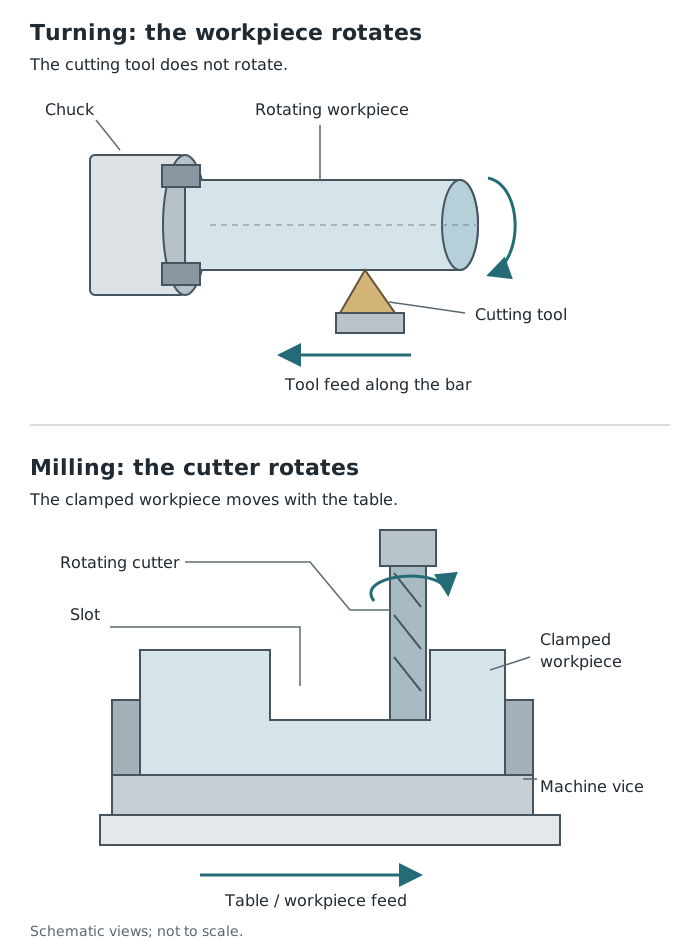
Turning rotates the workpiece; milling rotates the cutter. Controlled feed removes metal to create the required shape.
Casting begins by heating metal until it is molten. The liquid metal enters a mould cavity, cools and solidifies. The cavity determines the resulting shape. This makes casting useful for complex components that would require substantial material removal if machined from a solid block.
In sand casting, a pattern is used to form a cavity in compacted sand held in a moulding box. Molten metal, commonly aluminium, is poured into an entry passage and travels through a runner into the cavity. A riser provides an additional opening connected to the cavity, into which molten metal can rise.
After the metal has cooled and solidified, the sand mould is broken away. The casting is removed, unwanted metal from the passages is trimmed off, and the surface is cleaned and finished.
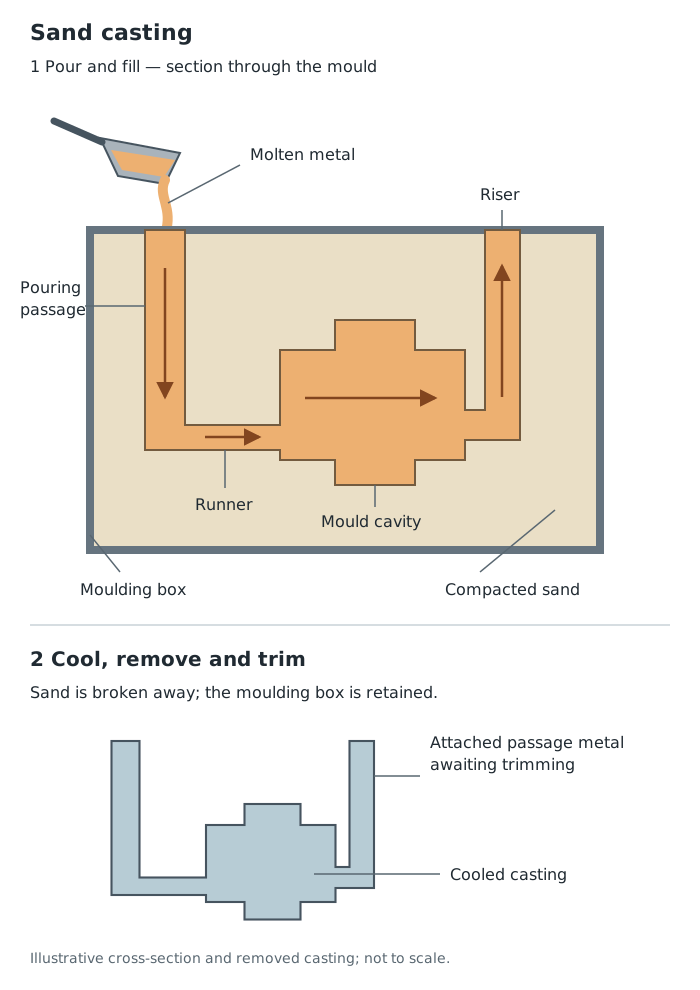
Molten metal fills the sand mould’s cavity, then cools and solidifies. The casting is removed and unwanted passage metal is trimmed away.
Other casting methods use different mould materials. Die casting uses a metal mould rather than sand. Pewter has a relatively low melting point and can be cast into ceramic, MDF or cuttlefish moulds to make small parts.
A casting must fill the intended cavity properly. Air pockets or incomplete filling can leave defects, so mould design and control of the process affect the quality of the finished component.
Brazing joins metal parts using a filler metal with a lower melting point than the parts themselves. The parts being joined are called the parent metals. For example, mild-steel pieces can be brazed together to make a frame or model structure.
First, shape the parts so that they fit closely and clean rust and oil from the joining surfaces. Apply flux to prevent oxidation during heating and help the filler flow.
Heat the joint sufficiently to melt the filler while leaving the parent metals solid. When the filler touches the hot joint, it melts and is drawn into the narrow gap by capillary action. Allow the joint to cool so that the filler solidifies, then clean away excess flux and filler. Close fitting and clean surfaces help produce a sound joint.
In metal welding, heat melts the surfaces of the parent metals so that they fuse together as they cool. Filler metal may also be added. Gas welding uses a flame; electrical methods, such as arc welding, provide heat electrically.
Clean surfaces and suitable joint preparation improve the result. Welding also requires appropriate protective equipment, extraction and screening because of the intense heat and other hazards involved.
Welding can produce a strong, continuous joint, making it useful for steel frames and fabricated structures. Its defining difference from brazing is not simply strength: welding melts the parent-metal surfaces; brazing leaves them solid and melts only the filler.
Get unlimited access to all revision notes, key terms, and exam tips.
Melt metal → fill mould cavity → cool and solidify → remove → trim and finish.
Key distinction: brazing melts only the filler; welding melts the joining surfaces.
Get unlimited access to all revision notes, key terms, and exam tips.
When describing a process, name the tool or machine, explain what moves and state how the shape or joint is produced.
Distinguish turning from milling: in turning the workpiece rotates; in milling the cutter rotates.
Explain the purpose of a centre-punch mark: it locates the drill tip and helps prevent it wandering.
For brazing and welding, state whether the parent metals melt. Do not claim that every welded joint is stronger than every brazed joint.
Link a process choice to the required shape: turning for cylindrical profiles, milling for slots or flat faces, and casting for complex moulded shapes.
Workpiece
The piece of material being shaped or worked on.
Centre punch
A pointed tool struck with a hammer to make an indentation that locates a drill tip on metal.
Turning
A machine process in which a workpiece rotates against a cutting tool to remove material, commonly producing cylindrical shapes.
Milling
A machine process that removes material using a rotating cutter moved relative to a securely held workpiece.
Casting
Forming a shape by introducing molten material into a mould and allowing it to solidify.
Mould cavity
The hollow space in a mould that determines the shape of the casting.
Brazing
Joining metals by melting a lower-melting-point filler into a close-fitting joint without melting the parent metals.
Filler metal
A metal added to a joint during joining; in brazing it melts while the parent metals remain solid.
Flux
A substance applied during brazing to prevent oxidation and help molten filler flow into the joint.
Capillary action
The movement of liquid through a narrow gap; in brazing it draws molten filler between closely fitted metal parts.
Welding
Joining metal parts by melting and fusing their surfaces, with or without added filler metal.
Put your knowledge into practice — try past paper questions for Design and Technology
Workpiece
The piece of material being shaped or worked on.
Centre punch
A pointed tool struck with a hammer to make an indentation that locates a drill tip on metal.
Turning
A machine process in which a workpiece rotates against a cutting tool to remove material, commonly producing cylindrical shapes.
Milling
A machine process that removes material using a rotating cutter moved relative to a securely held workpiece.
Casting
Forming a shape by introducing molten material into a mould and allowing it to solidify.
Mould cavity
The hollow space in a mould that determines the shape of the casting.
Brazing
Joining metals by melting a lower-melting-point filler into a close-fitting joint without melting the parent metals.
Filler metal
A metal added to a joint during joining; in brazing it melts while the parent metals remain solid.
Flux
A substance applied during brazing to prevent oxidation and help molten filler flow into the joint.
Capillary action
The movement of liquid through a narrow gap; in brazing it draws molten filler between closely fitted metal parts.
Welding
Joining metal parts by melting and fusing their surfaces, with or without added filler metal.