Loading…


Loading…
Loading…
Loading…
AQA GCSE Combined Science Trilogy · 8464
AQA 8464 · 5.5.1.1 Energy Transfer in Reactions Check the specification (PDF) (opens in a new tab)
Chemical reactions change reactants, the starting substances, into products, the substances formed. They can also transfer energy between the reacting chemicals and their surroundings. The surroundings include the solution around the reacting particles, the container and the nearby air.
Energy is conserved: it cannot be created or destroyed, only transferred. The total amount of energy in the universe at the end of a reaction is the same as before it began. A reaction that warms its surroundings has not created energy; it has transferred energy to them.
If a reaction transfers energy to the surroundings, the product molecules have less energy than the reactants by exactly the amount transferred. Conversely, when a reaction takes in energy from the surroundings, the products have more energy than the reactants. The gain on one side matches the loss on the other.
An exothermic reaction transfers energy to the surroundings, so the temperature of the surroundings increases. For example, burning a fuel transfers energy to nearby air and objects, warming them.
Common exothermic reactions include:
The heating effect makes exothermic reactions useful. In a self-heating can, energy transferred from a chemical reaction warms the food or drink. In a hand warmer, the transfer of energy warms the user's hands. In both cases, the useful effect is energy moving out of the reacting chemicals, not energy being created.
An endothermic reaction takes in energy from the surroundings, so the temperature of the surroundings decreases. The surroundings cool because they lose energy to the reacting chemicals.
Examples include thermal decomposition reactions, in which heating causes a substance to break down into simpler substances, and the reaction between citric acid and sodium hydrogencarbonate. Thermal decomposition needs an energy supply from heating; it does not provide a useful heating effect itself.
Some sports injury packs use endothermic reactions. These take in energy from the injured area, producing a cooling effect that can help reduce swelling. Here, cooling is useful because energy moves from the body into the pack.
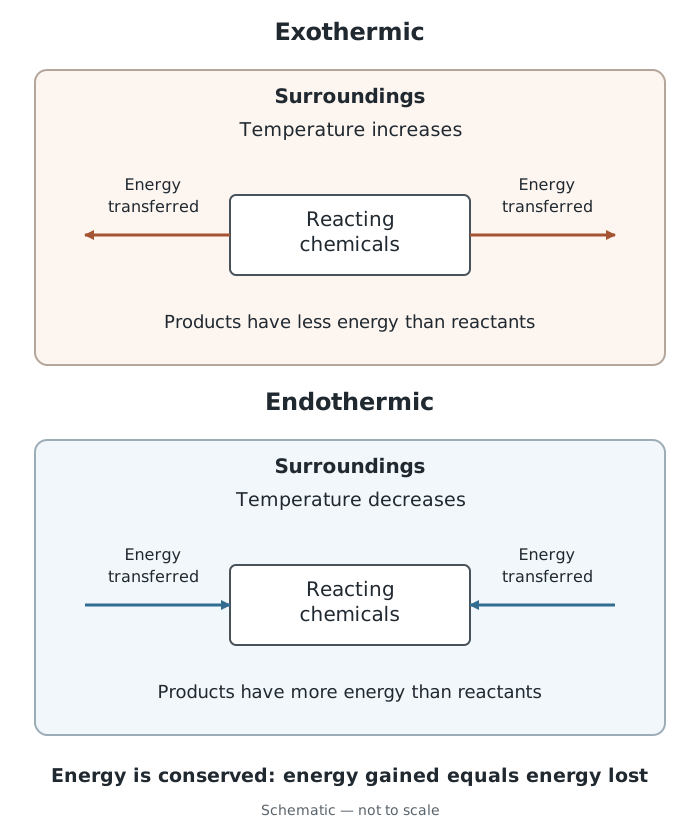
Exothermic and endothermic reactions transfer energy in opposite directions; neither creates nor destroys energy.
A thermometer allows you to compare the temperature before a reaction with the temperature reached during it. In a reacting solution, the surrounding liquid exchanges energy with the reacting chemicals, so its temperature change can indicate the direction of energy transfer.
A rise in temperature indicates an exothermic reaction: energy has been transferred to the surroundings. A fall indicates an endothermic reaction: energy has been taken in from the surroundings.
For example, suppose one mixture rises from 20 °C to 28 °C while another falls from 20 °C to 15 °C. The first reaction is exothermic and the second is endothermic. The same reasoning works even if the names of the reacting chemicals are unfamiliar.
A measurement must reflect the reaction rather than another heating or cooling source. For instance, a temperature rise while a container is being heated by a flame does not, by itself, show that the reaction is exothermic.
Evaluating an application means deciding how well it meets its purpose, using the information provided. First consider the direction of energy transfer: a hand warmer must transfer energy out, whereas a cold pack must take energy in. Then consider how much the temperature changes, how long the effect lasts, and any information about safety, cost, portability, reuse or waste.
For example, imagine two hand warmers: one reaches a higher temperature but stays warm only briefly; the other produces gentler warmth for longer. The hotter product is not automatically better. For a long outdoor activity, the longer-lasting warmer may be more suitable, provided it supplies enough warmth. An excessively hot warmer could also present a burn risk.
Similarly, a sports injury pack should provide useful cooling without becoming dangerously cold. A self-heating can should warm its contents sufficiently while remaining safe to handle. A strong conclusion connects the evidence to the intended use, rather than simply saying that a product is ‘good’ or ‘bad’.
Energy is transferred, not created or destroyed. Total energy before a reaction equals total energy afterwards.
| Reaction type | Energy transfer | Surroundings | Examples | Uses |
|---|---|---|---|---|
| Exothermic | To surroundings | Temperature rises | Combustion, many oxidation reactions, neutralisation | Self-heating cans, hand warmers |
| Endothermic | From surroundings | Temperature falls | Thermal decomposition; citric acid with sodium hydrogencarbonate | Some sports injury cold packs |
Compare temperatures before and during the reaction to identify its type.
Match heating or cooling to the purpose. Use the given evidence about temperature change, duration, safety, cost, portability, reuse and waste. Weigh advantages against disadvantages and reach a justified conclusion.
State both the direction of energy transfer and the temperature change of the surroundings when explaining whether a reaction is exothermic or endothermic.
Remember that many oxidation reactions are exothermic; do not claim that every oxidation reaction is.
In an evaluation, link the information given to the intended use, then weigh benefits against drawbacks before reaching a conclusion.
A temperature change is not an amount of energy: a thermometer measures temperature, not energy transferred.
Conservation of energy
The principle that energy cannot be created or destroyed, only transferred. The total energy before and after a chemical reaction is the same.
Reactant
A substance present at the start of a chemical reaction that is changed during the reaction.
Product
A substance formed in a chemical reaction.
Surroundings
Everything outside the reacting chemicals that can exchange energy with them, such as the surrounding solution, container and air.
Exothermic reaction
A chemical reaction that transfers energy to the surroundings, causing their temperature to increase.
Endothermic reaction
A chemical reaction that takes in energy from the surroundings, causing their temperature to decrease.
Thermal decomposition
A reaction in which a substance breaks down into simpler substances when heated.
Put your knowledge into practice — try past paper questions for Combined Science Trilogy
Conservation of energy
The principle that energy cannot be created or destroyed, only transferred. The total energy before and after a chemical reaction is the same.
Reactant
A substance present at the start of a chemical reaction that is changed during the reaction.
Product
A substance formed in a chemical reaction.
Surroundings
Everything outside the reacting chemicals that can exchange energy with them, such as the surrounding solution, container and air.
Exothermic reaction
A chemical reaction that transfers energy to the surroundings, causing their temperature to increase.
Endothermic reaction
A chemical reaction that takes in energy from the surroundings, causing their temperature to decrease.
Thermal decomposition
A reaction in which a substance breaks down into simpler substances when heated.