

Loading…
Loading…
Loading…
OCR GCSE Combined Science B · J260
OCR J260 · Non-Communicable Diseases Check the specification (PDF) (opens in a new tab)
A non-communicable disease cannot be passed from one person to another. Examples include cardiovascular diseases, cancers and type 2 diabetes. Unlike communicable diseases, they are not caught from another person, although an infection can sometimes contribute to their development.
A risk factor increases the probability that someone will develop a disease. Having a risk factor does not mean that the person will definitely become ill. Equally, reducing risk does not guarantee that disease will never develop. Many non-communicable diseases result from several factors acting together.
Genes are sections of DNA, and alleles are alternative versions of genes. The alleles a person inherits can make them more susceptible to certain diseases. This is called a genetic predisposition: an increased likelihood, rather than an unavoidable outcome.
Lifestyle factors include diet, physical activity, smoking and alcohol consumption. Environmental exposures, such as air pollution and ultraviolet radiation, can also affect risk. A person's overall risk depends on the combination of these influences, not just one factor considered on its own.
For example, someone with an inherited predisposition to type 2 diabetes may have a higher risk if they are also physically inactive and have excess body fat. Becoming more active and making dietary changes can reduce their risk even though their inherited alleles remain unchanged. Healthy habits can therefore help people with a genetic predisposition; they are not made pointless by family history.
Cardiovascular disease affects the heart or blood vessels. One example is coronary heart disease. The coronary arteries supply heart muscle with the oxygen and glucose it needs for respiration.
Fatty deposits can build up inside these arteries, narrowing them and reducing blood flow. If a coronary artery becomes completely blocked, part of the heart muscle loses its oxygen supply and a heart attack can occur.
Smoking, a diet high in saturated fat, physical inactivity and high alcohol consumption can increase cardiovascular risk. Tobacco smoke damages artery walls, while a diet high in saturated fat can contribute to raised blood cholesterol and the formation of fatty deposits. These factors can act together, increasing the likelihood of serious narrowing or blockage.
Not smoking, exercising regularly and eating a balanced diet with less saturated fat can reduce risk. Exercise can help control body mass and reduce blood pressure. These changes lower risk rather than removing every possible cause of cardiovascular disease.
Cancer involves uncontrolled cell division. Changes in DNA can disrupt the normal control of cell division. Some people inherit alleles that increase their susceptibility to particular cancers, while exposures during life can also increase risk.
Tobacco smoke contains carcinogens, which can damage DNA and increase the risk of lung cancer. Excessive exposure to ultraviolet radiation increases the risk of skin cancer. Exposure to asbestos can also increase cancer risk. Avoiding smoking and limiting excessive UV exposure reduce these risks.
Smoking does not only affect cancer risk. It also increases the risk of non-communicable lung diseases such as chronic bronchitis. Air pollution and excessive dust exposure can contribute to lung disease too. This shows how one exposure can affect several aspects of health.
High alcohol consumption increases the risk of liver disease, including cirrhosis, in which the liver becomes scarred and works less effectively. Reducing alcohol consumption lowers this risk. Different diseases have different combinations of risk factors: they do not all share one cause or one prevention strategy.
Insulin is a hormone that helps control blood glucose, including by helping glucose enter body cells. In type 2 diabetes, cells respond less effectively to insulin, and the body may also produce too little insulin. Blood glucose therefore remains too high.
Regularly taking in more energy in food than the body uses can lead to weight gain. Excess body fat increases the risk of insulin resistance and type 2 diabetes. Physical inactivity also increases risk, while regular activity and a balanced diet can help reduce it.
Family history matters as well: inherited susceptibility helps explain why people with similar lifestyles do not all develop type 2 diabetes. Some people with a healthy body mass develop it, while some people with obesity do not. It is therefore inaccurate to treat the disease as simply the result of eating sugar or as entirely a matter of personal choice.
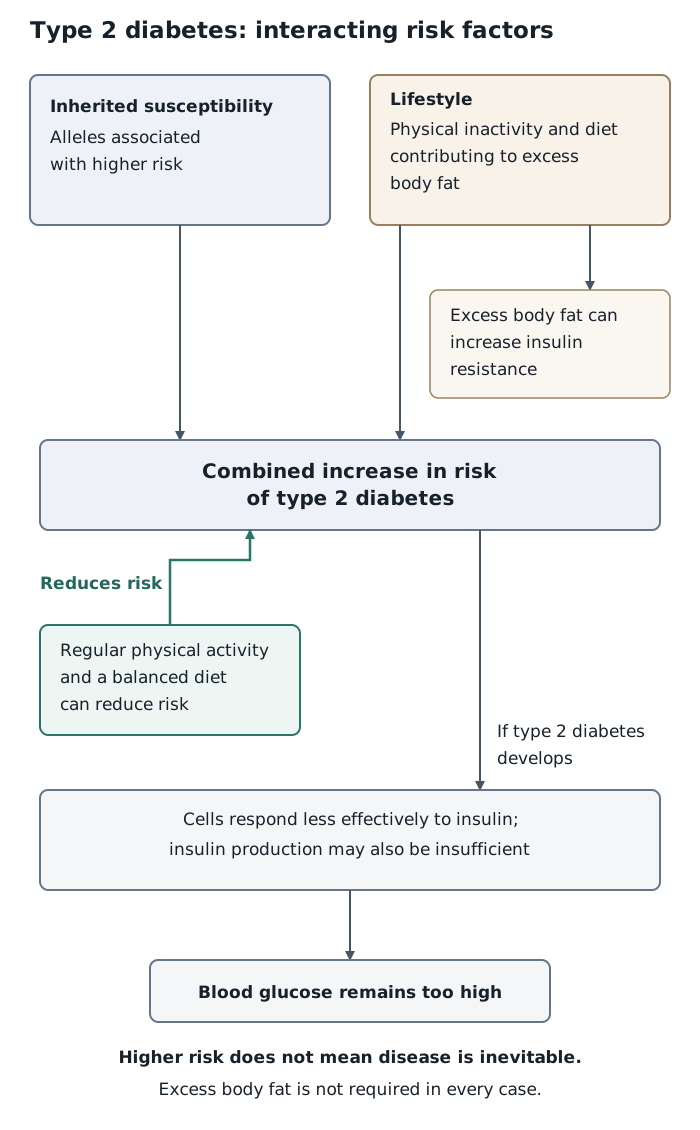
Inherited susceptibility and lifestyle combine to influence type 2 diabetes risk. Changing lifestyle can lower risk without changing inherited alleles.
Diseases can interact within the same person. One disease may weaken the body's defences, trigger another condition or make its effects harder to manage.
HIV and other infections: HIV infects and damages immune-system cells, including a type of lymphocyte. Without effective treatment, immunity can become severely weakened, allowing infections such as pneumonia to develop more easily. AIDS is the advanced stage of HIV infection associated with severe immune damage. Here, one communicable disease increases susceptibility to others.
Viral infections and cancer: certain types of human papillomavirus, or HPV, can infect cells of the cervix and increase the risk of cervical cancer. Some hepatitis viruses increase the risk of liver cancer. The viral infection is communicable, but the cancer that may develop is not. Infection increases risk; not every infected person develops cancer.
Immune reactions and allergies: immune reactions associated with an infection can sometimes trigger allergic conditions, such as skin rashes or asthma. The immune response itself can therefore contribute to further ill health.
Physical illness and mental health: severe or long-lasting physical illness can contribute to depression. Depression may then make activity, eating well or managing an existing illness more difficult, compounding the effects on health. Disease interactions are therefore not limited to two physical diseases: physical and mental health can influence each other.
| Disease | Important risk links |
|---|---|
| Cardiovascular disease | Smoking, high saturated-fat intake, inactivity and high alcohol consumption; fatty deposits can narrow coronary arteries. |
Use ‘increases the risk’ rather than claiming that everyone with a risk factor will develop the disease.
When explaining interacting risk factors, link inherited susceptibility and lifestyle to the same disease; do not simply list them.
For disease interactions, name both diseases and explain the link between them, such as HIV weakening immunity and increasing susceptibility to pneumonia.
Distinguish an infectious trigger from the resulting disease: HPV can spread between people, but cervical cancer itself is not communicable.
It can see this note and what your specification asks for.
Answers are free with an account.
1 free note left this week
Get more free notesYour answer sets when this note comes back for review, or marks it complete.
Was this note helpful?
Log in to tell us whether it helped, or to report a problem.
Last updated
Non-communicable disease
A disease that cannot be passed from one individual to another.
Risk factor
A characteristic, exposure or behaviour that increases the probability of developing a disease.
Allele
An alternative version of a gene.
Genetic predisposition
An increased likelihood of developing a condition because of inherited alleles; it does not make the condition inevitable.
Cardiovascular disease
A disease affecting the heart or blood vessels.
Cancer
A disease involving uncontrolled cell division, with cancerous cells able to invade tissues and spread to other parts of the body.
Carcinogen
An agent, such as a chemical in tobacco smoke, that can cause cancer.
Type 2 diabetes
A condition in which blood glucose remains too high because body cells respond less effectively to insulin and the body may not produce enough insulin.
Insulin resistance
A reduced response of body cells to the hormone insulin, making blood glucose harder to control.
Put your knowledge into practice — try past paper questions for Combined Science B
Non-communicable disease
A disease that cannot be passed from one individual to another.
Risk factor
A characteristic, exposure or behaviour that increases the probability of developing a disease.
Allele
An alternative version of a gene.
Genetic predisposition
An increased likelihood of developing a condition because of inherited alleles; it does not make the condition inevitable.
Cardiovascular disease
A disease affecting the heart or blood vessels.
Cancer
A disease involving uncontrolled cell division, with cancerous cells able to invade tissues and spread to other parts of the body.
Carcinogen
An agent, such as a chemical in tobacco smoke, that can cause cancer.
Type 2 diabetes
A condition in which blood glucose remains too high because body cells respond less effectively to insulin and the body may not produce enough insulin.
Insulin resistance
A reduced response of body cells to the hormone insulin, making blood glucose harder to control.
| Cancer | Inherited susceptibility, tobacco carcinogens, excessive UV exposure and asbestos. |
| Some lung diseases | Smoking, air pollution and excessive dust exposure. |
| Liver cirrhosis | High alcohol consumption. |
| Type 2 diabetes | Inherited susceptibility, excess body fat and inactivity; reduced insulin response leads to high blood glucose. |
An infectious trigger does not make the resulting cancer communicable.