Loading…


Loading…
Loading…
Loading…
Eduqas GCSE Religious Studies · C120
Eduqas C120 · The Five Pillars of Sunni Islam Check the specification (PDF) (opens in a new tab)
Sawm is fasting for Allah and is one of the Five Pillars of Sunni Islam. During Ramadan, Muslims abstain from food, drink and sexual activity from dawn until sunset. This is an act of worship, rather than simply a change of diet: a Muslim makes a sincere intention, called niyyah, to fast for Allah.
Ramadan follows the Islamic lunar calendar and lasts 29 or 30 days. Because lunar months move through the seasons, Ramadan does not always fall at the same time of the British year. A summer fast can therefore be much longer than a winter fast.
Before dawn, Muslims may eat sehri, also called suhur, and drink in preparation for the day. When dawn begins, the fast starts. No food or drink is taken during the fasting hours, including water. At sunset, Muslims break the fast with iftar. Dates are traditionally eaten at the start of this meal, and families may eat together at home or join a community meal at a mosque.
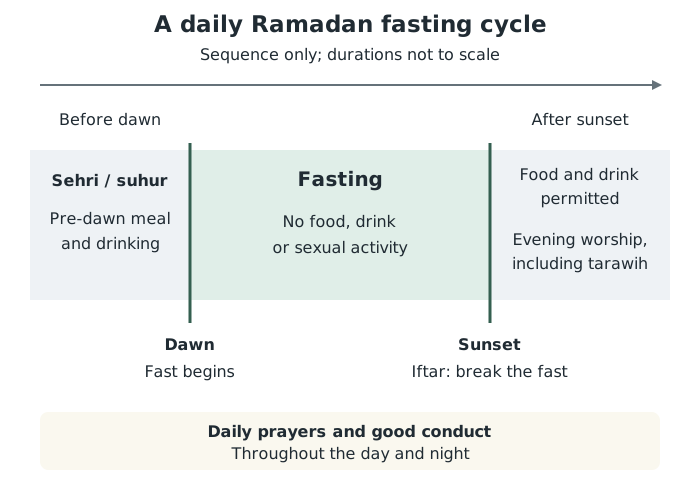
The fast runs from dawn to sunset, with meals and drinking outside the fasting hours. Actual timings vary with the season and location.
Fasting is accompanied by attention to conduct. Muslims try to avoid lying, swearing and other wrongdoing, which are not acceptable outside Ramadan either. Resisting hunger while continuing to harm others would miss the spiritual purpose of the practice. Muslims also make particular efforts to maintain the five daily prayers, read the Qur’an and give to others. Additional night prayers, called tarawih, provide further opportunities for worship and Qur’an recitation. Ramadan ends with the festival of Id-ul-Fitr.
Choosing not to satisfy hunger and thirst develops self-discipline: the worshipper puts obedience to Allah before immediate desires. Fasting can also remind Muslims of their dependence on Allah and help them focus on spiritual priorities rather than possessions or comfort.
Experiencing hunger can encourage sympathy for people who lack food and motivate practical generosity. This connects personal worship with responsibility towards others. Shared meals and mosque activities can strengthen relationships and a sense of belonging to the Muslim community.
These benefits are connected, but not identical. The intention to fast is personal, and one Muslim cannot perform someone else’s fast for them. Nevertheless, an individual’s fasting can have wider effects through charity, encouragement and shared worship.
Qur’an 2:184 describes fasting for a prescribed number of days and says that someone who is ill or travelling should fast “an equal number of days” afterwards. It also allows compensation by feeding a needy person for those who can fast only with extreme difficulty. The verse ends by affirming that “to fast is better for you, if only you knew”.
This teaching combines the importance of fasting with recognition of human circumstances. Someone temporarily prevented from fasting by illness or travel can make up the missed days later. Where a lasting inability makes fasting impracticable, fidyah, feeding a person in need, provides a different response. It is not a general option to buy one's way out of fasting simply because it is inconvenient.
The allowances matter when judging the practice: commitment to Allah does not mean that every person must fast regardless of illness or serious difficulty.
Britain’s long summer daylight hours can mean a lengthy period without food or water. In May and June 2019, for example, British Muslims could be fasting for around 18 hours a day. This is a seasonal example, not a fixed length for every Ramadan. Long fasts can make thirst, tiredness and demanding physical activity harder to manage. Some Muslim communities seek religious guidance about adjustments to timings in northern regions; there is not one adjustment followed by everyone.
Sleep can also become a difficulty. Late evening meals and prayers, followed by waking before dawn, must fit around ordinary school, work and family responsibilities. Yasmin Khalid, a working mother in Kent, described getting around five hours’ sleep a night during Ramadan in 2019. Her experience shows that tiredness may come from disrupted sleep as well as fasting itself.
Work and sport do not necessarily stop for Ramadan. Former semi-professional footballer Amjad Iqbal described combining a full working day with evening training while fasting. Support could make a difference: during matches, his manager kept track of sunset so that he could break his fast at the appropriate time. Other practical responses include reducing exercise intensity, planning adequate rest, and eating balanced meals and drinking enough water during non-fasting hours.
In Britain’s religiously diverse society, people around a fasting Muslim may not share the practice. Understanding from colleagues, classmates and sporting teams can therefore help, whereas ordinary meal breaks and schedules may not fit fasting times. Experiences differ according to the season, health, responsibilities and available support.
One argument is that fasting can make daily responsibilities harder, especially during long summer days or when sleep is restricted. Physical strain is a serious consideration, and people with relevant medical difficulties need to consider the religious allowances rather than assume they must continue regardless.
However, Muslims may regard overcoming manageable difficulties as part of fasting’s value: it develops discipline and demonstrates commitment to Allah. Community meals, practical support and charity can also make Ramadan a time of belonging rather than simply deprivation.
A justified conclusion distinguishes manageable demands from serious harm. Fasting may be challenging in Britain without being impossible or lacking value. Its impact depends on individual circumstances, support and the appropriate use of the allowances recognised in Qur’an 2:184.
Get unlimited access to all revision notes, key terms, and exam tips.
Qur’an 2:184: prescribed days of fasting; illness or travel allows missed days to be made up; extreme difficulty can allow feeding someone in need.
Main purposes: obedience to Allah, self-discipline, spiritual focus, sympathy for those in need and stronger community relationships.
Evaluation: weigh physical and practical difficulties against religious commitment and community benefits. Distinguish manageable hardship from circumstances covered by religious allowances; experiences vary.
Get unlimited access to all revision notes, key terms, and exam tips.
Use Qur’an 2:184 to explain both the importance of fasting and the allowances for illness, travel and extreme difficulty.
Distinguish making up missed fasts from fidyah. Giving money does not automatically replace the duty to fast.
Explain why a British circumstance creates a difficulty: long summer daylight means longer without water, while late meals and early waking can reduce sleep.
When evaluating fasting, weigh practical difficulties against religious and community benefits. Avoid assuming that every Muslim has the same experience.
Sawm begins at dawn, not sunrise, and ends at sunset. It includes abstaining from drink as well as food.
Sawm
Fasting for Allah; one of the Five Pillars of Sunni Islam. During Ramadan, Muslims abstain from food, drink and sexual activity from dawn until sunset.
Ramadan
The Islamic lunar month of fasting, lasting 29 or 30 days.
Niyyah
The sincere intention to perform an act of worship for Allah, including the intention to fast.
Sehri
The meal eaten before dawn during Ramadan, also called suhur.
Iftar
The meal with which Muslims break their daily Ramadan fast at sunset.
Fidyah
Compensation through feeding a person in need for a missed fast where a person cannot fast because of a lasting condition or extreme difficulty.
Tarawih
Additional night prayers offered during Ramadan, often involving extended recitation of the Qur’an.
Put your knowledge into practice — try past paper questions for Religious Studies
Sawm
Fasting for Allah; one of the Five Pillars of Sunni Islam. During Ramadan, Muslims abstain from food, drink and sexual activity from dawn until sunset.
Ramadan
The Islamic lunar month of fasting, lasting 29 or 30 days.
Niyyah
The sincere intention to perform an act of worship for Allah, including the intention to fast.
Sehri
The meal eaten before dawn during Ramadan, also called suhur.
Iftar
The meal with which Muslims break their daily Ramadan fast at sunset.
Fidyah
Compensation through feeding a person in need for a missed fast where a person cannot fast because of a lasting condition or extreme difficulty.
Tarawih
Additional night prayers offered during Ramadan, often involving extended recitation of the Qur’an.