

Loading…
Loading…
Loading…
Eduqas GCSE Food Preparation and Nutrition · C560
Eduqas C560 Check the specification (PDF) (opens in a new tab)
Dry frying, pan or , and are cooking methods used on the hob. All involve food touching a hot pan. The important differences are whether fat is added, how much is used, and how the food is moved during cooking.
Fat or oil helps transfer heat to food and can help produce a crisp surface. However, adding more fat can increase the fat content of the finished dish. Choosing a method therefore affects both the eating quality and the nutritional value of food.
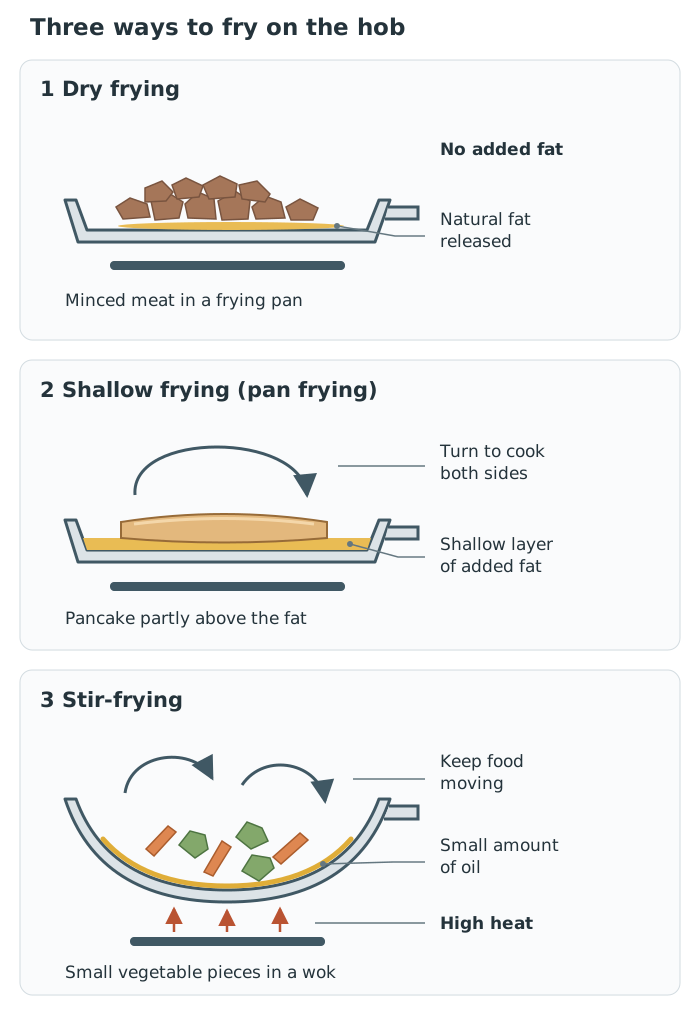
The amount of added fat and the way food is moved distinguish these three hob methods.
Dry frying means cooking in a frying pan without adding fat or oil. It is suitable for foods containing natural fat, such as minced meat, burgers, sausages, nuts and seeds. As the food heats, some of its fat is released into the pan. ‘Dry’ describes the absence of added fat; the pan may become greasy during cooking.
To demonstrate the method with mince, use a frying pan without adding oil. Begin cooking over a medium heat so that the natural fat has time to melt and release into the pan. Move and turn the mince during cooking, rather than leaving it resting against the same part of the hot pan.
Dry frying can develop a crisp outside and appealing flavour without adding extra fat. With nuts and seeds, it also develops their aroma. Watch the food closely and keep it moving because it can burn and lose its colour and texture. A crisp or coloured surface shows the effect of frying; it is not a universal test that every ingredient has finished cooking.
Shallow frying, also called pan frying, uses a shallow layer of fat or oil in a frying pan. The food is partly above the fat rather than completely submerged. Suitable foods include eggs, pancakes, fish, bacon and sausages.
Add a small to medium amount of fat to coat the frying pan and heat it before adding the food. Heating the fat first helps prevent the food absorbing it and becoming greasy. Monitor the food throughout cooking and turn or move it as needed so that different surfaces cook evenly.
A pancake gives a clear demonstration of the technique: cook batter in a heated, lightly greased frying pan, then turn the pancake to cook the other side. The turning action distinguishes cooking both surfaces from simply leaving one surface against the pan.
Shallow frying can produce a crisp surface and appealing flavour. However, added fat and fat released by the food remain in the pan and can coat the food, increasing its fat content. The quick cooking time can help retain nutrients, but food can still burn if it is not monitored.
Stir-frying cooks food quickly over a high heat with a small amount of oil, usually in a wok. Vegetables, tofu, small pieces of meat or fish, and noodles are suitable ingredients.
To demonstrate the technique with small vegetable pieces, cook them in a wok with a small amount of oil over a high heat. Stir and turn the pieces throughout the short cooking time. This exposes different surfaces to the heat and prevents food remaining against one hot part of the wok and burning.
The intended result is quickly cooked food with vegetables retaining their colour and texture, rather than losing these qualities through overcooking. The short cooking time also helps limit nutrient loss. Using only a small amount of oil can make stir-frying a lower-fat choice than frying in more oil, although the ingredients still affect the final dish.
All three methods need close attention: food can burn easily in a hot pan. Monitor it and turn or move it during cooking. Dry frying begins with medium heat to release natural fat; shallow frying requires the added fat to be heated first; stir-frying combines high heat with frequent movement and a short cooking time.
Surface crispness, colour and texture help you judge the quality of the frying result. The appropriate finishing point also depends on the ingredient, so these methods should be demonstrated using the cooking instructions for the chosen dish.
Dry frying means no added fat, not that the food contains no fat: naturally occurring fat can melt into the pan.
For a practical demonstration, show control of heat and movement of food, not just the finished dish.
Link the method to the ingredient: mince releases its own fat; pancakes need turning in a shallow layer of fat; small vegetable pieces cook quickly when stir-fried.
It can see this note and what your specification asks for.
Answers are free with an account.
1 free note left this week
Get more free notesYour answer sets when this note comes back for review, or marks it complete.
Was this note helpful?
Log in to tell us whether it helped, or to report a problem.
Last updated
Dry frying
Cooking food in a frying pan without adding fat or oil, using food that contains its own natural fat.
Shallow frying
Cooking food in a frying pan with a shallow layer of added fat or oil, turning it where necessary to cook both sides. Also called pan frying.
Stir-frying
Cooking small pieces of food quickly over a high heat with a small amount of oil, usually in a wok, while keeping them moving.
Put your knowledge into practice — try past paper questions for Food Preparation and Nutrition
Dry frying
Cooking food in a frying pan without adding fat or oil, using food that contains its own natural fat.
Shallow frying
Cooking food in a frying pan with a shallow layer of added fat or oil, turning it where necessary to cook both sides. Also called pan frying.
Stir-frying
Cooking small pieces of food quickly over a high heat with a small amount of oil, usually in a wok, while keeping them moving.