Loading…


Loading…
Loading…
Loading…
Edexcel GCSE Combined Science · 1SC0
Edexcel 1SC0 · Circuit components and energy transfer Check the specification (PDF) (opens in a new tab)
An electric current is a flow of charge. In a metal, this charge is carried by moving electrons. A resistor opposes the flow of current: this opposition is called electrical resistance.
Whenever a current flows through a resistor, energy is transferred to it by heating. The current does work against the electrical resistance, transferring energy electrically from the supply to the resistor. This increases the resistor’s thermal energy and can raise its temperature.
The heating effect is not limited to components labelled ‘resistor’. Metal connecting wires and appliance heating elements also have resistance, so they heat up when current flows through them.
A metal contains a regular arrangement, or lattice, of ions. These ions remain around fixed positions, but they are not motionless: they vibrate. Electrons are able to move through this lattice.
As electrons flow through the metal, they collide with lattice ions. These collisions oppose the electrons’ motion and transfer energy to the ions. The ions vibrate more vigorously, increasing the metal’s thermal energy and temperature. This explains how electrical resistance produces heating.
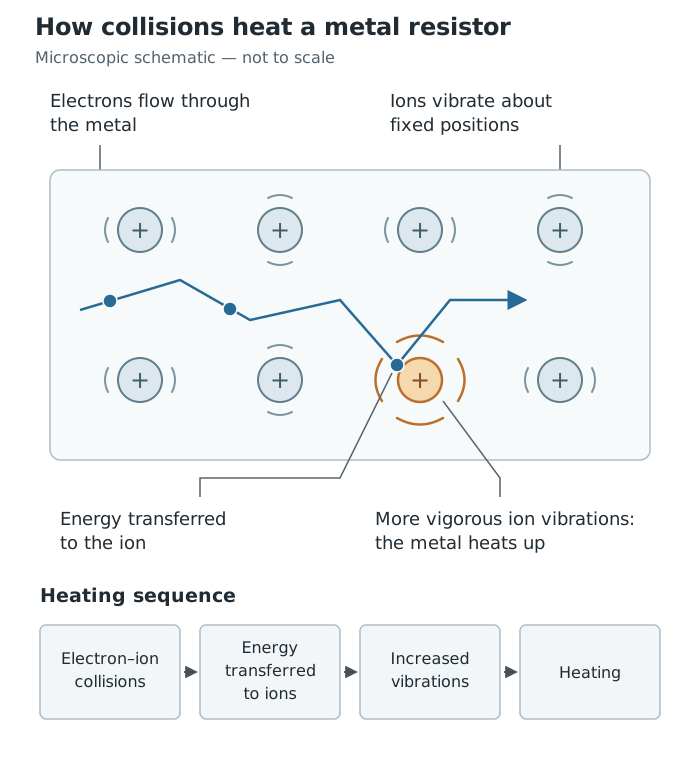
Electron–ion collisions transfer energy to the lattice, increasing ion vibrations and heating the metal.
The important distinction is that electrons move through the conductor, whereas the ions vibrate about their positions. The ions do not travel along the wire with the current.
Once a resistor is hotter than its surroundings, energy is transferred from it to the surroundings by heating. This can happen through conduction to materials touching it, convection in the surrounding air and radiation.
Electrical energy is therefore dissipated as thermal energy in the surroundings. ‘Dissipated’ means spread out, not destroyed. The energy still exists, but becomes less available for useful energy transfers.
For a given resistance, a greater current produces more heating. For the same current, a greater resistance also produces more heating. Whether this heating is useful or unwanted depends on the purpose of the device.
In an electric kettle, heating is the intended effect: energy is transferred from the heating element to the water. A toaster uses hot elements to toast bread, while an electric heater transfers energy to warm a room. Here, electrical resistance enables a useful energy transfer.
In connecting wires, however, heating is usually unwanted. Energy transferred to the wires and their surroundings is not available for the appliance’s intended purpose, reducing its efficiency. Excessive heating can also cause burns or start a fire, particularly if too much current flows.
The same physical process can therefore be an advantage in a heating element and a disadvantage in the wires supplying it.
Using low-resistance connecting wires reduces unwanted heating for the current they carry. Less energy is transferred to the wires and more is available for the intended component. Copper is commonly used for wiring because it has relatively low resistance and is fairly cheap. Materials with still lower resistance exist, but can be more expensive.
Reducing the current through a wire also reduces its heating. However, simply reducing the total resistance of a circuit does not guarantee less heating: this can increase the current. The comparison ‘lower resistance means less heating’ must be made for the same current.
Get unlimited access to all revision notes, key terms, and exam tips.
Current in a resistor transfers energy by heating:
Flowing electrons → collisions with lattice ions → ions vibrate more → metal heats up.
Ions vibrate about fixed positions; electrons move through the metal.
Electrical energy is dissipated as thermal energy in the surroundings. Energy is conserved, but becomes less available for useful transfers.
Get unlimited access to all revision notes, key terms, and exam tips.
For a microscopic explanation, link flowing electrons → collisions with lattice ions → energy transfer to the ions → increased vibrations and heating.
Say that energy is dissipated into the surroundings, not destroyed or ‘used up’.
When comparing heating at different resistances, state ‘for the same current’. Reducing a circuit’s resistance can also increase its current.
Distinguish useful heating in an appliance’s heating element from unwanted heating in its connecting wires.
Electric current
The rate of flow of electric charge. In a metal, the moving charges are electrons.
Electrical resistance
Opposition to the flow of electric current through a component.
Ion lattice
A regular arrangement of ions in a metal. The ions vibrate about fixed positions while electrons can move through the metal.
Dissipation
The spreading of energy into the surroundings, making it less available for useful transfers. Energy is conserved, not destroyed.
Heating effect
The transfer of energy to a component and its surroundings by heating when an electric current flows against resistance.
Put your knowledge into practice — try past paper questions for Combined Science
Electric current
The rate of flow of electric charge. In a metal, the moving charges are electrons.
Electrical resistance
Opposition to the flow of electric current through a component.
Ion lattice
A regular arrangement of ions in a metal. The ions vibrate about fixed positions while electrons can move through the metal.
Dissipation
The spreading of energy into the surroundings, making it less available for useful transfers. Energy is conserved, not destroyed.
Heating effect
The transfer of energy to a component and its surroundings by heating when an electric current flows against resistance.