Loading…


Loading…
Loading…
Loading…
Edexcel GCSE Combined Science · 1SC0
Edexcel 1SC0 · Obtaining and using metals Obtaining and using metals Check the specification (PDF) (opens in a new tab)
Deduce the relative reactivity of various metals by observing their reactions with water, acids, and salt solutions.
Explain displacement reactions as redox reactions, specifically detailing the gain and loss of electrons.
Explain the reactivity series of metals in terms of their tendency to form cations when reacting with water and dilute acids.
Recall that most metals are extracted from ores found in the Earth's crust, whereas unreactive metals exist as uncombined elements.
Explain oxidation as the gain of oxygen and reduction as the loss of oxygen in a chemical context.
Recall that the extraction of metals from their ores inherently involves reduction processes.
Explain how a metal's position in the reactivity series and extraction costs determine its extraction method, comparing heating with carbon to electrolysis.
Evaluate alternative biological methods for metal extraction, specifically bacterial extraction and phytoextraction.
Explain the relationship between a metal's position in the reactivity series and its relative resistance to oxidation.
Evaluate the economic and environmental advantages of recycling metals, including the preservation of raw materials.
Describe the purpose and stages of a life-cycle assessment for a product, from raw material extraction to final disposal.
Evaluate provided data from a life-cycle assessment to determine the environmental impact of a product.
Most metals are obtained from ores in the Earth’s crust. An ore is a rock containing enough metal or metal compound to make extraction economically worthwhile. A rock may contain some metal without being worth processing: the value of the metal recovered must justify the cost of obtaining it.
In most ores, the metal is chemically combined with other elements. For example, iron is obtained from iron oxide in haematite, while bauxite is an important aluminium ore. Obtaining the metal therefore involves a chemical change, not simply separating pieces of metal from the rock.
Very unreactive metals, such as gold, can occur as uncombined elements. They do not readily react with surrounding substances to form compounds. These naturally occurring uncombined metals are called native metals and do not need chemical reduction to release them from a compound.
Oxidation is the gain of oxygen; reduction is the loss of oxygen. These definitions describe what happens to a particular substance during a reaction.
When a metal reacts with oxygen to form a metal oxide, the metal gains oxygen and is oxidised. To obtain the metal again, oxygen must be removed from its oxide: the metal oxide is reduced.
Extraction of a metal from its ore involves reduction. For oxide ores, this is especially easy to picture: oxygen is taken away from the metal compound, leaving the metal. The oxygen does not disappear; it becomes part of another substance.
When carbon removes oxygen from a metal oxide, the metal oxide loses oxygen and is reduced, while the carbon gains oxygen and is oxidised. Carbon acts as the reducing agent, meaning the substance that causes the other substance to be reduced.
The reactivity series places metals in order of reactivity. Carbon is not a metal, but its position in the series gives a useful dividing line for extraction.
A metal below carbon is less reactive than carbon. Its oxide can be reduced by heating it with carbon. Iron is below carbon, so carbon-based reduction can be used to extract iron from iron oxide. Carbon is relatively cheap and can also provide heat when burned, making this an economical route. The detailed operation of a blast furnace is not needed here.
A metal above carbon is more reactive than carbon. Carbon cannot remove oxygen from its oxide, so heating with carbon will not extract it. Aluminium is above carbon and is extracted by electrolysis instead.
Electrolysis uses an electric current to break down an ionic compound. For extraction of these reactive metals, the compound must be molten, or dissolved in a molten electrolyte, so that its ions can move. Aluminium is obtained by electrolysis of aluminium oxide dissolved in a molten electrolyte. The metal ions are converted into metal: this is also reduction, although the extraction method is called electrolysis.
| Metal | Position relative to carbon | Extraction route | Cost consideration |
|---|---|---|---|
| Iron | Below carbon | Reduction using carbon-based reducing agents | Carbon is relatively cheap and can supply heat |
| Aluminium | Above carbon | Electrolysis | Large amounts of electricity make extraction expensive |
The choice is therefore not simply to use the cheapest process. The process must work chemically first. Carbon reduction is generally cheaper, but it cannot replace electrolysis for aluminium.
A low-grade ore contains a relatively small proportion of the useful metal. Conventional extraction may cost too much for the amount recovered. Biological methods can recover metals such as copper from low-grade material and mining waste, with less need for extensive digging and movement of rock.
Bacterial extraction, also called bioleaching, uses bacteria to help break down ores. This produces an acidic solution called a leachate, containing dissolved metal ions. The solution contains ions, not pieces of pure metal. The metal must then be recovered, for example by displacement with a more reactive metal or by electrolysis.
Phytoextraction uses plants grown in soil containing the required metal. They absorb metal ions through their roots, and metal compounds become concentrated in parts of the plants. The plants are harvested, dried and burned. Their ash contains metal compounds from which the metal can then be recovered by further processing, such as displacement or electrolysis.
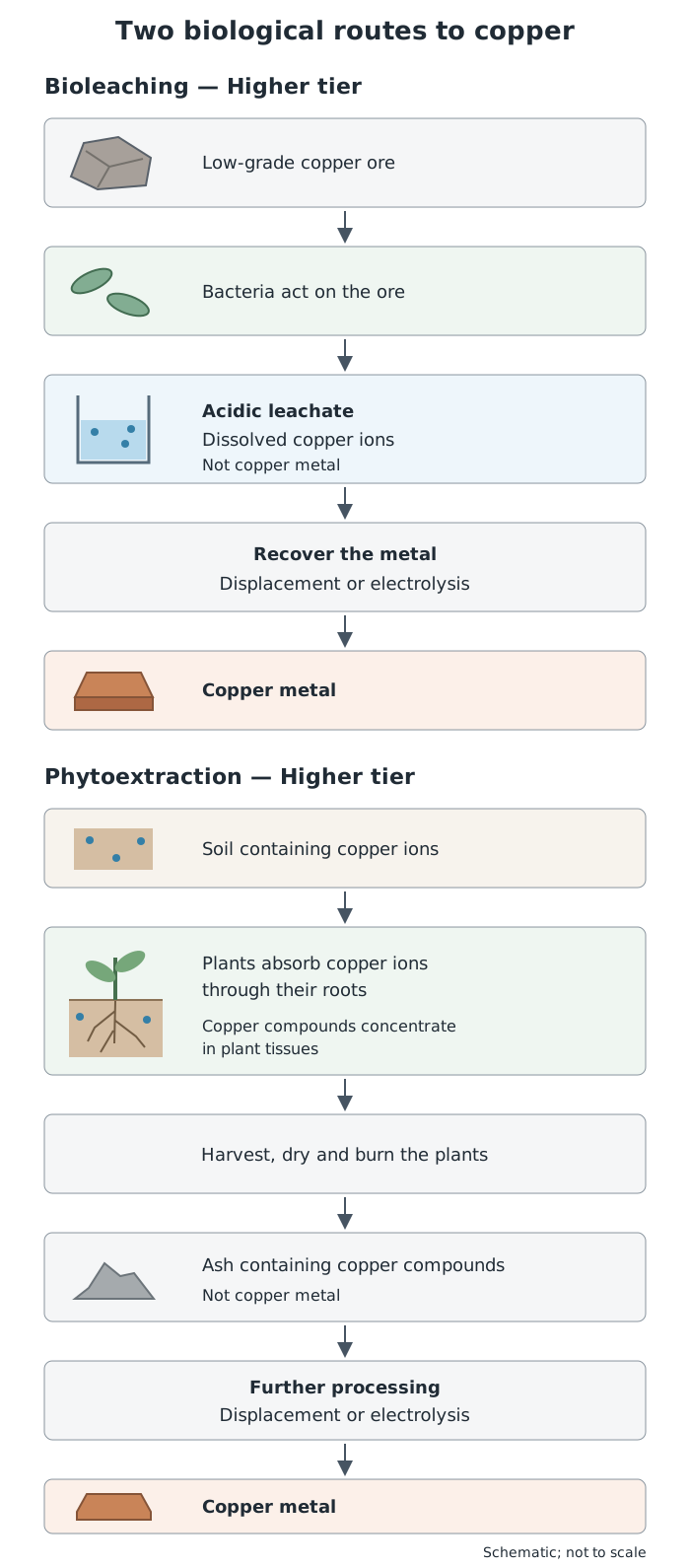
Biological extraction produces metal ions or compounds first; a further step is needed to obtain the metal.
Both biological methods can make low-grade material useful and reduce the environmental damage associated with conventional mining. They can also help recover metals from mining waste rather than leaving those metals unused.
However, both methods are slow. Plants need time to grow, and bacterial action takes time. Neither method produces pure metal in a single step, so further processing adds costs and may require electricity.
Bioleaching does not require high temperatures, reducing the energy needed for that stage. Its acidic, metal-containing solutions can nevertheless contaminate the environment and must be carefully contained and treated. Phytoextraction requires harvesting and burning the plants, so it is not an energy-free process either.
A biological route may therefore be worthwhile when the material has too little metal for conventional extraction to be economical and rapid production is not essential. Its lower mining impact must be balanced against its slow speed, further processing and any pollution-control costs.
Get unlimited access to all revision notes, key terms, and exam tips.
When comparing iron and aluminium extraction, state each metal’s position relative to carbon and explain why that determines whether carbon can reduce its oxide.
Electrolysis also involves reduction: do not treat ‘electrolysis’ and ‘reduction’ as opposites.
For an oxygen-transfer reaction, identify the substance gaining oxygen and the substance losing oxygen, not just the reaction as a whole.
In a biological-extraction evaluation, weigh benefits against slow extraction and the need for further processing. Link your conclusion to the ore’s metal content and the costs involved.
Ore
A rock containing enough metal or metal compound to make extracting the metal economically worthwhile.
Native metal
A metal found naturally as an uncombined element rather than chemically combined in a compound.
Oxidation
The gain of oxygen by a substance in a chemical reaction.
Reduction
The loss of oxygen by a substance in a chemical reaction.
Reactivity series
An arrangement of metals in order of reactivity. Carbon is included as a comparison point when choosing extraction methods.
Electrolysis
The decomposition of an ionic compound using an electric current.
Low-grade ore
An ore containing a relatively small proportion of the useful metal.
Bacterial extraction
A biological extraction method in which bacteria help produce a solution containing metal ions from an ore; also called bioleaching.
Leachate
The metal-ion-containing solution produced during leaching of an ore.
Phytoextraction
A biological extraction method in which plants absorb metal ions through their roots and are harvested and burned to produce ash containing metal compounds.
Put your knowledge into practice — try past paper questions for Combined Science
Ore
A rock containing enough metal or metal compound to make extracting the metal economically worthwhile.
Native metal
A metal found naturally as an uncombined element rather than chemically combined in a compound.
Oxidation
The gain of oxygen by a substance in a chemical reaction.
Reduction
The loss of oxygen by a substance in a chemical reaction.
Reactivity series
An arrangement of metals in order of reactivity. Carbon is included as a comparison point when choosing extraction methods.
Electrolysis
The decomposition of an ionic compound using an electric current.
Low-grade ore
An ore containing a relatively small proportion of the useful metal.
Bacterial extraction
A biological extraction method in which bacteria help produce a solution containing metal ions from an ore; also called bioleaching.
Leachate
The metal-ion-containing solution produced during leaching of an ore.
Phytoextraction
A biological extraction method in which plants absorb metal ions through their roots and are harvested and burned to produce ash containing metal compounds.
Get unlimited access to all revision notes, key terms, and exam tips.