Loading…


Loading…
Loading…
Loading…
Edexcel GCSE Combined Science · 1SC0
Edexcel 1SC0 · Electrolytic processes Electrolytic processes Check the specification (PDF) (opens in a new tab)
Recall that electrolytes are ionic compounds present in a molten state or dissolved in water.
Describe electrolysis as a process that utilizes electrical energy from a direct current supply to decompose electrolytes.
Explain the movement of ions during electrolysis, specifically how cations migrate to the cathode and anions migrate to the anode.
Explain the formation of products during the electrolysis of various electrolytes using inert electrodes, including copper chloride, sodium chloride, sodium sulfate, acidified water, and molten lead bromide.
Predict the specific products generated from the electrolysis of various binary ionic compounds in the molten state.
Formulate half equations for the chemical reactions occurring at both the anode and cathode during electrolysis.
Explain the concepts of oxidation and reduction strictly in terms of the loss or gain of electrons.
Recall that during electrolysis, reduction takes place at the cathode while oxidation takes place at the anode.
Explain how products are formed during the electrolysis of copper sulfate solution using copper electrodes, and describe how this process is applied to purify copper.
Investigate the electrolysis of copper sulfate solution using both inert and copper electrodes.
Electrolysis is the decomposition of an electrolyte using electrical energy from a direct current (DC) supply. Decomposition means breaking a substance down into simpler substances. The electrical supply drives the chemical change.
An electrolyte is an ionic compound that can conduct electricity when molten or dissolved in water. Ionic compounds contain positively and negatively charged ions. In a solid ionic compound, these ions are held in fixed positions in a lattice, so they cannot move through the substance to carry charge. Melting the compound or dissolving it in water frees the ions to move.
The distinction between molten and aqueous matters. Molten means melted: no water has been added. Aqueous means dissolved in water, and water can affect which products form.
Two conducting electrodes dip into the electrolyte without touching. Each is connected to a terminal of the DC supply. Inert electrodes, such as graphite or platinum, conduct electricity without reacting with the electrolyte or its products under the conditions used.
The electrode connected to the negative terminal is the cathode. Positively charged ions, called cations, are attracted to it. The electrode connected to the positive terminal is the anode. Negatively charged ions, called anions, are attracted to it.
Charge travels in different ways in different parts of the apparatus: electrons carry charge through the wires and electrodes, while moving ions carry charge through the electrolyte. At the electrodes, ions gain or lose electrons and form products. This is called being discharged.
Molten lead bromide contains lead ions, , and bromide ions, . With inert electrodes, it produces lead at the cathode and bromine at the anode.
Lead ions move to the negative cathode, where they gain electrons and become lead atoms. Bromide ions move to the positive anode, where they lose electrons. The resulting bromine atoms pair up to form bromine molecules, , released as a gas.
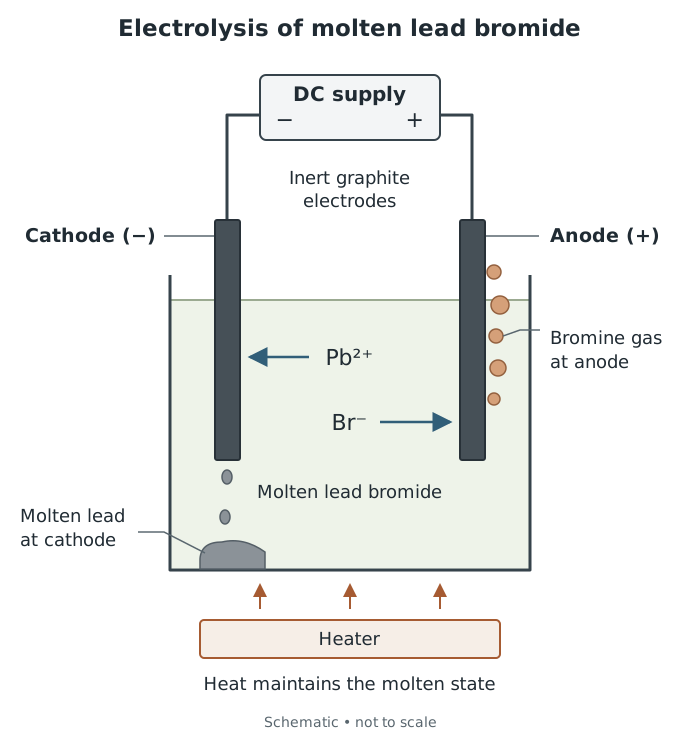
Molten lead bromide: lead ions move to the negative cathode; bromide ions move to the positive anode.
Lead bromide must be heated to keep it molten. This is a teacher demonstration: the high temperature, toxic lead compounds and harmful bromine require appropriate safety controls.
A binary ionic compound contains just two elements. When it is molten, its ions come only from that compound, so each electrode product follows directly from the ions present:
For example, molten sodium chloride contains and ions. Sodium forms at the cathode and chlorine, , forms at the anode. There is no water present to provide an alternative product.
An aqueous electrolyte contains ions from the dissolved compound, but water also provides hydrogen ions, , and hydroxide ions, . These provide competing possibilities at the electrodes.
At the cathode, compare the metal with hydrogen in the reactivity series. If the metal is less reactive than hydrogen, as copper is, its ions form the metal. If the metal is more reactive than hydrogen, as sodium is, hydrogen forms instead of the metal.
At the anode, chloride, bromide or iodide ions can form their halogen. In the chloride solutions considered here, chlorine is the expected product. Concentration can affect this choice: very dilute chloride solutions can produce oxygen instead. When no halide ions are present, oxygen normally forms from hydroxide ions or water. Sulfate ions are not discharged in these examples.
The following products are formed using inert electrodes:
| Electrolyte | Negative cathode product | Positive anode product |
|---|---|---|
| Copper chloride solution | Copper | Chlorine |
| Sodium chloride solution | Hydrogen | Chlorine |
| Sodium sulfate solution | Hydrogen | Oxygen |
| Water acidified with sulfuric acid | Hydrogen | Oxygen |
| Molten lead bromide | Lead | Bromine |
Copper chloride solution: copper ions move towards the cathode and form a copper deposit because copper is less reactive than hydrogen. Chloride ions move towards the anode and form chlorine gas.
Sodium chloride solution: sodium is more reactive than hydrogen, so hydrogen forms at the cathode rather than sodium. Chloride ions form chlorine at the anode. Sodium ions remain in solution, along with hydroxide ions, leaving sodium hydroxide solution.
Sodium sulfate solution: sodium ions are not discharged at the cathode; hydrogen forms instead. Sulfate ions are not discharged at the anode; oxygen forms instead. The sodium and sulfate ions remain in solution, while water is broken down.
Water acidified with sulfuric acid: pure water conducts poorly because it contains very few ions. Adding dilute sulfuric acid provides more ions so current can flow readily. Hydrogen forms at the cathode and oxygen at the anode; sulfate ions are not discharged. The overall change is:
Bubbles form at both electrodes. At the same temperature and pressure, the expected hydrogen volume is twice the oxygen volume. Hydrogen gives a squeaky pop with a lit splint; oxygen relights a glowing splint.
In electron-transfer terms, reduction is gain of electrons and oxidation is loss of electrons. During electrolysis, reduction occurs at the cathode and oxidation occurs at the anode. The ions do not simply arrive and stick to an electrode: electron transfer changes them into products.
A half equation shows the reaction at one electrode. Start by writing the reacting ion and the product, balance the atoms, then add electrons, , so the total charge also balances.
For lead at the cathode, one ion needs two electrons to become a neutral atom:
The total charge on the left is , matching the neutral lead on the right. This is reduction.
For bromine at the anode, two bromide ions are needed to make one diatomic bromine molecule:
Both sides have a total charge of . Electrons are released, so this is oxidation.
The other cathode reactions needed for the named solutions are:
Chlorine formation at the anode is:
Oxygen formation can be represented using hydroxide ions:
Here, four oxygen atoms and four hydrogen atoms appear on each side. The charge is on each side too. This illustrates why balancing a half equation requires checking both atoms and charge.
Get unlimited access to all revision notes, key terms, and exam tips.
| Electrolyte | Cathode (−) | Anode (+) |
|---|---|---|
| Copper chloride solution | Copper | Chlorine |
| Sodium chloride solution | Hydrogen | Chlorine |
| Sodium sulfate solution | Hydrogen | Oxygen |
| Water acidified with sulfuric acid | Hydrogen | Oxygen |
| Molten lead bromide | Lead | Bromine |
Molten binary compound: metal at the cathode, non-metal at the anode.
Aqueous solution: water provides competing products. Metals less reactive than hydrogen form at the cathode; otherwise hydrogen forms. Halides can form halogens at the anode; without halides, oxygen forms. Sulfate ions are not discharged. Very dilute chloride solutions can give oxygen rather than chlorine.
Acidified water: ; hydrogen : oxygen volume ratio 2 : 1.
Cathode: reduction, electron gain.
Anode: oxidation, electron loss.
Every half equation must balance atoms and total charge.
Get unlimited access to all revision notes, key terms, and exam tips.
Check whether the electrolyte is molten or aqueous before predicting products: molten sodium chloride gives sodium, but sodium chloride solution gives hydrogen at the cathode.
Explain a product by naming the ion involved, the electrode it reaches and what happens there; naming the product alone is not an explanation.
Keep electrode names and signs together: cathode negative, anode positive in electrolysis.
Higher tier: balance both atoms and total charge in half equations. Electrons belong on the left for reduction and on the right for oxidation.
Use diatomic formulae for hydrogen and the halogens: H₂, Cl₂ and Br₂.
Electrolyte
An ionic compound that conducts electricity when molten or dissolved in water because its ions are free to move.
Electrolysis
The decomposition of an electrolyte using electrical energy from a direct current supply.
Electrode
A conductor through which current enters or leaves an electrolyte.
Inert electrode
An electrode that conducts electricity without reacting with the electrolyte or products under the conditions used.
Cation
A positively charged ion that moves towards the cathode during electrolysis.
Anion
A negatively charged ion that moves towards the anode during electrolysis.
Cathode
The negatively charged electrode in electrolysis, towards which cations move.
Anode
The positively charged electrode in electrolysis, towards which anions move.
Oxidation
The loss of electrons by an atom or ion. This electron-transfer definition is higher-tier content.
Reduction
The gain of electrons by an atom or ion. This electron-transfer definition is higher-tier content.
Half equation
An equation showing the reaction at one electrode, including the electrons transferred; both atoms and total charge must balance. Writing half equations is higher-tier content.
Put your knowledge into practice — try past paper questions for Combined Science
Electrolyte
An ionic compound that conducts electricity when molten or dissolved in water because its ions are free to move.
Electrolysis
The decomposition of an electrolyte using electrical energy from a direct current supply.
Electrode
A conductor through which current enters or leaves an electrolyte.
Inert electrode
An electrode that conducts electricity without reacting with the electrolyte or products under the conditions used.
Cation
A positively charged ion that moves towards the cathode during electrolysis.
Anion
A negatively charged ion that moves towards the anode during electrolysis.
Cathode
The negatively charged electrode in electrolysis, towards which cations move.
Anode
The positively charged electrode in electrolysis, towards which anions move.
Oxidation
The loss of electrons by an atom or ion. This electron-transfer definition is higher-tier content.
Reduction
The gain of electrons by an atom or ion. This electron-transfer definition is higher-tier content.
Half equation
An equation showing the reaction at one electrode, including the electrons transferred; both atoms and total charge must balance. Writing half equations is higher-tier content.