Loading…


Loading…
Loading…
Loading…
Edexcel GCSE Combined Science · 1SC0
Edexcel 1SC0 · Electrolytic processes Electrolytic processes Check the specification (PDF) (opens in a new tab)
Recall that electrolytes are ionic compounds present in a molten state or dissolved in water.
Describe electrolysis as a process that utilizes electrical energy from a direct current supply to decompose electrolytes.
Explain the movement of ions during electrolysis, specifically how cations migrate to the cathode and anions migrate to the anode.
Explain the formation of products during the electrolysis of various electrolytes using inert electrodes, including copper chloride, sodium chloride, sodium sulfate, acidified water, and molten lead bromide.
Predict the specific products generated from the electrolysis of various binary ionic compounds in the molten state.
Formulate half equations for the chemical reactions occurring at both the anode and cathode during electrolysis.
Explain the concepts of oxidation and reduction strictly in terms of the loss or gain of electrons.
Recall that during electrolysis, reduction takes place at the cathode while oxidation takes place at the anode.
Explain how products are formed during the electrolysis of copper sulfate solution using copper electrodes, and describe how this process is applied to purify copper.
Investigate the electrolysis of copper sulfate solution using both inert and copper electrodes.
Copper sulfate solution contains mobile copper ions, , and sulfate ions. It acts as the electrolyte: ions carry charge through the solution, while electrons carry charge through the connecting wires. A direct current supply makes the cathode negative and the anode positive.
The core practical compares two pairs of electrodes. Graphite electrodes are inert: they conduct electricity without supplying copper to the solution. Copper electrodes take part in the reactions. Changing the electrode material therefore changes what happens at the anode, even though the electrolyte is the same.
Positive copper ions move towards the negative cathode. There, they gain electrons and become copper atoms, which coat the electrode. The cathode gains mass.
At the positive copper anode, copper atoms lose electrons and enter the solution as copper ions. The anode loses mass rather than producing oxygen gas.
These processes happen together: copper ions removed from the solution at the cathode are replaced by copper ions formed at the anode. Ideally, the cathode's mass gain equals the anode's mass loss, and the copper-ion concentration remains approximately constant. This is a transfer of copper, not the creation of extra copper.
To purify copper, use impure copper as the anode, a thin sheet of pure copper as the cathode, and copper sulfate solution as the electrolyte.
Copper from the impure anode enters the solution as ions. Copper ions then form pure copper on the cathode, which becomes thicker as the anode becomes thinner. Impurities are not deposited along with the copper: insoluble impurities collect beneath the anode as sludge. This separates copper from those impurities. The sludge can contain valuable metals such as silver.
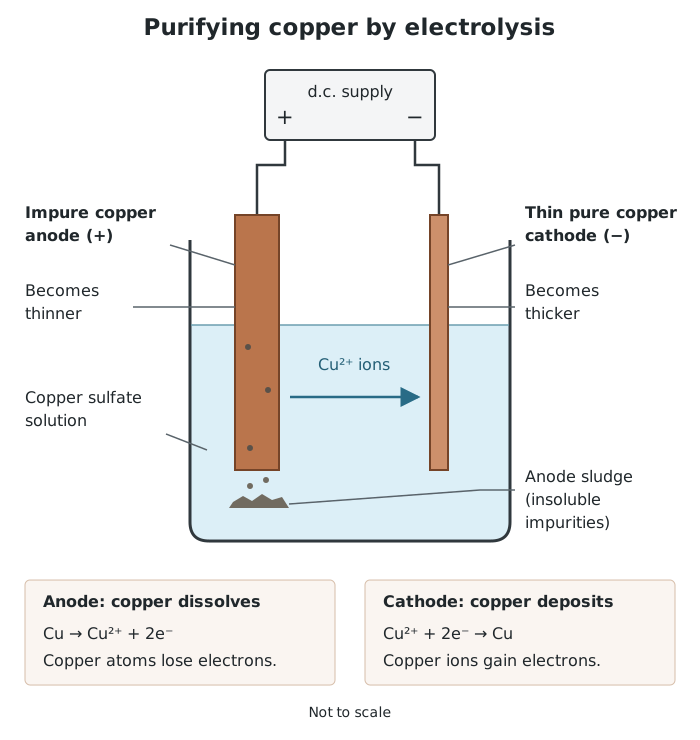
Copper is transferred from the impure anode to the pure copper cathode.
Use two pieces of copper foil, a 100 cm³ beaker, copper sulfate solution, a low-voltage d.c. supply, connecting leads and crocodile clips. An ammeter measures the current, and a variable resistor allows it to be adjusted. You also need emery paper, a balance, a stop clock, distilled water and access to propanone in a fume cupboard.
Wear eye protection and avoid skin contact with copper sulfate solution. Wash any splashes from skin. Propanone is an irritant and highly flammable: there must be no naked flames in the laboratory while it is used.
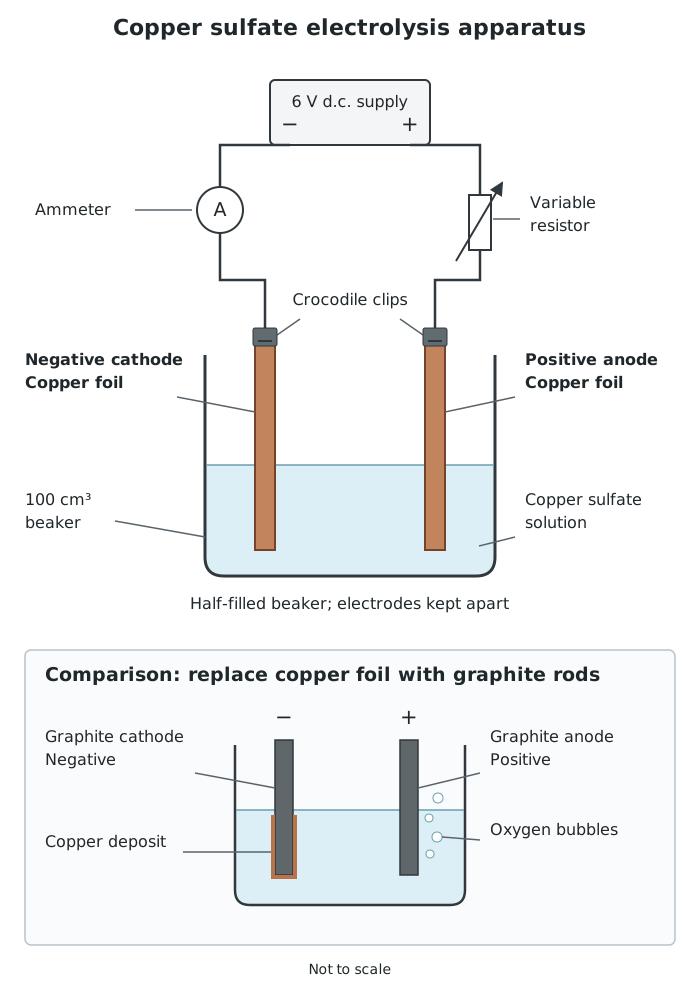
The ammeter measures current; the variable resistor adjusts it. Graphite rods replace copper foil for the comparison.
Record current in amperes and initial and final electrode masses in grams. Calculate each mass change using:
The cathode should have a positive mass change and the anode a negative mass change. Alternatively, record mass gained and mass lost as positive quantities, but label them clearly.
Plot current on the horizontal axis and mass change on the vertical axis. For a fixed time, a larger current transfers more charge, so more copper is deposited at the cathode and more is removed from the anode. Ideally, the mass gained or lost is directly proportional to current: doubling the current doubles the amount of copper transferred.
Suppose the cathode gains 0.08 g at 0.2 A, 0.12 g at 0.3 A, 0.16 g at 0.4 A and 0.20 g at 0.5 A, all for the same electrolysis time. These example values demonstrate the proportional relationship.
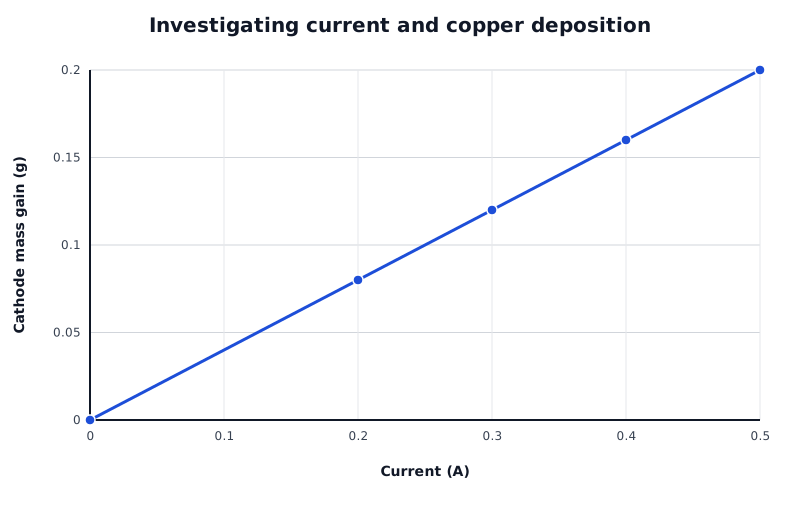
Example values for equal electrolysis times. The straight-line relationship allows interpolation between currents.
Data for Investigating current and copper deposition
| Series | Current (A) | Cathode mass gain (g) |
|---|---|---|
| Example cathode mass gain | 0 | 0 |
| Example cathode mass gain | 0.2 | 0.08 |
| Example cathode mass gain | 0.3 | 0.12 |
| Example cathode mass gain | 0.4 | 0.16 |
| Example cathode mass gain | 0.5 | 0.2 |
To estimate a value at 0.35 A, locate 0.35 on the current axis, move up to the line, then across to the mass axis. Here the estimated cathode gain is 0.14 g. Under ideal conditions, the corresponding anode loss would also be 0.14 g, or a signed mass change of −0.14 g. Use the same interpolation method on your measured anode graph.
Real mass gains and losses may not match exactly. Copper can flake off the cathode during handling, or remaining liquid can affect a mass reading. Gently rinsing rather than wiping the electrodes, drying them fully and keeping current and time controlled improve the measurements. Repeat each current several times and calculate mean mass changes to check the reliability of the trend.
Replace the copper foil with two graphite rods and connect them to the same positive and negative terminals. Switch on and record what happens at each electrode.
| Electrode | Observation | Product |
|---|---|---|
| Negative graphite cathode | Brown/pink solid coats the electrode | Copper |
| Positive graphite anode | Bubbles of colourless gas | Oxygen |
Copper ions still gain electrons at the cathode, so copper is deposited there. At the inert anode, the electrode cannot supply copper ions. The water in the solution provides hydroxide ions, . These lose electrons in preference to the sulfate ions, producing oxygen; sulfate ions remain in solution.
To identify the oxygen, collect the gas in a small inverted test tube initially filled with solution over the anode. Oxygen relights a glowing splint. Carry out the gas test separately from any use of propanone, with the flammable solvent removed. Switch off the power before dismantling the apparatus.
At the cathode, with either electrode material, copper ions gain electrons. This is reduction:
At a copper anode, copper atoms lose electrons. This is oxidation:
At a graphite anode, hydroxide ions lose electrons and oxygen forms. This is oxidation:
The electron positions show the distinction: reduction uses electrons, whereas oxidation releases them.
Get unlimited access to all revision notes, key terms, and exam tips.
| Electrodes | Cathode (−) | Anode (+) |
|---|---|---|
| Graphite, inert | Copper deposited | Oxygen produced from hydroxide ions |
| Copper, active | Copper deposited; mass increases | Copper dissolves as ions; mass decreases |
Oxygen relights a glowing splint. Ideally, copper electrodes give equal mass gain and loss, with approximately constant copper-ion concentration.
Clean, label and weigh copper electrodes → electrolyse for 20 minutes at constant current → switch off → rinse, use propanone safely, dry and reweigh.
Investigate 0.2, 0.3, 0.4 and 0.5 A, keeping time constant. Plot mass change against current; interpolate to estimate at 0.35 A. Repeat each current and calculate means.
For copper purification, the impure copper is the positive anode; the thin sheet of pure copper is the negative cathode.
Distinguish observations from products: a brown/pink deposit is observed; copper is the identified product.
Dry electrodes fully before weighing, and do not wipe off the deposited copper.
Keep electrolysis time constant when investigating current. Repeating at different currents is not the same as repeating each current to check reliability.
Higher tier: balance both atoms and charge in half equations. Electrons appear on the left for reduction and on the right for oxidation.
Electrolysis
The use of electrical energy from a direct current supply to decompose an electrolyte.
Electrolyte
An ionic substance that conducts electricity when molten or dissolved in water because its ions can move.
Cathode
The negative electrode in electrolysis, where positive ions gain electrons.
Anode
The positive electrode in electrolysis, where electrons are lost.
Inert electrode
An electrode that conducts electricity without taking part chemically in the electrode reactions.
Anode sludge
Solid impurities that collect beneath the anode during electrolytic purification of a metal.
Oxidation
Loss of electrons during a reaction.
Reduction
Gain of electrons during a reaction.
Put your knowledge into practice — try past paper questions for Combined Science
Electrolysis
The use of electrical energy from a direct current supply to decompose an electrolyte.
Electrolyte
An ionic substance that conducts electricity when molten or dissolved in water because its ions can move.
Cathode
The negative electrode in electrolysis, where positive ions gain electrons.
Anode
The positive electrode in electrolysis, where electrons are lost.
Inert electrode
An electrode that conducts electricity without taking part chemically in the electrode reactions.
Anode sludge
Solid impurities that collect beneath the anode during electrolytic purification of a metal.
Oxidation
Loss of electrons during a reaction.
Reduction
Gain of electrons during a reaction.
For fixed time, mass gained or lost is ideally directly proportional to current.
Get unlimited access to all revision notes, key terms, and exam tips.