Loading…


Loading…
Loading…
Loading…
Edexcel GCSE Combined Science · 1SC0
Edexcel 1SC0 · Cells and Microscopy Check the specification (PDF) (opens in a new tab)
A cell is the basic unit of a living organism. Its sub-cellular structures are the smaller parts that work together to keep it alive. Some contain genetic instructions, some make proteins, and others control the movement of substances or release energy.
Animal and plant cells are eukaryotic: their DNA is enclosed in a nucleus. Bacterial cells are prokaryotic: they have no nucleus, so their chromosomal DNA lies in the cytoplasm. Bacteria are generally much smaller than animal and plant cells, but they still carry out the processes needed for life.
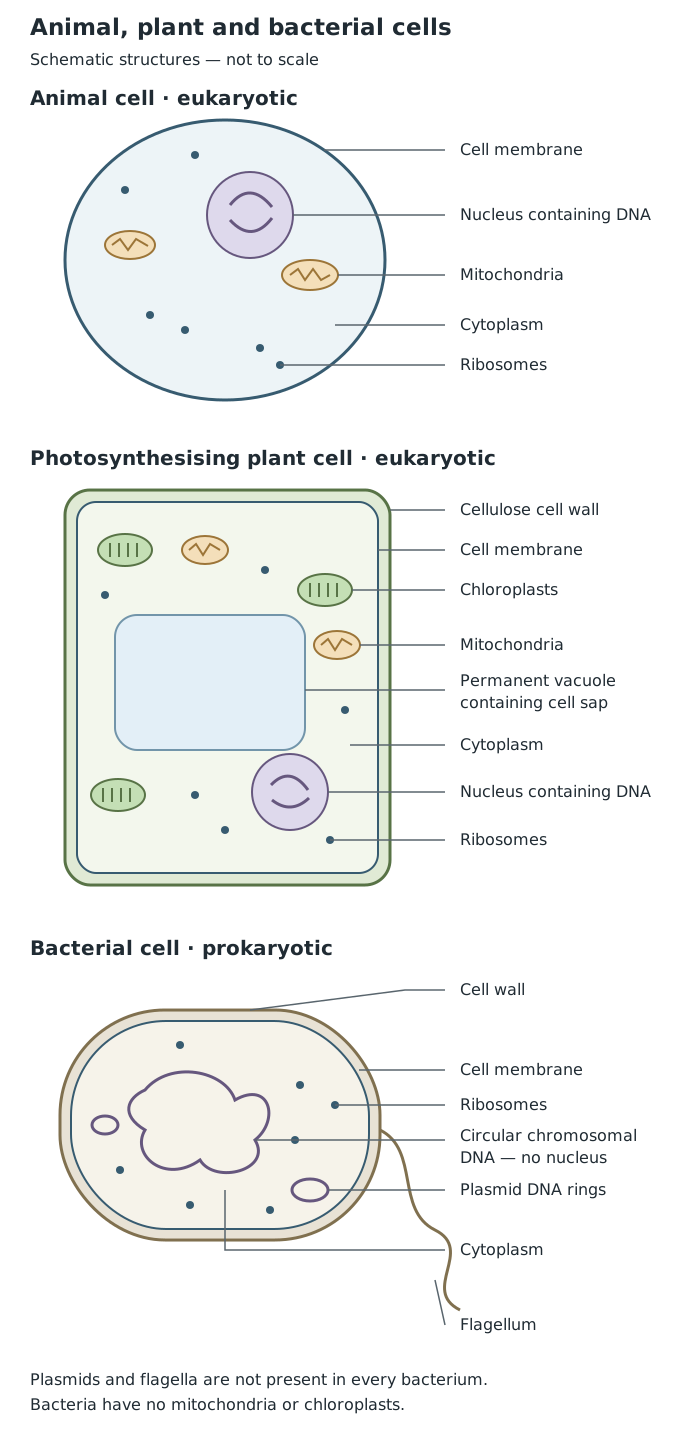
Typical cell structures compared. Bacteria lack a nucleus; animal and plant cells contain one. Not to scale.
The nucleus contains DNA, the genetic material carrying instructions for making proteins. These proteins are needed to build cell structures and carry out cell processes, so the nucleus controls the cell's activities. A nuclear membrane encloses it.
The cell membrane forms the boundary of the cell and controls which substances enter and leave. This allows the cell to take in substances it needs and remove waste products. Inside the membrane is the cytoplasm, where many chemical reactions take place. It contains enzymes, which speed up these reactions.
Mitochondria are the sites of aerobic respiration reactions. Respiration releases energy for activities such as movement and building new molecules. Cells with high energy demands often contain many mitochondria.
Ribosomes are the sites of protein synthesis, meaning that they make proteins. This connects their role to that of the nucleus: DNA supplies the instructions, while ribosomes make the proteins.
| Structure | Main function |
|---|---|
| Nucleus | Contains DNA and controls cell activities |
| Cell membrane | Controls movement of substances into and out of the cell |
| Cytoplasm | Site of many chemical reactions |
| Mitochondria | Site of aerobic respiration reactions that release energy |
| Ribosomes | Site of protein synthesis |
Plant cells have the shared structures above, together with features that help them make food and remain supported.
Chloroplasts are the sites of photosynthesis. They contain the green pigment chlorophyll, which absorbs the light needed for photosynthesis. This process makes food for the plant. Chloroplasts occur in photosynthesising plant cells; not every plant cell contains them.
A cell wall lies outside the cell membrane. It is made of cellulose and provides strength and support. The wall and membrane have different roles: the wall supports the cell, while the membrane controls the movement of substances.
The large permanent vacuole contains cell sap. It helps keep the cell firm, contributing to the support of the plant.
Plant cells also need mitochondria. Photosynthesis makes food, whereas respiration releases energy that the cell can use: these are different processes.
A bacterium has a cell membrane and cytoplasm, with the same basic roles as in animal and plant cells. It also has ribosomes, which make proteins. However, it does not have a nucleus, mitochondria or chloroplasts.
Its main genetic information is carried by chromosomal DNA, usually a single circular DNA molecule in the cytoplasm. This supplies instructions for making proteins and carrying out cell activities, without being enclosed in a nucleus.
Bacteria may also contain plasmids. These are small rings of DNA separate from the chromosomal DNA and carry additional genes.
Some bacteria have one or more flagella. A flagellum is a long, tail-like structure that enables the bacterium to move. Bacteria also have a supporting cell wall, but it is not made of cellulose like a plant cell wall.
The key comparison is therefore not whether a cell has DNA: all three cell types do. It is whether that DNA is enclosed in a nucleus.
In a multicellular organism, different cells perform different jobs. A specialised cell has features adapted to its particular function. Specialisation can involve a distinctive shape, additional surface structures or larger numbers of particular organelles.
Sperm cells and egg cells are specialised for reproduction. Ciliated epithelial cells are specialised to move material along a surface.
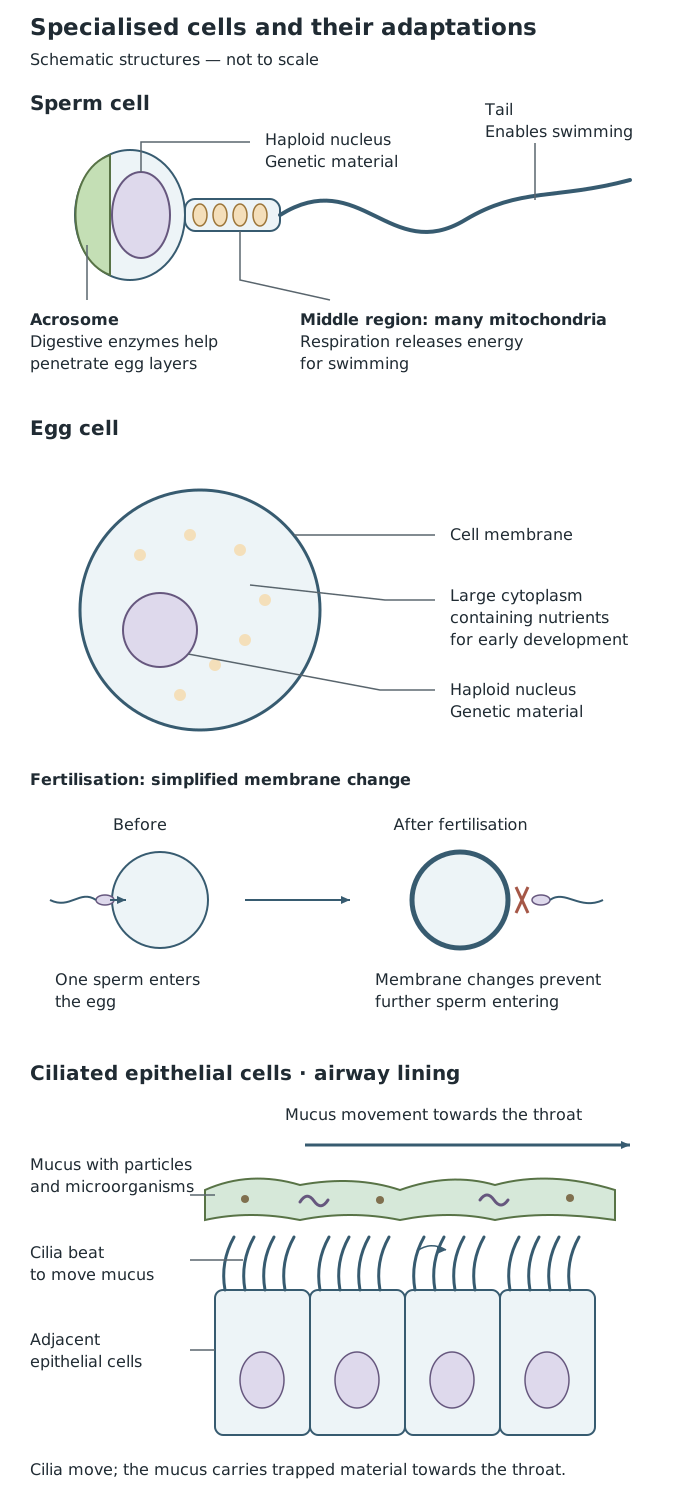
Specialised structures help sperm reach an egg, eggs support early development, and ciliated cells clear mucus from the airways.
A sperm cell must move towards an egg and deliver its genetic material. Its structures support different stages of this task.
The egg also has a haploid nucleus. When the two nuclei fuse during fertilisation, their chromosome sets combine, restoring the normal number in the fertilised egg.
An egg cell contributes genetic material and supports the early stages of development after fertilisation.
Its haploid nucleus contains half the normal number of chromosomes, so it can combine with the sperm's nucleus. Its large amount of cytoplasm contains nutrients needed for the growth of the early embryo.
After fertilisation by one sperm, the egg's cell membrane changes to prevent further sperm from entering. This ensures that only one sperm contributes genetic material to the fertilised egg.
Epithelial cells form linings and coverings in the body. Ciliated epithelial cells line parts of the airways, including the trachea and bronchi. Their exposed surfaces have tiny, hair-like projections called cilia.
Mucus traps particles and microorganisms in the airways. The cilia beat to move this mucus towards the throat, where it can be coughed out or swallowed. Swallowed mucus passes to the stomach. This helps remove trapped material from the airways rather than allowing it to remain near the lungs.
Here, the adaptation is a moving surface: the cilia move the mucus, while the mucus carries the trapped particles.
| Structure | Function |
|---|---|
| Nucleus | DNA instructions; controls cell activities |
| Cell membrane |
Link each adaptation to its function: for example, many mitochondria release energy by respiration for the sperm's tail movement.
Plant cells have mitochondria as well as chloroplasts: they respire as well as photosynthesise.
Bacteria have DNA and ribosomes, but no nucleus. Their chromosomal DNA is not enclosed in a nuclear membrane.
Describe a haploid nucleus as containing half the normal number of chromosomes, not half a chromosome.
Cilia move mucus; the mucus traps particles and microorganisms.
Eukaryotic cell
A cell with its DNA enclosed in a nucleus; animal and plant cells are eukaryotic.
Prokaryotic cell
A cell without a nucleus; its chromosomal DNA lies in the cytoplasm. Bacterial cells are prokaryotic.
Organelle
A structure inside a cell that performs a particular function, such as a mitochondrion or chloroplast.
Nucleus
A membrane-enclosed structure containing DNA that provides instructions for making proteins and controls cell activities.
Cell membrane
The boundary of a cell that controls which substances enter and leave.
Cytoplasm
The material inside a cell where many chemical reactions take place.
Mitochondrion
An organelle where aerobic respiration reactions take place, releasing energy for cell activities.
Ribosome
A small sub-cellular structure where proteins are made.
Chloroplast
An organelle containing chlorophyll that absorbs light for photosynthesis.
Permanent vacuole
A large compartment in a plant cell containing cell sap and helping to keep the cell firm.
Cell wall
A strong layer outside the cell membrane that supports the cell. Plant cell walls are made of cellulose.
Chromosomal DNA
The main DNA molecule carrying a cell's genetic information; in bacteria it is circular and lies in the cytoplasm.
Plasmid
A small ring of DNA separate from a bacterium's chromosomal DNA, carrying additional genes.
Flagellum
A long, tail-like structure that enables a cell, such as a bacterium, to move.
Specialised cell
A cell with structures adapted to carry out a particular function.
Acrosome
A cap on the head of a sperm cell containing digestive enzymes that help the sperm penetrate an egg's outer layers.
Haploid nucleus
A nucleus containing one set of chromosomes: half the normal number found in body cells.
Fertilisation
The fusion of the nuclei of a sperm cell and an egg cell.
Cilia
Short, hair-like projections on the surface of some cells that beat to move material along.
Put your knowledge into practice — try past paper questions for Combined Science
Eukaryotic cell
A cell with its DNA enclosed in a nucleus; animal and plant cells are eukaryotic.
Prokaryotic cell
A cell without a nucleus; its chromosomal DNA lies in the cytoplasm. Bacterial cells are prokaryotic.
Organelle
A structure inside a cell that performs a particular function, such as a mitochondrion or chloroplast.
Nucleus
A membrane-enclosed structure containing DNA that provides instructions for making proteins and controls cell activities.
Cell membrane
The boundary of a cell that controls which substances enter and leave.
Cytoplasm
The material inside a cell where many chemical reactions take place.
Mitochondrion
An organelle where aerobic respiration reactions take place, releasing energy for cell activities.
Ribosome
A small sub-cellular structure where proteins are made.
Chloroplast
An organelle containing chlorophyll that absorbs light for photosynthesis.
Permanent vacuole
A large compartment in a plant cell containing cell sap and helping to keep the cell firm.
Cell wall
A strong layer outside the cell membrane that supports the cell. Plant cell walls are made of cellulose.
Chromosomal DNA
The main DNA molecule carrying a cell's genetic information; in bacteria it is circular and lies in the cytoplasm.
Plasmid
A small ring of DNA separate from a bacterium's chromosomal DNA, carrying additional genes.
Flagellum
A long, tail-like structure that enables a cell, such as a bacterium, to move.
Specialised cell
A cell with structures adapted to carry out a particular function.
Acrosome
A cap on the head of a sperm cell containing digestive enzymes that help the sperm penetrate an egg's outer layers.
Haploid nucleus
A nucleus containing one set of chromosomes: half the normal number found in body cells.
Fertilisation
The fusion of the nuclei of a sperm cell and an egg cell.
Cilia
Short, hair-like projections on the surface of some cells that beat to move material along.
| Controls entry and exit of substances |
| Mitochondria | Aerobic respiration; energy release |
| Ribosomes | Protein synthesis |
| Plant cell wall | Cellulose; strength and support |
| Chloroplasts | Chlorophyll absorbs light for photosynthesis |
| Permanent vacuole | Cell sap; keeps the plant cell firm |
| Bacterial chromosomal DNA | Main genetic instructions |
| Plasmid DNA | Additional genes |
| Flagella | Movement |
Plant cells have mitochondria and chloroplasts. Bacteria have ribosomes but no mitochondria or chloroplasts.
Haploid + haploid at fertilisation → normal chromosome number restored.