Loading…


Loading…
Loading…
Loading…
Edexcel GCSE Combined Science · 1SC0
Edexcel 1SC0 · Medicines and Non-Communicable Diseases Check the specification (PDF) (opens in a new tab)
A non-communicable disease cannot be passed from one person to another. Examples include cardiovascular diseases, many cancers, some lung and liver diseases, and diseases influenced by nutrition.
These conditions often develop through the interaction of several risk factors, rather than one cause acting alone. Lifestyle factors include diet, exercise, smoking and alcohol consumption. Age, inherited characteristics and environmental exposures can also affect risk.
One risk factor can contribute to several diseases: smoking increases the risk of cardiovascular disease and lung cancer. Equally, one disease can have several risk factors: smoking, an unhealthy diet and insufficient exercise can all contribute to cardiovascular disease. Their effects can combine, increasing a person's overall risk.
A risk factor changes the chance of developing a disease; it does not make the outcome certain. A smoker will not necessarily develop lung cancer. An association between a factor and a disease is a correlation. Establishing that the factor causes disease also requires evidence of a causal relationship, such as an explanation of how it damages the body.
Food provides energy and nutrients. If energy intake repeatedly exceeds energy used through activity and other body processes, body mass increases. Over time, excess fat accumulation can lead to obesity, which increases the risk of cardiovascular disease and Type 2 diabetes. Exercise increases energy use and helps people maintain a healthy body mass.
Too little food can mean that energy needs are not met. An unbalanced diet can also fail to provide essential nutrients, even if it supplies enough energy. Both can cause malnutrition. For example, insufficient iron can cause anaemia, while insufficient calcium can contribute to weak or brittle bones.
Body mass alone therefore does not give a complete picture of nutritional health. Someone can have excess body fat but still lack particular nutrients. A balanced diet must provide suitable amounts of energy as well as the nutrients the body needs.
Body mass index, or BMI, compares a person's mass with their height. A taller person would usually be expected to have a greater body mass, so height must be taken into account.
For an adult with a mass of 96 kg and a height of 1.60 m, the calculation is . This is above 30, indicating obesity and an increased risk of conditions such as Type 2 diabetes. It does not diagnose diabetes.
A low BMI may indicate undernutrition, but BMI cannot reveal whether particular vitamins or minerals are lacking. It also does not distinguish muscle from fat or show where fat is stored. It is a useful screening measure, not a complete assessment of health.
Fat distribution matters as well as total body mass. Excess fat stored around the abdomen is associated with an increased risk of Type 2 diabetes. Waist-to-hip ratio gives an indication of this distribution.
Both circumferences must use the same units. For an adult woman with a waist circumference of 90 cm and a hip circumference of 100 cm, the ratio is . The units cancel, so the answer has no unit.
A ratio above 0.85 for women or 1.0 for men is associated with increased Type 2 diabetes risk. The example ratio exceeds the threshold for women. Like BMI, it indicates risk rather than proving that someone has a disease; it cannot identify a nutrient deficiency.
Excessive alcohol consumption over a prolonged period can damage the liver and increase the risk of liver disease, liver failure and liver cancer. Heavy drinking can also be associated with vitamin deficiencies, adding further risks to health.
Smoking increases cardiovascular disease risk because chemicals in tobacco smoke damage artery walls. This encourages atherosclerosis: fatty plaques build up and narrow arteries. An unhealthy diet can contribute to this process, illustrating how risk factors interact.
The coronary arteries supply the heart muscle with oxygenated blood. Narrowing these arteries reduces the oxygen available for aerobic respiration. Restricted blood flow can cause chest pain called angina; a complete blockage can cause a heart attack. Blood clots can also block vessels, including those supplying the brain, causing a stroke.
The effects of lifestyle factors occur at several scales. Locally, a community in which smoking, unhealthy diets or heavy drinking are common may have more associated disease. This increases demand on local medical services.
Nationally, widespread obesity and cardiovascular disease increase healthcare costs and can prevent people from working. UK measures such as the sugar tax aim to reduce unhealthy dietary choices. Tobacco taxes, standardised packaging and advertising restrictions aim to reduce smoking and therefore the incidence of smoking-related disease.
Globally, differences in access to food and nutrients contribute to differences in nutritional disease. Populations with inadequate food supplies may experience more undernutrition and deficiency diseases, while populations with widespread excess energy intake may experience more obesity-related disease. Ill health can reduce the workforce and hinder economic development. These patterns reflect access to resources and living conditions as well as individual choices.
Cardiovascular treatments can reduce the processes that damage arteries, improve blood flow, or reduce future risk. These are different jobs, so treatments are often used together.
Life-long medication includes statins, which reduce cholesterol production in the liver. This slows the build-up of fatty plaques and reduces coronary heart disease risk. Antihypertensive medicines lower blood pressure, reducing damage to arteries. Low-dose aspirin reduces blood-clot formation.
Medication can reduce risk without an operation, but its benefit depends on continued treatment. It does not physically hold open or bypass a severely narrowed artery, so medication alone may not meet every patient's needs.
Surgical procedures can improve blood flow more directly. A stent is expanded inside a narrowed coronary artery using a small balloon. The balloon is removed, leaving the stent holding the artery open. This improves blood flow and can reduce heart attack risk. Stents can last a long time, but blood clots may form around them.
In coronary bypass surgery, a healthy blood vessel from elsewhere in the body provides an alternative route around a blocked section. It restores a route for blood to reach the heart muscle, but requires surgery and does not remove the lifestyle factors contributing to disease.
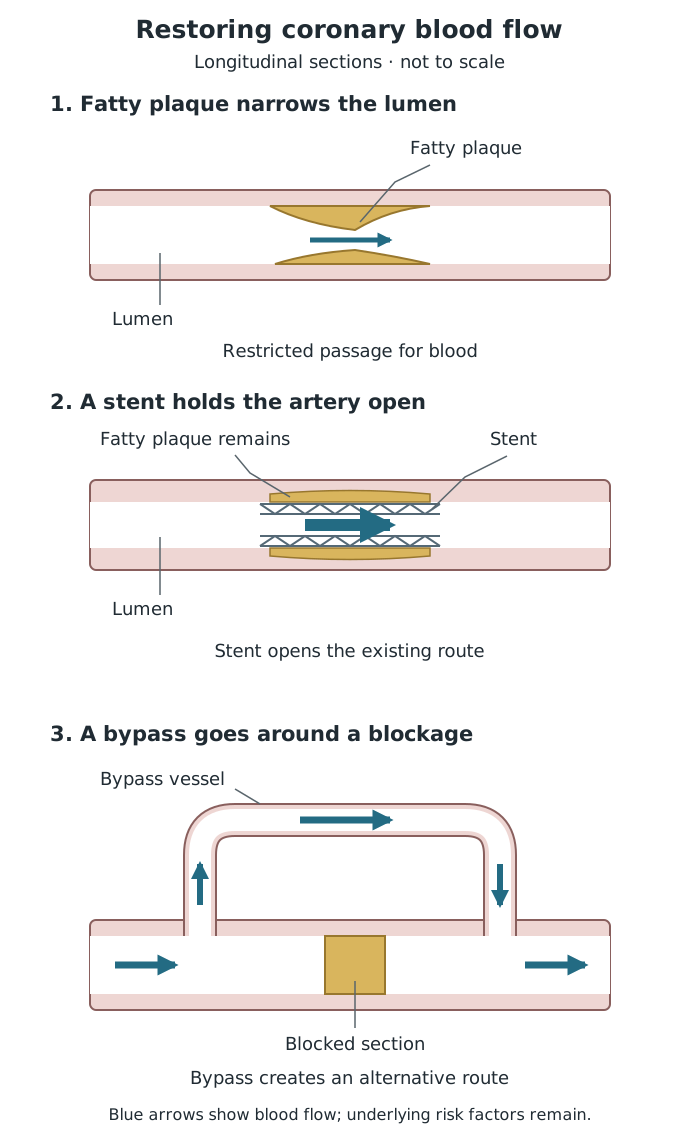
A stent holds an artery open; a bypass provides another route around a blockage. Both aim to improve blood supply to the heart muscle.
For some severe conditions, a heart transplant is an option. However, the donated heart may be rejected or may not work successfully, and permanent medication is needed to help prevent rejection.
Stopping smoking reduces further artery damage. A balanced diet with controlled energy intake helps maintain a healthy body mass; reducing saturated fat and cholesterol intake can help limit plaque build-up, while reducing salt helps lower the risk of high blood pressure. Regular exercise also helps maintain a healthy body mass.
Lifestyle changes address several risk factors together and avoid an operation, but they require sustained changes in behaviour. They cannot be relied on to restore blood flow through an already severely blocked artery.
The most suitable approach depends on the patient's condition. For example, a stent may improve blood flow through a narrowed artery, while medication and lifestyle changes reduce the risk of further problems. Successful treatment of an existing blockage is not the same as removing the causes of future disease.
Get unlimited access to all revision notes, key terms, and exam tips.
BMI above 30 indicates obesity. BMI does not distinguish fat from muscle or detect nutrient deficiencies.
Ratios above 1.0 for men or 0.85 for women indicate increased Type 2 diabetes risk. Both measures indicate risk, not a diagnosis.
| Treatment | Main benefit | Important limitation |
|---|---|---|
| Statins | Reduce cholesterol production and slow plaque build-up | Require continued treatment; do not mechanically reopen an artery |
| Antihypertensives / low-dose aspirin | Lower blood pressure / reduce clot formation | Ongoing medication may be needed |
| Stent | Holds a narrowed artery open | Clots can form around it |
| Coronary bypass | Provides a route around a blockage | Requires surgery; risk factors remain |
| Heart transplant | Replaces a severely diseased heart | Rejection risk and permanent medication |
| Lifestyle changes | Reduce several underlying risk factors | Require sustained changes; may not resolve severe blockage |
Treatments can be combined: restoring blood flow and preventing further disease are different aims.
Get unlimited access to all revision notes, key terms, and exam tips.
For BMI, use mass in kilograms and height in metres, and square the height before dividing.
For waist-to-hip ratio, divide waist circumference by hip circumference, using the same units for both. The ratio has no unit.
A risk factor increases the probability of disease; it does not mean that everyone exposed will develop it. Correlation alone does not establish causation.
When evaluating a treatment, link its benefit to how it works, explain a limitation, and reach a conclusion suited to the patient's condition.
Non-communicable disease
A disease that cannot be passed from one organism to another.
Risk factor
A characteristic, behaviour or exposure that increases the chance of developing a disease.
Cardiovascular disease
Disease affecting the heart or blood vessels.
Atherosclerosis
The build-up of fatty plaques in artery walls, which narrows the space through which blood flows.
Obesity
A condition in which excess body fat can damage health.
Malnutrition
Poor nutrition resulting from an insufficient, excessive or unbalanced intake of nutrients.
Body mass index
A measure relating body mass to height, calculated as .
Waist-to-hip ratio
Waist circumference divided by hip circumference, with both measurements in the same units; it indicates how body fat is distributed.
Stent
A small mesh tube placed inside an artery to hold it open and improve blood flow.
Put your knowledge into practice — try past paper questions for Combined Science
Non-communicable disease
A disease that cannot be passed from one organism to another.
Risk factor
A characteristic, behaviour or exposure that increases the chance of developing a disease.
Cardiovascular disease
Disease affecting the heart or blood vessels.
Atherosclerosis
The build-up of fatty plaques in artery walls, which narrows the space through which blood flows.
Obesity
A condition in which excess body fat can damage health.
Malnutrition
Poor nutrition resulting from an insufficient, excessive or unbalanced intake of nutrients.
Body mass index
A measure relating body mass to height, calculated as .
Waist-to-hip ratio
Waist circumference divided by hip circumference, with both measurements in the same units; it indicates how body fat is distributed.
Stent
A small mesh tube placed inside an artery to hold it open and improve blood flow.