Loading…


Loading…
Loading…
Loading…
Edexcel GCSE Combined Science · 1SC0
Edexcel 1SC0 · Inheritance Check the specification (PDF) (opens in a new tab)
Individuals of the same species share many features, but they are not identical. Differences between them are called variation. Humans, for example, differ in height, eye colour and blood group.
An organism’s phenotype is its observable characteristics. These include features such as height as well as characteristics such as blood group, which cannot be identified simply by looking at someone. Phenotype depends on the organism’s genetic makeup and can also be influenced by its environment.
A gene is a section of DNA that influences a characteristic. Different versions of a gene are called alleles, and an organism’s combination of alleles is its genotype.
A single-gene inheritance model follows the alleles of one gene. It is useful for explaining some inherited characteristics, but most phenotypic features are the result of multiple genes, rather than single-gene inheritance. This is called polygenic inheritance: ‘poly’ means many.
With several genes contributing to a characteristic, individuals can inherit many different combinations of alleles. These combinations help produce a wide range of phenotypes.
Eye colour is an example. Several genes influence it, so a simple model with one allele for brown eyes and one for blue eyes does not fully explain its inheritance. Green and hazel eyes are also possible. Height is another polygenic feature: there is not just one gene that determines whether a person is tall or short.
Genetic variation means differences in genetic material between individuals. Two causes are mutation and sexual reproduction, but they contribute in different ways.
A mutation is a change in genetic material. A mutation in a gene can produce a new allele, adding to genetic variation. It may influence a characteristic, although a change in DNA does not necessarily produce an observable change in phenotype.
Sexual reproduction brings together genetic material from two parents. Meiosis, the cell division that produces gametes, creates gametes with different combinations of alleles. Gametes are sex cells, such as sperm and egg cells.
At fertilisation, a male gamete fuses with a female gamete to form a zygote, the first cell of the offspring. Which gametes fuse is random, so offspring receive different combinations of alleles. This explains why siblings can differ even though they have the same biological parents. Sexual reproduction reshuffles existing alleles; mutation can introduce new ones.
An organism’s environment includes the conditions and experiences that affect it during its life. Diet, temperature, light, water availability and injuries can all influence phenotype.
A scar caused by an injury is an acquired characteristic. It developed during the person’s lifetime rather than being inherited through their alleles. Their children do not inherit that scar. Similarly, the accent someone develops depends on the speech they hear, not on an inherited allele for that accent.
Environmental variation also occurs in plants. Differences in water supply or light can affect growth and the condition of leaves. Plants with similar genetic makeup can therefore look different if they grow in different conditions.
Genetic and environmental influences are not always alternatives. Many characteristics are affected by both.
Height provides a useful example. A child inherits alleles from both parents that influence growth, but nutrition during childhood also affects their eventual height. Poor nutrition can limit growth even when the child has inherited alleles associated with being tall.
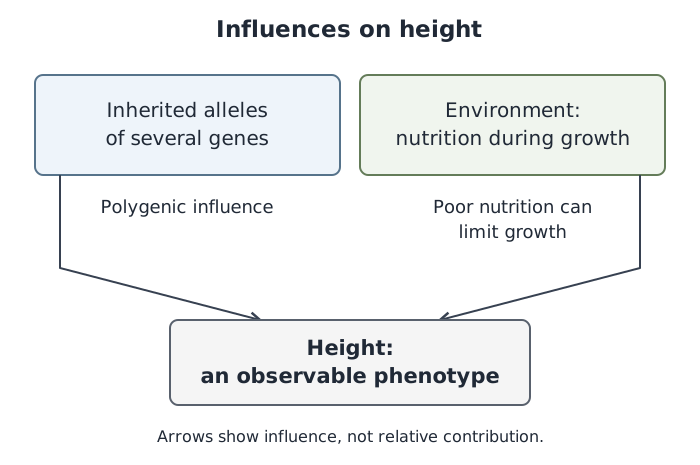
Height is influenced by inherited alleles of several genes and by environmental conditions during growth.
The important distinction is between what an organism inherits and the conditions it experiences. Several genes can influence a feature, while the environment affects how that feature develops. Knowing the genotype alone is therefore not always enough to predict the phenotype.
Get unlimited access to all revision notes, key terms, and exam tips.
| Cause | Key mechanism |
|---|---|
| Mutation | Changes genetic material; can create new alleles. |
| Sexual reproduction | Meiosis produces genetically different gametes; random fertilisation combines alleles from two parents. |
| Environment | Conditions and experiences affect characteristics during life. |
Get unlimited access to all revision notes, key terms, and exam tips.
When explaining genetic variation, name both mutation and sexual reproduction. Mutation changes genetic material; sexual reproduction produces new combinations of alleles.
For a characteristic affected by both genes and environment, name a specific environmental factor and explain its effect, such as poor nutrition limiting growth.
Polygenic means controlled by several genes, not simply having several alleles of one gene.
Acquired characteristics such as scars are not inherited by offspring.
Phenotype
The observable characteristics of an organism, resulting from its genotype and the influence of its environment.
Genotype
The combination of alleles an organism has.
Allele
An alternative version of a gene.
Polygenic inheritance
The inheritance of a characteristic controlled by more than one gene.
Variation
Differences between individuals of the same species.
Genetic variation
Differences in genetic material between individuals, arising through mutation and sexual reproduction.
Mutation
A change in genetic material that can produce a new allele.
Environmental variation
Differences in characteristics caused by the environments organisms experience.
Acquired characteristic
A characteristic that develops during an organism’s lifetime because of environmental influences, rather than being inherited through its alleles.
Put your knowledge into practice — try past paper questions for Combined Science
Phenotype
The observable characteristics of an organism, resulting from its genotype and the influence of its environment.
Genotype
The combination of alleles an organism has.
Allele
An alternative version of a gene.
Polygenic inheritance
The inheritance of a characteristic controlled by more than one gene.
Variation
Differences between individuals of the same species.
Genetic variation
Differences in genetic material between individuals, arising through mutation and sexual reproduction.
Mutation
A change in genetic material that can produce a new allele.
Environmental variation
Differences in characteristics caused by the environments organisms experience.
Acquired characteristic
A characteristic that develops during an organism’s lifetime because of environmental influences, rather than being inherited through its alleles.