Loading…


Loading…
Loading…
Loading…
Edexcel GCSE Combined Science · 1SC0
Edexcel 1SC0 · Inheritance Check the specification (PDF) (opens in a new tab)
Chromosomes are long DNA structures in the nucleus, carrying many genes. A gene is a section of DNA that codes for a protein. Proteins contribute to characteristics, so differences in genes can lead to differences between organisms.
An allele is a version of a gene. Different alleles can code for different forms of a protein, changing its structure or how it works. For example, an allele associated with Huntington's disease produces an altered protein that folds incorrectly. This helps explain the connection between an inherited difference in DNA and a difference in phenotype.
For the paired genes considered in these simple crosses, an individual has two alleles: one inherited from each parent. The combination is its genotype; the resulting observable characteristic is its phenotype. Different genotypes can sometimes produce the same phenotype.
Consider the simple inheritance of height in pea plants. Let represent the dominant allele for tall plants and the recessive allele for short plants.
A dominant allele is expressed when just one copy is present. A recessive allele is expressed only when both copies are recessive in this model.
| Genotype | Description | Phenotype |
|---|---|---|
| Homozygous dominant: two identical dominant alleles | Tall | |
| Heterozygous: two different alleles | Tall | |
| Homozygous recessive: two identical recessive alleles | Short |
The tall phenotype therefore does not reveal whether a plant is or . The short phenotype does identify its genotype as .
Gametes are reproductive cells formed by meiosis. They contain one set of chromosomes rather than the two sets found in diploid cells. In humans, a sperm or egg normally has 23 chromosomes; their fusion at fertilisation produces a zygote with 46 chromosomes.
For a particular gene, each gamete receives only one of the parent's two alleles. A pea plant produces gametes carrying , whereas a plant produces gametes carrying either or , with equal probability. Fertilisation brings together one allele from each parent.
This explains why siblings can inherit different genotypes even when they have the same parents: different gametes can combine.
A monohybrid cross follows one gene. A complete genetic diagram connects parental genotypes, possible gametes and offspring genotypes.
Crossing a homozygous tall plant with a homozygous short plant gives:
Now cross two of these heterozygous plants: . Each parent can produce or gametes. Place one parent's gametes across the top of a Punnett square and the other parent's down the side. Each inner cell combines the allele above it with the allele beside it.
| Gametes | ||
|---|---|---|
The four cells represent equally likely combinations. There is one , two and one , giving a genotype ratio of . Three combinations are tall and one is short, giving a phenotype ratio of tall to short.
Count the combinations producing the requested outcome, then divide by the total number of equally likely combinations:
In the cross, the probability of a short plant is . The probability of a tall plant is .
A different cross gives different outcomes. For , the offspring combinations are , , and . The tall-to-short ratio is , with a probability of each phenotype.
These are predictions, not a fixed schedule of births. Four offspring from two heterozygous parents need not include exactly one short plant. Larger numbers of offspring are more likely to show proportions close to the predicted ratio.
A family pedigree follows a characteristic through generations. Squares represent males and circles represent females. A horizontal line joins parents, with their children connected beneath them. The key explains shading: it may show affected individuals, carriers or particular genotypes.
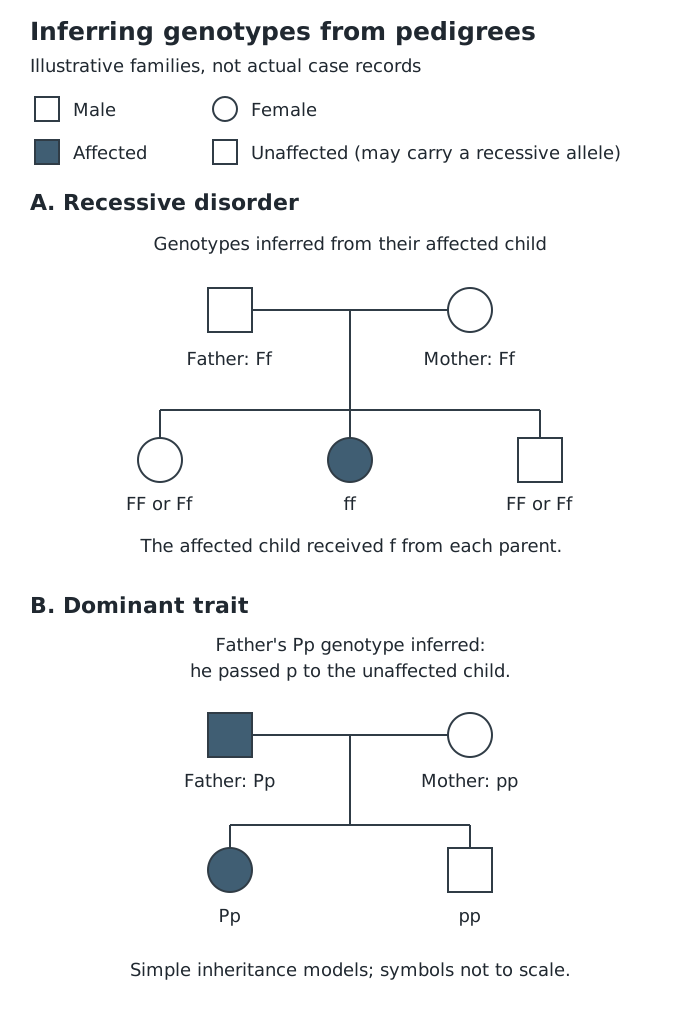
Pedigrees: a child's genotype can reveal an allele carried by a parent. Unaffected people in the recessive pedigree are not automatically free of the disorder allele.
For a recessive disorder such as cystic fibrosis, let represent the dominant allele associated with not having the disorder and the recessive disorder allele. An affected individual is . An unaffected individual could be or ; a heterozygous individual is a carrier.
If two unaffected parents have an affected child, the child must have inherited from each parent. Each parent therefore carries , but must also have because neither is affected. Their genotypes are both .
Using these inferred genotypes in a Punnett square gives , , and . For each child, the probability of being affected is or , and the probability of being a carrier is or . The affected-to-unaffected ratio is .
Polydactyly, which involves extra fingers or toes, can illustrate dominant inheritance. Let represent the dominant polydactyly allele and the recessive allele. In this simple model, and individuals are affected, while individuals are unaffected.
An affected parent who has an unaffected child must carry : the child received a recessive allele from each parent. Because that parent also shows the dominant trait, its genotype must be .
If the other parent is unaffected, it is . The cross gives equal probabilities of and : a chance of polydactyly and a affected-to-unaffected ratio.
Pedigree analysis therefore works by combining what a person's phenotype tells you with the alleles they must have received or passed on. Where the evidence leaves two possible genotypes, retain both possibilities rather than assuming one.
Human body cells normally contain 23 pairs of chromosomes. One pair consists of the sex chromosomes. In the usual pattern, females have and males have . Here, and name chromosomes, not dominant and recessive alleles.
During meiosis, the chromosomes in each pair separate, so each gamete receives just one sex chromosome. Every egg carries an chromosome. A sperm carries either or , with an equal probability of each in this model.
At fertilisation, an -bearing sperm joining an egg produces an zygote, which develops as female in the usual pattern. A -bearing sperm joining an egg produces an zygote, which develops as male. The sex chromosome contributed by the sperm therefore determines which combination forms.
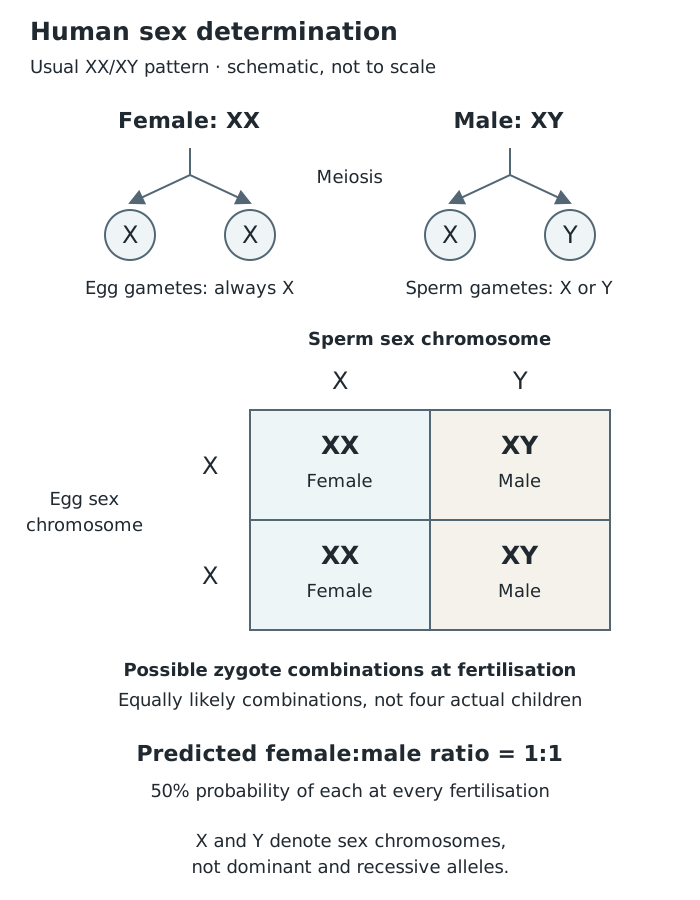
Eggs contribute X; sperm contribute X or Y. Fertilisation gives equally likely XX and XY combinations in the usual human pattern.
The genetic diagram follows the same sequence as other crosses: parents, gametes, then the combinations possible at fertilisation. The two outcomes and two outcomes give a predicted female-to-male ratio of . The probability of either outcome is for each fertilisation. This does not mean that a family must have equal numbers of girls and boys.
Get unlimited access to all revision notes, key terms, and exam tips.
Each gamete carries one allele of the gene. Fertilisation combines one allele from each parent in a zygote.
| Cross | Genotype outcomes | Phenotype outcomes |
|---|---|---|
| All | All dominant | |
| dominant: recessive | ||
| dominant: recessive |
Multiply probability by to express it as a percentage. Each fertilisation is independent.
Get unlimited access to all revision notes, key terms, and exam tips.
Use the same letter for both alleles: a capital for the dominant allele and lower case for the recessive allele. Define what each represents.
Put one allele from each parent into each Punnett-square cell: gametes carry one allele, not the parent's complete genotype.
Label ratios clearly. A genotype ratio of 1:2:1 can give a phenotype ratio of 3:1.
Read the pedigree key before interpreting shading. An unaffected person is not necessarily free of a recessive disorder allele.
Probabilities apply to each fertilisation independently; a 25% chance does not guarantee one affected child in every four.
For human sex determination, show eggs carrying X and sperm carrying either X or Y, not the full parental XX or XY pair.
Chromosome
A structure made from a long DNA molecule, found in the nucleus of a cell. Chromosomes carry genes.
Gene
A section of DNA that codes for a protein and can therefore contribute to a characteristic.
Allele
An alternative version of a gene.
Dominant allele
An allele expressed in the phenotype when one copy is present, including in a heterozygous individual.
Recessive allele
An allele expressed in the phenotype only when two copies are present in the simple inheritance patterns studied here.
Homozygous
Having two identical alleles of a particular gene, such as or .
Heterozygous
Having two different alleles of a particular gene, such as .
Genotype
The combination of alleles an organism has, either for a particular gene or more generally.
Phenotype
An organism's observable characteristics, resulting from its genotype and environmental influences.
Gamete
A reproductive cell, such as a sperm or egg, containing one set of chromosomes: half the number found in a diploid body cell.
Zygote
The diploid cell formed when two haploid gametes fuse at fertilisation.
Monohybrid inheritance
The inheritance of a characteristic controlled by a single gene.
Punnett square
A grid showing the possible combinations of parental alleles in offspring.
Family pedigree
A diagram tracing the inheritance of a characteristic through generations of a family.
Carrier
A heterozygous individual who has an allele for a recessive disorder without showing the disorder, but can pass that allele to offspring.
Sex chromosome
A chromosome involved in determining biological sex. In the usual human pattern, females have XX and males have XY.
Put your knowledge into practice — try past paper questions for Combined Science
Chromosome
A structure made from a long DNA molecule, found in the nucleus of a cell. Chromosomes carry genes.
Gene
A section of DNA that codes for a protein and can therefore contribute to a characteristic.
Allele
An alternative version of a gene.
Dominant allele
An allele expressed in the phenotype when one copy is present, including in a heterozygous individual.
Recessive allele
An allele expressed in the phenotype only when two copies are present in the simple inheritance patterns studied here.
Homozygous
Having two identical alleles of a particular gene, such as or .
Heterozygous
Having two different alleles of a particular gene, such as .
Genotype
The combination of alleles an organism has, either for a particular gene or more generally.
Phenotype
An organism's observable characteristics, resulting from its genotype and environmental influences.
Gamete
A reproductive cell, such as a sperm or egg, containing one set of chromosomes: half the number found in a diploid body cell.
Zygote
The diploid cell formed when two haploid gametes fuse at fertilisation.
Monohybrid inheritance
The inheritance of a characteristic controlled by a single gene.
Punnett square
A grid showing the possible combinations of parental alleles in offspring.
Family pedigree
A diagram tracing the inheritance of a characteristic through generations of a family.
Carrier
A heterozygous individual who has an allele for a recessive disorder without showing the disorder, but can pass that allele to offspring.
Sex chromosome
A chromosome involved in determining biological sex. In the usual human pattern, females have XX and males have XY.