Loading…


Loading…
Loading…
Loading…
Edexcel GCSE Combined Science · 1SC0
Edexcel 1SC0 · Material Cycles Check the specification (PDF) (opens in a new tab)
Water moves continually between non-living stores, such as oceans, rivers, soil and the atmosphere, and living organisms. This movement is the water cycle. Water is recycled rather than used once and lost.
Organisms need water as a solvent in which metabolic reactions can take place and as a medium for transporting substances. Plants also use water as a reactant in photosynthesis. The water cycle replenishes freshwater supplies on land, making water available to organisms and helping to maintain ecosystems.
Energy from the Sun drives evaporation from oceans, lakes, rivers and soil. Liquid water changes into water vapour, a gas, and enters the atmosphere. When seawater evaporates, dissolved salts remain behind: it is the water that enters the air.
Plants also return water to the atmosphere through transpiration. Roots absorb water from the soil, and xylem carries it through the plant. Water evaporates from leaf cells and then diffuses out through tiny pores called stomata.
As moist air rises and cools, water vapour condenses into tiny liquid droplets that form clouds. When droplets or ice crystals become large enough to fall, water returns to the surface as precipitation: rain, snow, sleet or hail.
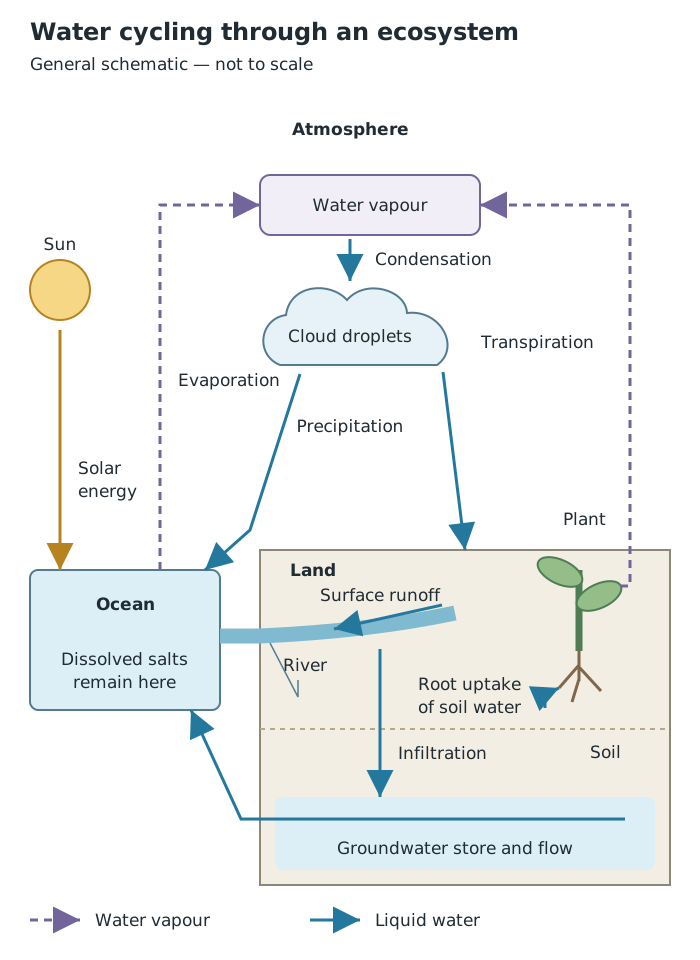
Water moves between surface stores, the atmosphere, underground stores and organisms. Solar energy drives evaporation.
Some precipitation flows downhill over the land as surface runoff, reaching streams and rivers that carry it towards lakes and oceans. Some enters the soil by infiltration. Water can be stored underground as groundwater or move slowly towards rivers and the sea.
Plants take up soil water through their roots. Animals obtain water by drinking and eating. Water returns to the surroundings through processes such as transpiration, excretion, sweating and the loss of water vapour in exhaled air. Evaporation can then return it to the atmosphere, continuing the cycle.
These pathways connect the living and non-living parts of an ecosystem. They also explain why the total amount of water is not the same thing as the amount of fresh water available in a particular place.
A drought is a prolonged period of unusually low rainfall. Rivers, reservoirs and groundwater stores may not be replenished quickly enough to replace the water being used. Demand from homes and agriculture can then exceed the available freshwater supply, while ecosystems also receive less water.
Conserving water, storing it and treating water for reuse can reduce pressure on supplies. In coastal areas, seawater provides another possible source, but its dissolved salts must be removed before it can supply drinking water.
Potable water is water that is safe to drink. It must contain acceptably low levels of harmful microorganisms and dissolved substances. It does not have to be chemically pure: safe drinking water can still contain small amounts of dissolved minerals.
Desalination removes dissolved salts from seawater or other salty water. One method is distillation. Seawater is heated until water boils and becomes vapour. The dissolved salts remain behind. The vapour is then cooled in a condenser, changing back into liquid water, which is collected separately.
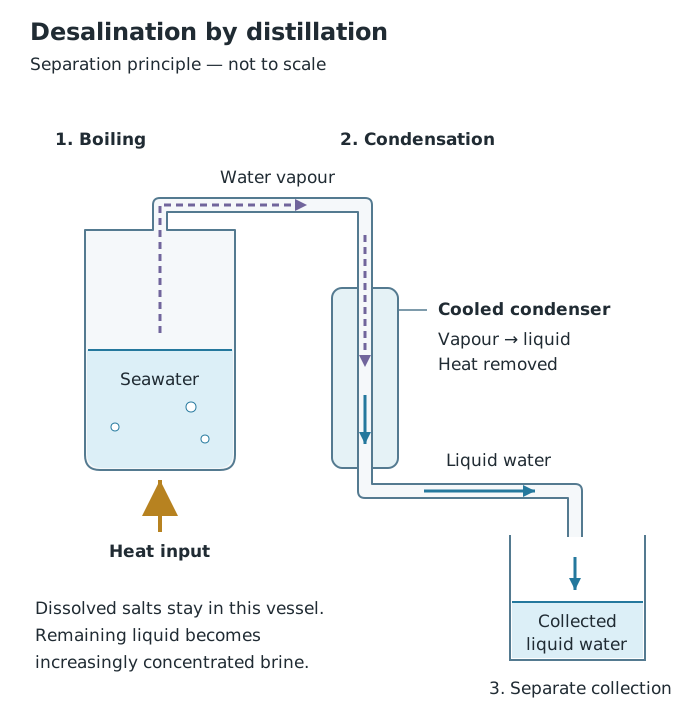
Distillation separates water from dissolved salts by boiling the water and then condensing its vapour.
This resembles the evaporation and condensation stages of the natural water cycle, but heating and cooling are deliberately controlled to collect the water.
Another method, reverse osmosis, uses high pressure to force water through a partially permeable membrane. Water passes through while the salts are retained on the other side.
Desalination can provide a supply when rainfall and local freshwater stores are insufficient. However, heating large volumes of water or pumping them at high pressure requires substantial energy, making production expensive. If fossil fuels supply that energy, carbon dioxide emissions increase. The concentrated salty waste, called brine, must also be managed carefully because careless disposal can damage aquatic ecosystems.
Freshwater does not usually need desalination, but it may contain suspended particles and harmful microorganisms. Screening removes large debris, sedimentation allows particles to settle, and filtration removes remaining small solid particles. Disinfection, for example by adding chlorine, kills harmful microorganisms. Dissolved substances must also be checked to ensure that their levels are safe.
The treatment needed therefore depends on the starting water: removing dirt and microorganisms is different from removing dissolved salts.
Get unlimited access to all revision notes, key terms, and exam tips.
Importance: replenishes freshwater stores and supplies water for metabolic reactions, transport and photosynthesis.
Low rainfall reduces replenishment of freshwater stores. Demand may exceed supply.
Potable means safe to drink, not chemically pure.
Screening and sedimentation → filtration → disinfection, such as chlorination.
Removing suspended solids and microorganisms does not necessarily remove dissolved salts.
Name the state changes: evaporation is liquid water becoming water vapour; condensation is water vapour becoming liquid water.
Clouds contain tiny liquid droplets or ice crystals, not simply water vapour.
Explain desalination by stating what happens to both the water and the dissolved salts.
Ordinary filtration removes suspended particles, not dissolved salts. Potable water is safe to drink, but need not be chemically pure.
When evaluating desalination, link its reliable water supply to its energy costs and the need to dispose of concentrated brine safely.
Water cycle
The continuous movement of water between the atmosphere, Earth's surface, underground stores and living organisms.
Evaporation
The change of liquid water into water vapour at a surface.
Transpiration
The loss of water vapour from a plant, mainly through evaporation from leaf cells followed by diffusion through stomata.
Condensation
The change of water vapour into liquid water.
Precipitation
Water falling from clouds as rain, snow, sleet or hail.
Surface runoff
Water flowing over the land surface towards streams, rivers, lakes and the sea.
Infiltration
The movement of water from the ground surface into the soil.
Drought
A prolonged period of unusually low rainfall.
Potable water
Water that is safe to drink because harmful microorganisms and dissolved substances are absent or present at acceptably low levels.
Desalination
The removal of dissolved salts from seawater or other salty water.
Distillation
A separation process in which water is boiled and its vapour is cooled and condensed, leaving dissolved salts behind.
Put your knowledge into practice — try past paper questions for Combined Science
Water cycle
The continuous movement of water between the atmosphere, Earth's surface, underground stores and living organisms.
Evaporation
The change of liquid water into water vapour at a surface.
Transpiration
The loss of water vapour from a plant, mainly through evaporation from leaf cells followed by diffusion through stomata.
Condensation
The change of water vapour into liquid water.
Precipitation
Water falling from clouds as rain, snow, sleet or hail.
Surface runoff
Water flowing over the land surface towards streams, rivers, lakes and the sea.
Infiltration
The movement of water from the ground surface into the soil.
Drought
A prolonged period of unusually low rainfall.
Potable water
Water that is safe to drink because harmful microorganisms and dissolved substances are absent or present at acceptably low levels.
Desalination
The removal of dissolved salts from seawater or other salty water.
Distillation
A separation process in which water is boiled and its vapour is cooled and condensed, leaving dissolved salts behind.
Get unlimited access to all revision notes, key terms, and exam tips.