Loading…


Loading…
Loading…
Loading…
Edexcel GCSE Combined Science · 1SC0
Edexcel 1SC0 · Material Cycles Check the specification (PDF) (opens in a new tab)
Plants need nitrogen to make amino acids, the building blocks of proteins. Proteins are needed for growth and include enzymes that control chemical reactions. Although about 78% of the atmosphere is nitrogen gas, plants cannot use this gas directly.
Instead, plant roots absorb nitrogen-containing compounds from the soil, including nitrate ions, , dissolved in soil water. Plants use this nitrogen to build amino acids and proteins. The nitrogen cycle changes nitrogen between different forms and moves it between the atmosphere, soil and living organisms.
Nitrogen-fixing bacteria convert nitrogen gas from the atmosphere into ammonia, which forms ammonium compounds in the soil. Some of these bacteria live freely in soil; others live in root nodules, small swellings on the roots of legumes such as peas, beans and clover.
The partnership in a root nodule benefits both organisms. The plant supplies nutrients to the bacteria, while the bacteria supply nitrogen compounds to the plant. The legume still cannot use nitrogen gas itself: the bacteria carry out the conversion.
Another group, nitrifying bacteria, converts ammonium compounds into nitrites and then nitrates. This process is called nitrification. It makes nitrogen available in a form that plant roots can absorb.
When an animal eats a plant, nitrogen in the plant's proteins passes into the animal. The animal uses it to make its own proteins, so nitrogen moves through food chains.
Dead plants, dead animals and animal waste contain nitrogen compounds. Decomposers, including bacteria and fungi, break down this material and release ammonia or ammonium compounds into the soil. Nitrifying bacteria can then convert these compounds into nitrates, allowing plants to take up the nitrogen again.
Not all bacterial activity increases nitrate availability. Denitrifying bacteria convert nitrates into nitrogen gas, which returns to the atmosphere. They act particularly in oxygen-poor conditions, such as waterlogged soil. This removes nitrates that plants could otherwise absorb and can reduce soil fertility.
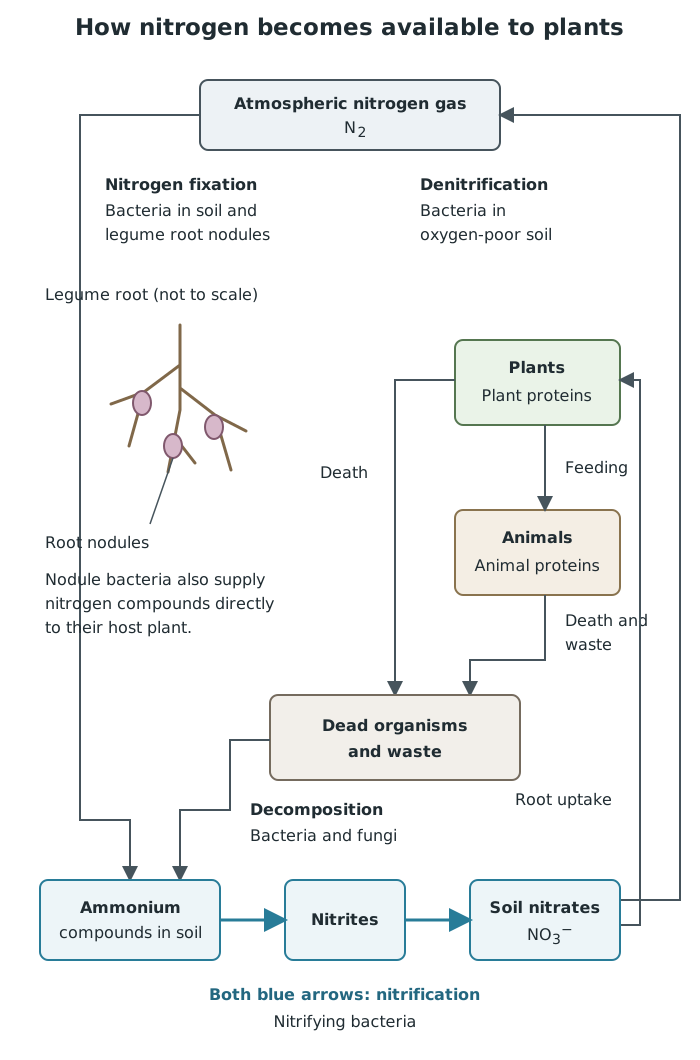
Bacteria change nitrogen into different forms. Nitrification supplies nitrates for plant uptake, while denitrification returns nitrogen to the atmosphere.
Follow the arrows by asking two questions: where is the nitrogen moving, and which process changes its form? Fixation brings atmospheric nitrogen into usable compounds; decomposition recycles nitrogen from organisms; nitrification produces nitrates; denitrification removes them.
Get unlimited access to all revision notes, key terms, and exam tips.
Get unlimited access to all revision notes, key terms, and exam tips.
Distinguish nitrogen-fixing bacteria, which use atmospheric nitrogen, from nitrifying bacteria, which convert ammonium compounds into nitrates.
When explaining crop rotation, link legumes to root-nodule bacteria, then explain how decomposition and nitrification make nitrogen available to the next crop.
Denitrifying bacteria reduce nitrate availability: they convert nitrates into nitrogen gas, especially in oxygen-poor, waterlogged soil.
Nitrate
A nitrogen-containing mineral ion, , absorbed by plant roots and used to make amino acids and proteins.
Nitrogen fixation
The conversion of atmospheric nitrogen gas into nitrogen compounds by nitrogen-fixing bacteria.
Nitrification
The conversion of ammonium compounds into nitrites and then nitrates by nitrifying bacteria in soil.
Denitrification
The conversion of nitrates into nitrogen gas by denitrifying bacteria, particularly in oxygen-poor soil.
Decomposer
An organism, such as a bacterium or fungus, that breaks down dead organisms and waste, returning nutrients to the environment.
Legume
A plant such as a pea, bean or clover that can have nitrogen-fixing bacteria living in nodules on its roots.
Crop rotation
Growing different crops on the same land in successive growing seasons; including legumes can help replenish soil nitrogen.
Fertiliser
A substance added to soil to supply mineral nutrients needed for plant growth.
Put your knowledge into practice — try past paper questions for Combined Science
Nitrate
A nitrogen-containing mineral ion, , absorbed by plant roots and used to make amino acids and proteins.
Nitrogen fixation
The conversion of atmospheric nitrogen gas into nitrogen compounds by nitrogen-fixing bacteria.
Nitrification
The conversion of ammonium compounds into nitrites and then nitrates by nitrifying bacteria in soil.
Denitrification
The conversion of nitrates into nitrogen gas by denitrifying bacteria, particularly in oxygen-poor soil.
Decomposer
An organism, such as a bacterium or fungus, that breaks down dead organisms and waste, returning nutrients to the environment.
Legume
A plant such as a pea, bean or clover that can have nitrogen-fixing bacteria living in nodules on its roots.
Crop rotation
Growing different crops on the same land in successive growing seasons; including legumes can help replenish soil nitrogen.
Fertiliser
A substance added to soil to supply mineral nutrients needed for plant growth.
Growing crops takes nitrogen compounds out of the soil. When crops are harvested, some of that nitrogen leaves the field rather than returning through decomposition. Farmers can replace the lost nutrients with fertilisers.
Artificial fertilisers such as ammonium nitrate supply nitrogen-containing mineral ions. Their nitrate ions dissolve in soil water and are available for root uptake; their ammonium ions can be converted into nitrates by nitrifying bacteria. Supplying nitrogen can improve growth and crop yield when nitrogen availability is limiting growth.
Manure and compost also supply nitrogen, but much of it is contained in organic material. Decomposers must break this material down, and nitrifying bacteria then produce nitrates. Their nitrogen therefore becomes available more gradually than nitrate supplied directly in an artificial fertiliser.
Crop rotation means growing different crops on the same land in successive seasons. A farmer might grow peas or beans in one season and wheat in the next.
The legumes have nitrogen-fixing bacteria in their root nodules. These bacteria bring nitrogen from the atmosphere into the living crop. When roots and other legume residues are left in the soil, decomposers break them down, releasing ammonium compounds. Nitrifying bacteria convert these into nitrates that the following crop can absorb.
Including legumes in a rotation can therefore replenish soil nitrogen and reduce the need for artificial nitrogen fertilisers. The benefit comes from bacterial fixation and the recycling of nitrogen-containing material, not simply from changing the crop.