Loading…


Loading…
Loading…
Loading…
Edexcel GCSE Combined Science · 1SC0
Edexcel 1SC0 · Material Cycles Check the specification (PDF) (opens in a new tab)
An ecosystem contains biotic components, its living organisms, and abiotic components, its non-living surroundings such as air, water and soil. Organisms take materials from these surroundings to build their bodies and carry out life processes. Those materials can later return to the environment and be used again.
For example, a plant absorbs water and mineral ions from the soil and takes in carbon dioxide from the air. An animal obtains materials by eating plants or other animals. When organisms produce waste or die, decomposers break down their biological material, returning materials to the environment. These transfers connect the living and non-living parts of the ecosystem.
Different materials follow different pathways. Water can move between non-living stores through physical processes such as evaporation and condensation, and through organisms by root uptake and transpiration. Carbon moves into plants through photosynthesis, passes between organisms through feeding, and returns to the atmosphere through respiration and combustion. A material cycle is therefore a network of routes, not necessarily one simple loop.
Carbon is part of biological molecules such as glucose. Organisms need carbon-containing molecules both to build their bodies and as nutrients from which energy can be released.
Carbon is stored in several places, including the atmosphere, living biomass, soil and oceans. A store, or reservoir, is a place where a material is held. The carbon cycle transfers carbon between stores, making it available for reuse rather than leaving it permanently locked in dead organisms and waste.
Carbon dioxide in the atmosphere is an abiotic source of carbon. During photosynthesis, plants use light energy to make glucose from carbon dioxide and water. Carbon atoms that were in atmospheric carbon dioxide become part of glucose and can then be used to make other biological molecules. Carbon has moved from the atmosphere into plant biomass.
When an animal eats a plant, some of the plant's carbon becomes part of the animal's body. Carbon can then pass to another animal when it feeds on that animal. Feeding transfers carbon between biotic components; it does not itself return that carbon to the atmosphere.
Plants, animals and microorganisms all respire. During aerobic respiration, glucose reacts with oxygen, releasing energy and producing carbon dioxide and water. The carbon dioxide can pass into the atmosphere, where it is available for photosynthesis again.
Photosynthesis and respiration therefore move carbon in opposite directions between atmospheric carbon dioxide and biological molecules. Plants carry out both processes: they take in carbon dioxide for photosynthesis, but also release it through respiration.
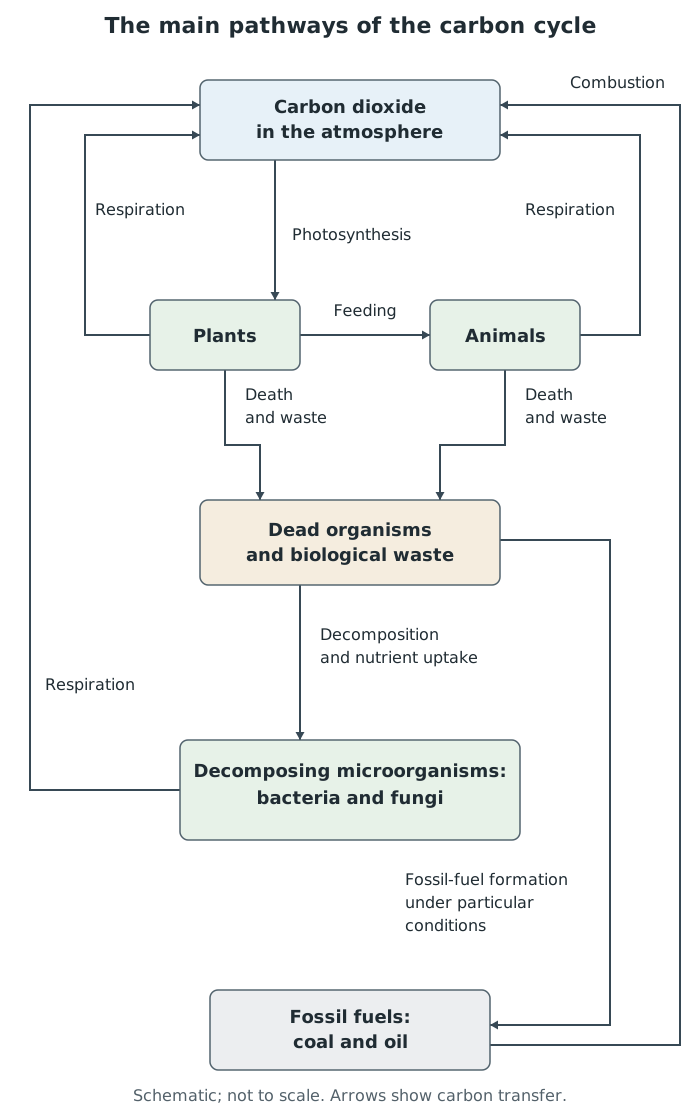
Carbon moves between atmospheric carbon dioxide, living organisms, dead material and fossil fuels. Each arrow names the process responsible for the transfer.
Follow the arrowheads to see where carbon moves, and read each process label to identify how it gets there. Notice that carbon can return to the atmosphere directly through an organism's respiration or after its dead material has been broken down.
Dead leaves, dead animals and biological waste still contain carbon. Decomposers, including bacteria and fungi, break down and digest this material. They obtain nutrients from it, and some of its carbon becomes part of their own biomass.
As these microorganisms respire, they release carbon dioxide. Decomposition therefore provides a route from carbon in dead material and waste back to atmospheric carbon dioxide. Decomposers also recycle mineral ions into the environment, where plants can absorb them again.
Consider a fallen leaf. Its carbon originally entered the plant through photosynthesis. After the leaf falls, microorganisms break it down and use its nutrients. Their respiration releases carbon dioxide, which another plant can take in. Without decomposition, more materials would remain locked in dead biological matter and fewer would be available for new growth.
Under particular conditions, some dead biological material becomes fossil fuels rather than being fully decomposed. Fuels such as coal and oil are stores of carbon that originated in living organisms.
When fossil fuels are burned, combustion releases their carbon as carbon dioxide into the atmosphere. This transfers carbon from a long-term fuel store back into the air. The carbon can then enter plants through photosynthesis.
The central idea is that carbon atoms are transferred and reused. Photosynthesis incorporates them into biological molecules; feeding moves them through food chains; respiration, decomposition and combustion provide routes back to the environment.
Get unlimited access to all revision notes, key terms, and exam tips.
Carbon is needed for biological molecules such as glucose. Cycling transfers it between stores and makes it available again. Bacteria and fungi are essential decomposers: they recycle carbon from dead material and waste, as well as returning mineral ions to the environment.
Name the process on each carbon-cycle arrow: photosynthesis, feeding, respiration, decomposition or combustion.
Plants respire as well as photosynthesise. Respiration by plants, animals and decomposers releases carbon dioxide.
Distinguish decomposition from respiration: decomposers break down dead material and waste; their respiration returns carbon dioxide to the atmosphere.
Carbon is recycled, not created by photosynthesis or destroyed by combustion.
Abiotic component
The non-living parts of an ecosystem, such as air, water and soil.
Biotic component
The living organisms in an ecosystem, such as plants, animals and microorganisms.
Carbon cycle
The movement and reuse of carbon between organisms and non-living stores through processes including photosynthesis, feeding, respiration, decomposition and combustion.
Biomass
The material making up living organisms; it contains carbon in biological molecules.
Decomposer
An organism that breaks down and digests dead biological material and waste, recycling materials into the environment. Bacteria and fungi are important decomposers.
Decomposition
The breakdown and digestion of dead organisms and biological waste by decomposers.
Photosynthesis
The process in which plants use light energy to make glucose from carbon dioxide and water.
Respiration
Chemical reactions in cells that release energy from nutrients. Aerobic respiration uses oxygen and releases carbon dioxide and water.
Combustion
Burning a substance in oxygen; burning carbon-containing fuels releases carbon dioxide.
Put your knowledge into practice — try past paper questions for Combined Science
Abiotic component
The non-living parts of an ecosystem, such as air, water and soil.
Biotic component
The living organisms in an ecosystem, such as plants, animals and microorganisms.
Carbon cycle
The movement and reuse of carbon between organisms and non-living stores through processes including photosynthesis, feeding, respiration, decomposition and combustion.
Biomass
The material making up living organisms; it contains carbon in biological molecules.
Decomposer
An organism that breaks down and digests dead biological material and waste, recycling materials into the environment. Bacteria and fungi are important decomposers.
Decomposition
The breakdown and digestion of dead organisms and biological waste by decomposers.
Photosynthesis
The process in which plants use light energy to make glucose from carbon dioxide and water.
Respiration
Chemical reactions in cells that release energy from nutrients. Aerobic respiration uses oxygen and releases carbon dioxide and water.
Combustion
Burning a substance in oxygen; burning carbon-containing fuels releases carbon dioxide.
Get unlimited access to all revision notes, key terms, and exam tips.