Loading…


Loading…
Loading…
Loading…
Edexcel GCSE Combined Science · 1SC0
Edexcel 1SC0 · Cell Division and Growth Check the specification (PDF) (opens in a new tab)
To grow or replace damaged cells, an organism needs to make new cells. Each new cell must receive the genetic information needed to function. This information is carried by DNA, organised into chromosomes in the nucleus.
Most human body cells are diploid: they contain two sets of chromosomes, one inherited from each parent. In humans, this means 46 chromosomes arranged in 23 pairs. When a diploid body cell divides by mitosis, each daughter cell receives the same sets of chromosomes as the original parent cell. The chromosome number is maintained, not halved.
The cell cycle is the sequence of events through which a cell grows and divides. It includes interphase, mitosis and cytokinesis. Mitosis is specifically the division of the nucleus; cytokinesis separates the cell into two.
During interphase, the cell grows and its DNA is copied exactly. Each chromosome now consists of two identical copies called sister chromatids, joined together. These copies will later be separated so that each daughter cell receives one complete set of genetic information.
An X-shaped chromosome represents a copied chromosome: the two halves are sister chromatids, not the two chromosomes of a pair. Copying the DNA prepares the cell for division; it does not yet produce two cells.
Prophase — chromosomes become visible. The DNA condenses into compact chromosomes, each containing two sister chromatids. The nuclear membrane breaks down, allowing the chromosomes to be moved within the cell.
Metaphase — chromosomes line up in the middle. The copied chromosomes line up along the equator, or centre, of the cell. Spindle fibres attach to them. This arrangement allows the two copies of each chromosome to be separated towards opposite ends.
Anaphase — the copies separate. Spindle fibres pull the sister chromatids apart towards opposite poles of the cell. Once separated, each chromatid is a chromosome in its own right. Each pole receives one copy of every chromosome, so both ends receive identical sets.
Telophase — two nuclei form. New nuclear membranes form around the chromosomes at each pole. There are now two nuclei within the cell, each containing the same genetic information.
During cytokinesis, the cytoplasm divides and the two daughter cells become separate. Each has its own cell membrane and nucleus.
The overall result is two genetically identical diploid daughter cells, with identical sets of chromosomes to those in the parent cell before its DNA was copied. The key connection is that exact copying during interphase, followed by equal separation during mitosis, preserves the genetic information.
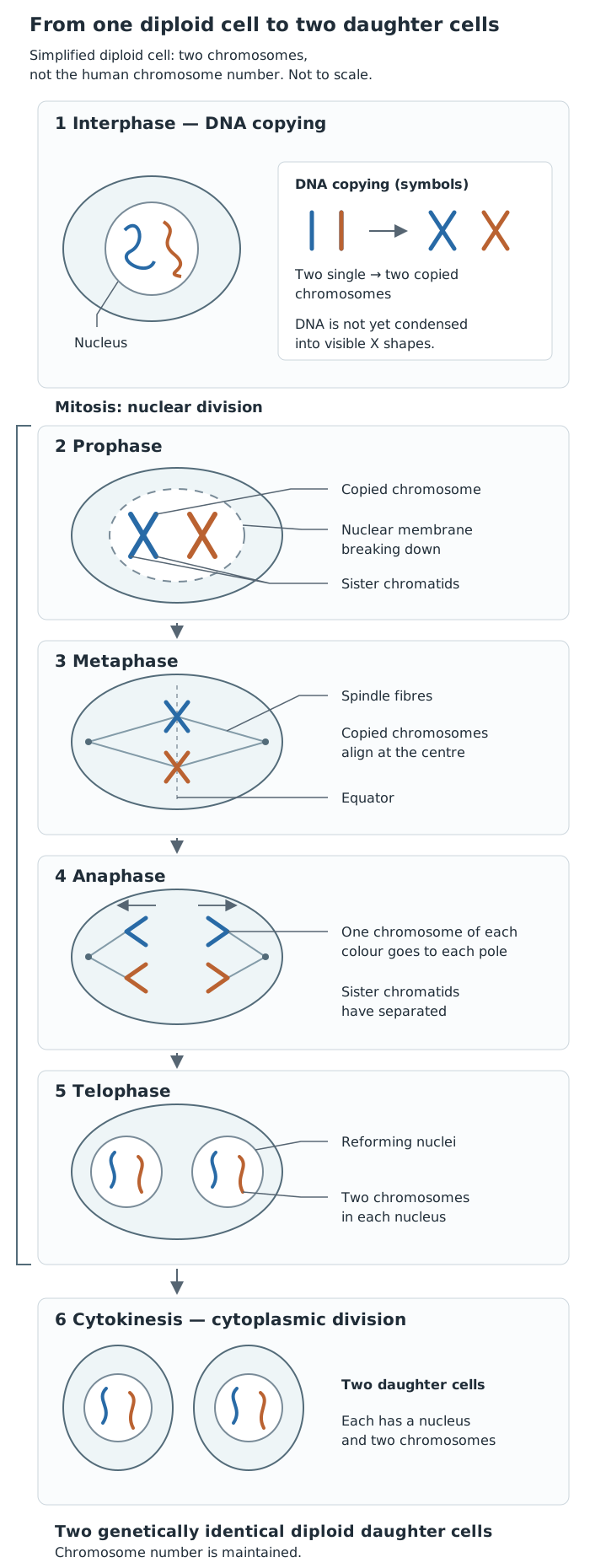
DNA is copied before mitosis, then the copies are shared equally between two daughter cells. The chromosome number is maintained.
Growth requires an increase in cell number. Repeated mitotic divisions produce more body cells as an organism develops and grows.
Repair and replacement require new cells to take the place of damaged or dead cells. For example, cells lining the intestines divide to replace cells shed as food moves through the digestive system. The replacement cells receive the same genetic information as the cells that produced them.
Asexual reproduction involves one parent. Mitosis produces genetically identical cells, allowing offspring to inherit the same genetic information as that parent. Unlike growth or repair, the outcome here is a new organism rather than simply more cells within an existing organism.
Normally, the cell cycle is controlled so that cells divide when needed and stop when enough cells have been produced. Genes help regulate this process.
Changes in a cell’s DNA, called mutations, can disrupt this control. Affected cells may continue dividing when they should stop. This uncontrolled cell division can produce a tumour, a mass of cells.
Cancer results from changes in cells that lead to uncontrolled division. The problem is therefore not mitosis itself—normal mitosis is essential—but the loss of control over when division occurs.
Get unlimited access to all revision notes, key terms, and exam tips.
Interphase → prophase → metaphase → anaphase → telophase → cytokinesis
Mitosis is nuclear division: prophase to telophase.
One diploid parent cell produces two genetically identical diploid daughter cells, each with the same sets of chromosomes as the parent. In humans: 46 chromosomes in each daughter cell.
Mitosis enables growth, repair and replacement, and asexual reproduction.
Changes in DNA can disrupt cell-cycle control → uncontrolled cell division → possible tumour formation.
Get unlimited access to all revision notes, key terms, and exam tips.
Give the stages in order: interphase, prophase, metaphase, anaphase, telophase, then cytokinesis. Interphase and cytokinesis are parts of the cell cycle, not stages of nuclear division.
State that DNA is copied during interphase, before mitosis begins.
When describing the outcome, include two daughter cells, genetically identical, diploid, and the same sets of chromosomes as the parent cell.
For cancer, link changes in the cell’s DNA to loss of control of cell division, rather than simply saying that cells divide quickly.
Cell cycle
The sequence of events in which a cell grows, copies its DNA and divides into two daughter cells.
Mitosis
Division of a cell’s nucleus to produce two nuclei with identical sets of chromosomes.
Chromosome
A structure made of DNA that carries genetic information in the nucleus.
Chromatid
One of the two identical copies joined together in a chromosome after its DNA has been copied.
Diploid
Having two sets of chromosomes, one inherited from each parent.
Cytokinesis
Division of the cytoplasm to form two separate daughter cells.
Asexual reproduction
Reproduction involving one parent, producing genetically identical offspring.
Mutation
A change in the DNA of a cell.
Cancer
A disease resulting from changes in cells that cause uncontrolled cell division.
Put your knowledge into practice — try past paper questions for Combined Science
Cell cycle
The sequence of events in which a cell grows, copies its DNA and divides into two daughter cells.
Mitosis
Division of a cell’s nucleus to produce two nuclei with identical sets of chromosomes.
Chromosome
A structure made of DNA that carries genetic information in the nucleus.
Chromatid
One of the two identical copies joined together in a chromosome after its DNA has been copied.
Diploid
Having two sets of chromosomes, one inherited from each parent.
Cytokinesis
Division of the cytoplasm to form two separate daughter cells.
Asexual reproduction
Reproduction involving one parent, producing genetically identical offspring.
Mutation
A change in the DNA of a cell.
Cancer
A disease resulting from changes in cells that cause uncontrolled cell division.