Loading…


Loading…
Loading…
Loading…
AQA GCSE Physical Education · 8582
AQA 8582 Check the specification (PDF) (opens in a new tab)
Identifying a bone means recognising it and knowing its name and location. Everyday names provide useful starting points: the shoulder blade is the scapula, the breastbone is the sternum, and the kneecap is the patella.
A joint is a place where bones meet. Some bones extend between two joints, so the same bone can appear in more than one location you need to identify. For example, the humerus runs along the upper arm from the shoulder to the elbow.
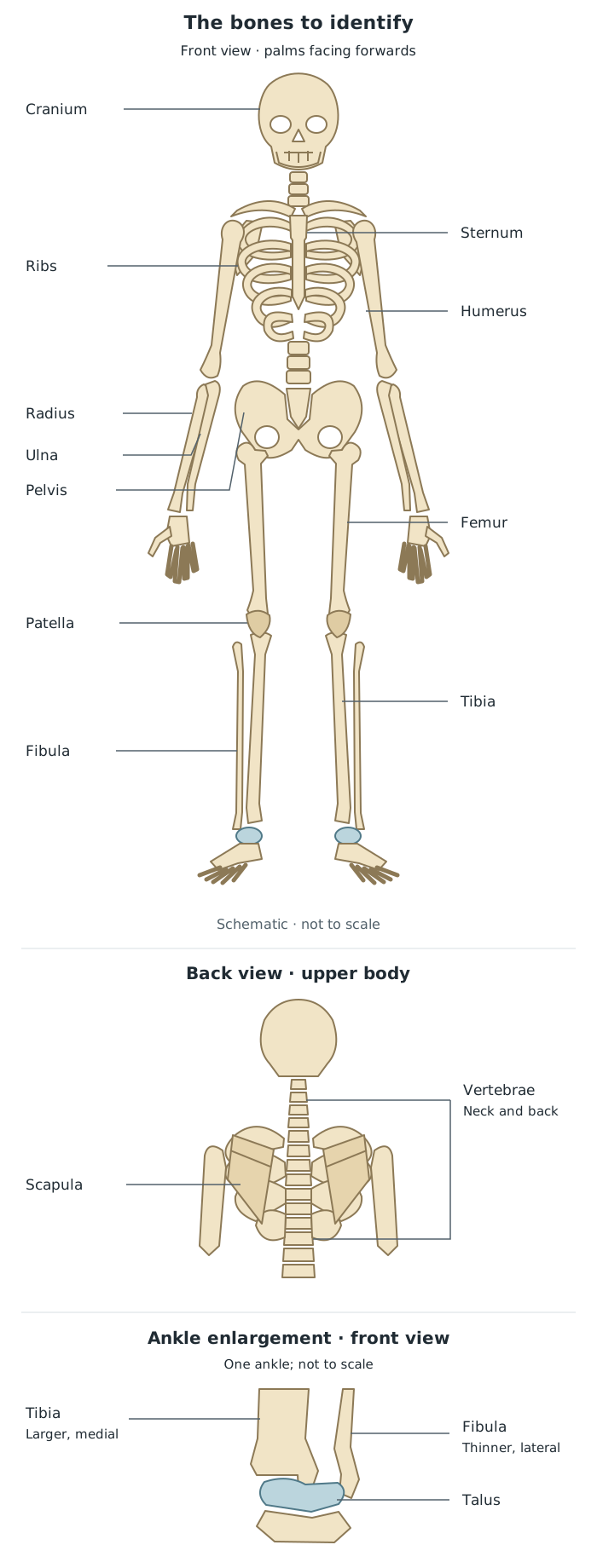
Locate each bone by its position and its relationship to neighbouring bones. The back view makes the shoulder blades and spine easier to identify.
The cranium is the part of the skull surrounding the brain. Below it, the vertebrae form the spine. The vertebrae in the neck are the bones to recognise for the neck location, although the spine continues down the back.
In the chest, the ribs form a curved cage. The sternum is the breastbone running down the front and centre of the chest. On a skeleton diagram, distinguish the many curved ribs from the single central sternum.
At the shoulder, identify the scapula and humerus. The scapula is the broad shoulder blade at the back of the shoulder. The humerus is the long upper-arm bone below it.
At the elbow, identify three bones: the humerus, radius and ulna. The humerus approaches the elbow from above; the radius and ulna extend from the elbow towards the wrist, forming the forearm.
To distinguish the two forearm bones, use the hand as a guide. The radius is on the thumb side, while the ulna is on the little-finger side. These relationships are more useful than memorising which bone appears on the left or right of a particular drawing.
At the hip, identify the pelvis and femur. The pelvis is the bony structure around the hips. The femur is the thigh bone, extending down from the hip to the knee.
At the knee, the femur meets the tibia, the larger lower-leg bone also known as the shin bone. The patella sits in front of the knee joint. Its position matters: it is not a long bone running down the leg, but a smaller bone over the front of the knee.
The lower leg contains the tibia and fibula. The tibia is the larger shin bone; the fibula is the thinner bone alongside it on the outer side of the leg.
At the ankle, identify the tibia, fibula and talus. Follow the two lower-leg bones downwards: the talus lies beneath them at the ankle, above the rest of the foot.
You can connect these locations into a continuous route: pelvis at the hip, femur through the thigh, tibia and fibula through the lower leg, then talus at the ankle. This helps you recognise a bone even when a diagram shows only part of the skeleton.
| Location | Bones to identify |
|---|---|
| Head/neck | Cranium and vertebrae |
| Shoulder | Scapula and humerus |
| Chest | Ribs and sternum |
| Elbow | Humerus, radius and ulna |
| Hip | Pelvis and femur |
| Knee | Femur and tibia; patella sits in front of the joint |
| Ankle | Tibia, fibula and talus |
When identifying a bone on a diagram, follow the label line to its endpoint rather than choosing the nearest written label.
Use the thumb side to identify the radius and the little-finger side to identify the ulna; their positions on the page depend on how the arm is shown.
For the knee, name the femur and tibia, and remember that the patella sits in front of the joint.
Learn bones by location: the humerus appears at both the shoulder and elbow, while the tibia appears at both the knee and ankle.
Cranium
The skull bones surrounding the brain, located in the head.
Vertebra
One of the bones making up the spine; together these bones are called vertebrae.
Scapula
The shoulder blade, located at the back of the shoulder.
Humerus
The upper-arm bone, extending from the shoulder to the elbow.
Rib
One of the curved bones forming the rib cage in the chest.
Sternum
The breastbone at the front and centre of the chest.
Radius
The forearm bone on the thumb side, extending between the elbow and wrist.
Ulna
The forearm bone on the little-finger side, extending between the elbow and wrist.
Pelvis
The bony structure at the hips, where the femur meets the skeleton of the trunk.
Femur
The thigh bone, extending from the hip to the knee.
Tibia
The shin bone: the larger lower-leg bone, extending between the knee and ankle.
Patella
The kneecap, which sits in front of the knee joint.
Fibula
The thinner bone on the outer side of the lower leg, alongside the tibia.
Talus
The ankle bone positioned beneath the tibia and fibula.
Put your knowledge into practice — try past paper questions for Physical Education
Cranium
The skull bones surrounding the brain, located in the head.
Vertebra
One of the bones making up the spine; together these bones are called vertebrae.
Scapula
The shoulder blade, located at the back of the shoulder.
Humerus
The upper-arm bone, extending from the shoulder to the elbow.
Rib
One of the curved bones forming the rib cage in the chest.
Sternum
The breastbone at the front and centre of the chest.
Radius
The forearm bone on the thumb side, extending between the elbow and wrist.
Ulna
The forearm bone on the little-finger side, extending between the elbow and wrist.
Pelvis
The bony structure at the hips, where the femur meets the skeleton of the trunk.
Femur
The thigh bone, extending from the hip to the knee.
Tibia
The shin bone: the larger lower-leg bone, extending between the knee and ankle.
Patella
The kneecap, which sits in front of the knee joint.
Fibula
The thinner bone on the outer side of the lower leg, alongside the tibia.
Talus
The ankle bone positioned beneath the tibia and fibula.