Loading…


Loading…
Loading…
Loading…
AQA GCSE Design and Technology · 8552
AQA 8552 · Shaping and forming techniques Check the specification (PDF) (opens in a new tab)
Textile fabrics are flexible: they can be folded, drawn together and layered without removing material. Sewing holds these arrangements in place. It can join separate pieces into a product, secure folds to shape a garment, or attach additional material for padding and decoration.
The technique must suit the fabric and the demands on the finished product. A seam that carries a load needs a stronger construction than temporary stitching used only to hold pieces in position.
Sewing uses a needle and thread to make stitches. Hand sewing offers close control and is useful for small joins, attaching components and decoration. A running stitch passes the needle repeatedly in and out of the fabric along a line. Backstitch overlaps back towards previous stitches, producing a stronger join that is useful for seams.
A conventional sewing machine works much faster. It uses an upper thread from a spool and a lower thread from a bobbin beneath the sewing plate. The threads interlock to form stitches as the needle moves up and down and the fabric travels beneath the presser foot. The foot pedal controls the sewing speed.
Before sewing, choose a needle suitable for the fabric and thread, and make sure it is fitted securely. Thread the machine correctly, then sew a sample of the same fabric to check the thread tension, stitch type and stitch length. This lets you adjust the machine before stitching the product.
A seam joins fabric pieces with stitching. The fabric needs a seam allowance: extra material between the stitching line and the cut edge. Without this allowance, the finished product would be smaller than intended and there would be too little fabric to form the join.
To make a plain seam:
A plain seam is straightforward, but other constructions can give greater strength or enclose raw edges. A French seam encloses the edges without much bulk. A flat-felled seam wraps one seam edge around the other, is pressed flat and has a second line of stitching; it is strong but bulkier.
An overlocker encloses edges in thread and can trim and sew at the same time. It is useful for neat seams, including side seams in stretchy clothing.
Pleating forms deliberate folds in fabric. The folds take up some of the fabric's width at the stitched edge while leaving fullness below it. This can shape a skirt and allow movement when it is worn.
Mark the fold positions evenly along the fabric. Fold the material at these marks and pin the pleats in position. Stitch across the top to secure them, then press with an iron to create sharp creases. Consistent marking produces regular folds rather than an uneven arrangement.
Gathering also shortens an edge, but produces small, soft folds rather than sharply arranged pleats. It is useful where a wider piece of fabric must fit a shorter edge, such as the gathered top of a curtain.
Secure the threads at one end and sew two parallel rows of small running stitches near the edge to be gathered. Pull the threads gently and ease the fabric along them. Distribute the fullness evenly until the edge is the required length, then knot the threads to hold the gathering in place. The gathered edge can then be sewn into the product.
The two rows help control the fabric as it is drawn together. Unlike pleating, the shape comes from pulling threads, not marking and folding individual pleats.
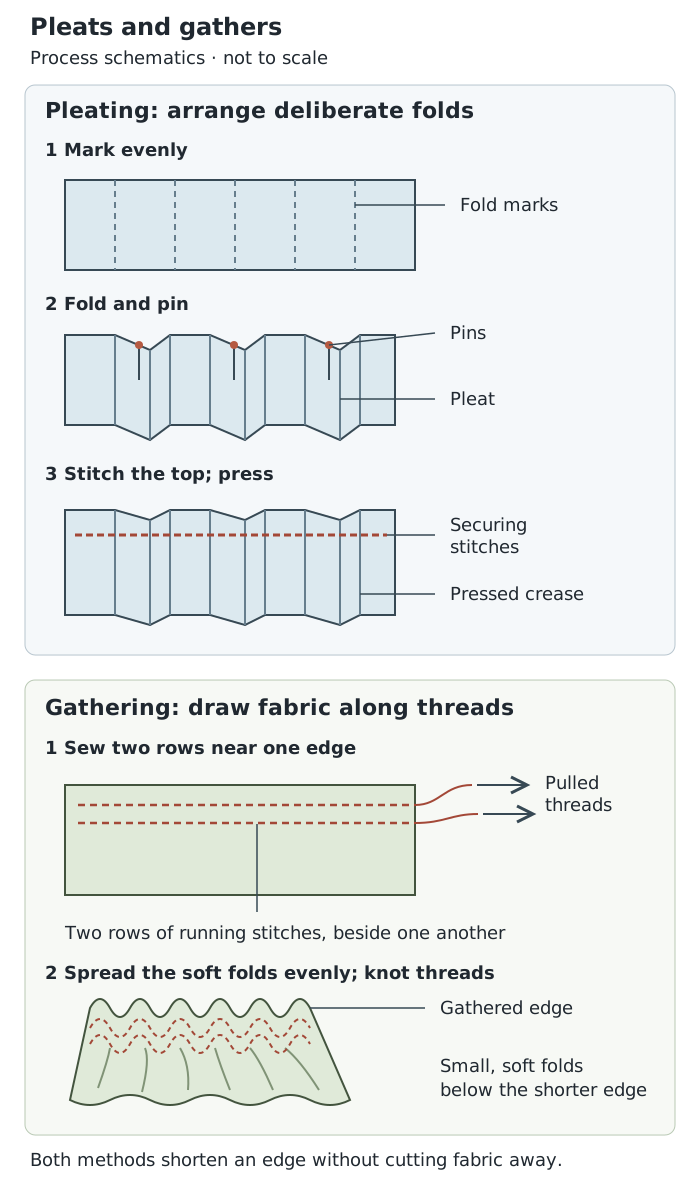
Pleats are made by arranging folds; gathers are made by drawing fabric along threads. Both reduce the length of an edge.
Quilting joins three layers: an outer fabric, soft wadding in the middle and a backing fabric. Arrange the layers together and stitch through all three, either by hand or machine. The stitching may follow straight lines or a decorative pattern.
These stitches hold the layers together and keep the padding distributed. The result is thicker and padded, making quilting useful for products such as quilts. Air trapped within the layered construction provides insulation, helping the textile retain warmth.
Piping creates a raised, clearly defined line along an edge or seam. A common version consists of a cord enclosed in a folded strip of fabric.
Fold the strip around the cord and stitch close alongside it to hold the cord inside. Position the covered cord along the intended seam, with its loose fabric edges caught in the join when the fabric pieces are sewn together. The rounded, covered cord remains visible along the finished seam.
Piping adds decoration, definition and strength. Its raised line makes the boundary between fabric panels stand out, unlike quilting, which creates padding across a larger area.
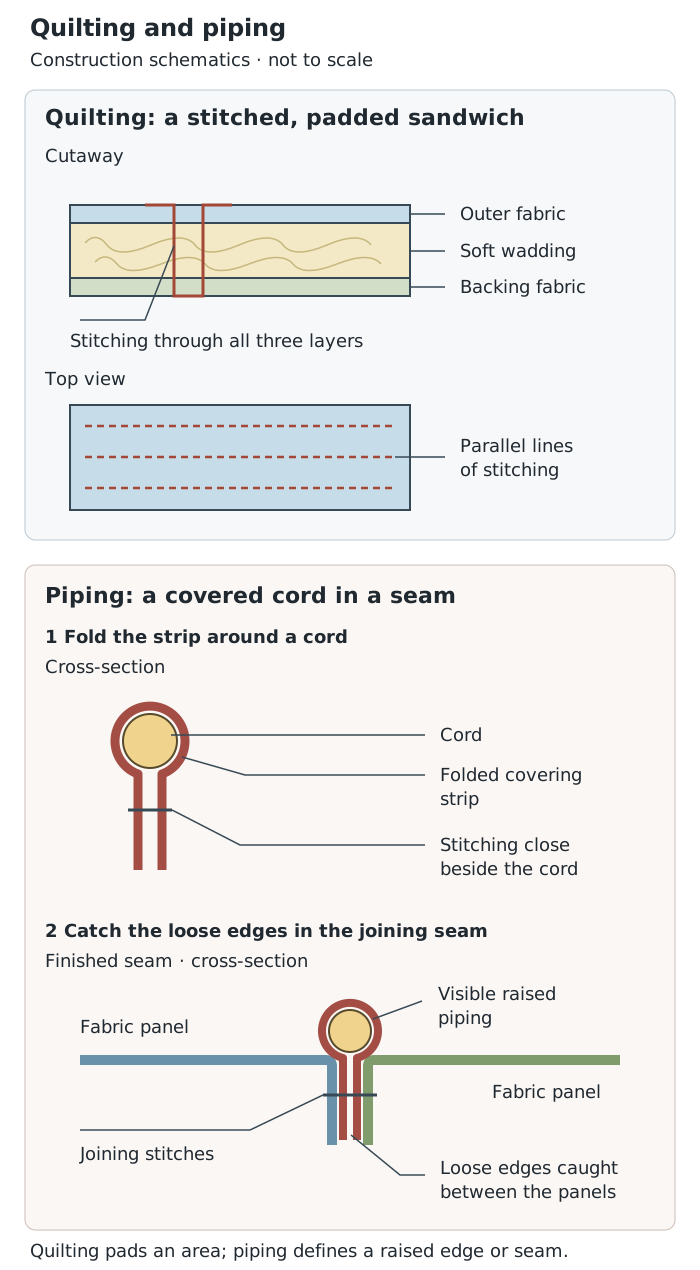
Quilting holds padding between fabric layers. Piping encloses a cord to make a raised, defined seam.
Get unlimited access to all revision notes, key terms, and exam tips.
Get unlimited access to all revision notes, key terms, and exam tips.
When explaining a process, describe the sequence and how it produces the required shape or join, rather than only naming tools.
Distinguish pleating from gathering: pleats are deliberately arranged folds; gathers are formed by pulling threads to draw fabric together.
Quilting involves stitching through the fabric–wadding–fabric layers, not simply placing padding between fabrics.
A seam allowance is extra fabric beyond the stitching line. Its width depends on the pattern and seam, so do not treat one measurement as universal.
Link your choice of technique to the product: for example, quilting provides padding and insulation, while piping defines and strengthens an edge.
Sewing
Joining or decorating textile material by making stitches with a needle and thread, by hand or machine.
Seam
A line of stitching that joins pieces of fabric together.
Seam allowance
The extra fabric between a stitching line and the cut edge, which provides material for constructing and finishing a seam.
Tacking
Long, temporary running stitches used to hold fabric pieces in position before permanent sewing.
Pleating
Forming deliberate folds in fabric and securing them with stitching to create shape or fullness.
Gathering
Drawing fabric together along threads to shorten an edge and form small, soft folds.
Quilting
Stitching through an outer fabric, a central layer of wadding and a backing fabric to create a padded textile.
Wadding
Soft padding placed between fabric layers, for example in a quilted textile.
Piping
A fabric-covered cord or folded fabric insert sewn into an edge or seam to provide decoration, strength and definition.
Overlocker
A sewing machine that encloses fabric edges in thread to prevent fraying, and can sew, trim and neaten a seam in one operation.
Put your knowledge into practice — try past paper questions for Design and Technology
Sewing
Joining or decorating textile material by making stitches with a needle and thread, by hand or machine.
Seam
A line of stitching that joins pieces of fabric together.
Seam allowance
The extra fabric between a stitching line and the cut edge, which provides material for constructing and finishing a seam.
Tacking
Long, temporary running stitches used to hold fabric pieces in position before permanent sewing.
Pleating
Forming deliberate folds in fabric and securing them with stitching to create shape or fullness.
Gathering
Drawing fabric together along threads to shorten an edge and form small, soft folds.
Quilting
Stitching through an outer fabric, a central layer of wadding and a backing fabric to create a padded textile.
Wadding
Soft padding placed between fabric layers, for example in a quilted textile.
Piping
A fabric-covered cord or folded fabric insert sewn into an edge or seam to provide decoration, strength and definition.
Overlocker
A sewing machine that encloses fabric edges in thread to prevent fraying, and can sew, trim and neaten a seam in one operation.