Loading…


Loading…
Loading…
Loading…
AQA GCSE Design and Technology · 8552
AQA 8552 · Commercial processes Check the specification (PDF) (opens in a new tab)
Commercial textile processes use machinery to make consistent materials in the quantities manufacturers need. Weaving constructs fabric from yarns, while dyeing and printing add colour. These processes can be combined: a manufacturer might weave fabric, dye it a background colour and then print a pattern onto it.
The distinction matters when choosing a process. A curtain manufacturer needs both a suitable fabric structure and the intended appearance; colouring alone does not create the fabric.
A loom holds one set of yarns lengthways under tension. These are the warp yarns. A second set, the weft yarns, passes across the width, at right angles to the warp. Their interlacing forms the woven fabric.
The loom repeats a controlled sequence:
Changing which warp yarns are raised changes the weave pattern. Automated commercial looms can be programmed to lift the correct yarns repeatedly, producing the intended structure consistently.
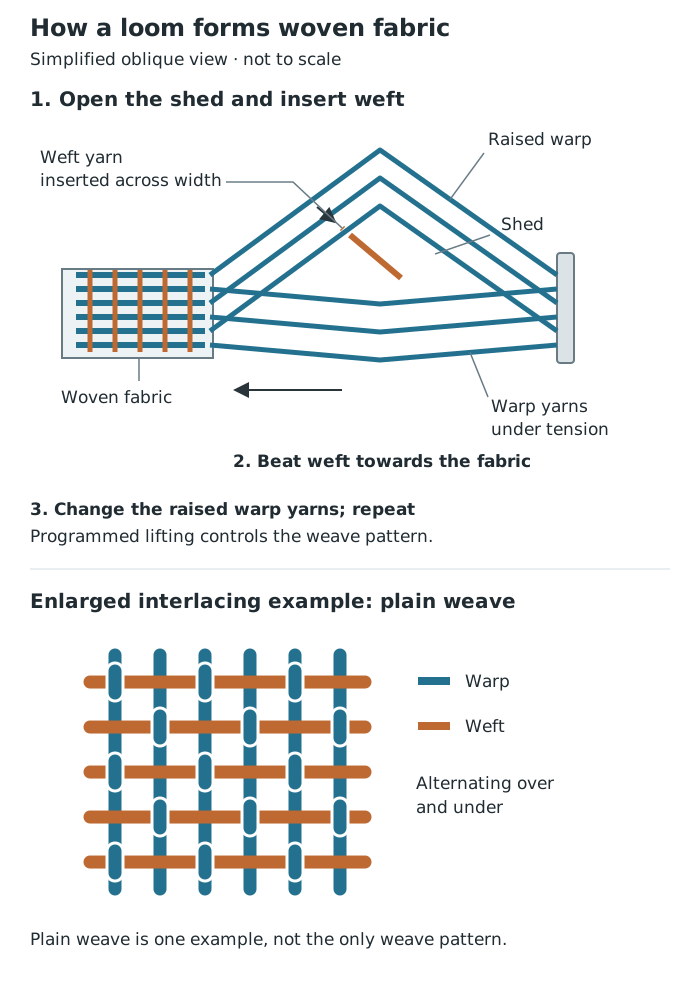
A loom repeatedly opens a shed, inserts weft and beats it into place. The enlarged patch shows one example of how warp and weft interlace.
Woven fabrics are used for clothing, upholstery, curtains and bags. Manufacturers control yarn tension, thread count and weave pattern because these affect strength, appearance and dimensional stability—how well the fabric keeps its size and shape. Consistent tension helps the loom produce an even fabric rather than areas with different tightness.
Dyeing allows a suitable dye to penetrate and colour textile fibres. Colour can be added at different stages: fibres or yarns can be dyed before fabric construction, or fabric and completed garments can be dyed afterwards. Dyeing yarn first allows coloured yarns to be incorporated into a woven design; dyeing a whole piece of fabric can produce an even background shade.
For dyeing fabric in a large container, the textile is immersed in a dye solution. Other commercial systems spray the solution onto the textile or pass the material through it. The basic sequence is similar:
The dye must suit the fibre because different fibres absorb and bond with different dyes. An unsuitable dye may produce weak or uneven colour, or wash out.
Temperature, dye concentration and treatment time are controlled to achieve a consistent shade. The finished material must also have suitable colourfastness: it should retain its colour during washing and exposure to sunlight. A strong initial colour is not enough if it quickly fades in use.
Textile printing applies colour in a controlled pattern to selected areas of fabric. It is used for products such as patterned furnishing fabrics, fashion garments, sportswear and promotional textiles.
The design is prepared for the chosen printing system, and the fabric is aligned and held flat. Colour is then applied in the required pattern. Afterwards, the print is dried or fixed, for example using heat, according to the colouring material used.
In screen printing, colour passes through the open areas of a patterned screen. Blocked areas prevent colour reaching the fabric. A squeegee spreads the colour and pushes it through the screen. Separate screens apply the different colours of a multicoloured design.
In flatbed screen printing, flat screens are lowered onto the fabric. A squeegee passes across each screen to apply its colour. The screens lift after printing, allowing the conveyor to advance the fabric for the next print. The process therefore works through repeated printing and movement stages.
In rotary screen printing, the screens are cylindrical. They rotate as the fabric travels underneath on a conveyor. Each screen applies one colour, with a squeegee inside ensuring an even flow through the patterned screen. This continuous action makes rotary printing fast for long production runs.
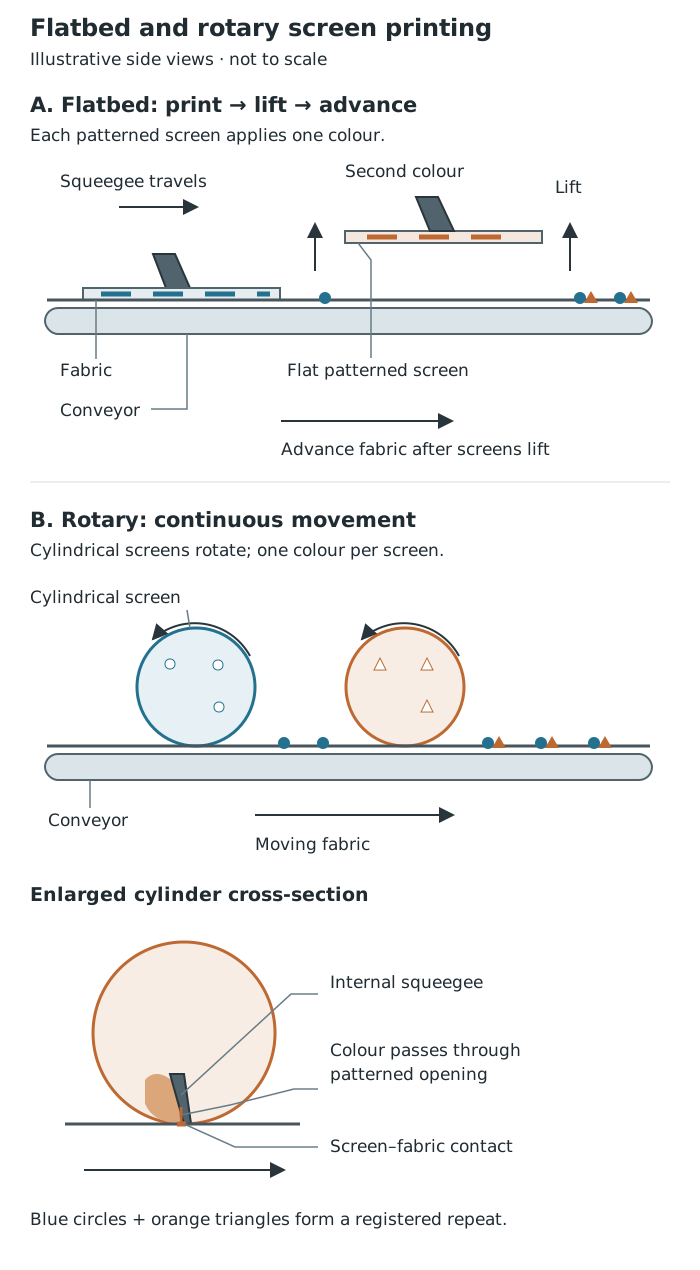
Flatbed screens lift between printing stages; rotary screens turn as fabric moves beneath them. Separate screens apply the different colours.
Digital printing uses a design supplied as digital data and is flexible for short runs. Manufacturers choose a printing technique according to the amount of fabric required, the desired print effect and the available budget.
A multicoloured pattern depends on accurate registration: each colour must line up with the others. Otherwise, the parts of the design appear displaced. A repeating pattern also needs consistent repeat spacing so that the design does not gradually drift along the fabric.
Quality checks compare the printed fabric with an approved sample. Manufacturers check colour, alignment, repeat spacing and whether the print has been properly dried or fixed. Measuring repeats at intervals helps identify a problem before it affects a whole production run.
Get unlimited access to all revision notes, key terms, and exam tips.
Prepare textile → select a fibre-compatible dye → apply dye solution → fix colour → wash and dry.
Prepare design → align fabric → apply patterned colour → dry or fix → check.
Get unlimited access to all revision notes, key terms, and exam tips.
When describing a process, give the sequence and explain what the machinery does rather than only naming it.
Distinguish warp yarns, which run lengthways on the loom, from weft yarns, which pass across its width.
Link a printing method to the production requirement: digital printing is flexible for short runs, whereas rotary screen printing is fast for long runs.
Make quality-control answers specific: for a repeating print, measure the repeat spacing and compare the pattern and colour with an approved sample.
Weaving
A fabric-making process that interlaces two sets of yarns, called warp and weft, at right angles.
Warp
A yarn held lengthways under tension on a loom during weaving.
Weft
A yarn inserted across the width of a loom, interlacing with the warp yarns.
Loom
A machine that holds warp yarns under tension and enables weft yarns to be interlaced with them to make fabric.
Shed
The opening between raised and lowered warp yarns through which a weft yarn passes during weaving.
Dyeing
The process of colouring textile fibres, yarns, fabric or garments using a suitable dye.
Colourfastness
The ability of a textile to retain its colour during use, including washing and exposure to sunlight.
Textile printing
The controlled application of colour to selected areas of a textile to create a design or pattern.
Squeegee
A blade that spreads printing colour and pushes it through the open areas of a screen onto fabric.
Registration
The accurate alignment of the separate parts or colours of a printed design.
Put your knowledge into practice — try past paper questions for Design and Technology
Weaving
A fabric-making process that interlaces two sets of yarns, called warp and weft, at right angles.
Warp
A yarn held lengthways under tension on a loom during weaving.
Weft
A yarn inserted across the width of a loom, interlacing with the warp yarns.
Loom
A machine that holds warp yarns under tension and enables weft yarns to be interlaced with them to make fabric.
Shed
The opening between raised and lowered warp yarns through which a weft yarn passes during weaving.
Dyeing
The process of colouring textile fibres, yarns, fabric or garments using a suitable dye.
Colourfastness
The ability of a textile to retain its colour during use, including washing and exposure to sunlight.
Textile printing
The controlled application of colour to selected areas of a textile to create a design or pattern.
Squeegee
A blade that spreads printing colour and pushes it through the open areas of a screen onto fabric.
Registration
The accurate alignment of the separate parts or colours of a printed design.