Loading…


Loading…
Loading…
Loading…
AQA GCSE Design and Technology · 8552
AQA 8552 · Commercial processes Check the specification (PDF) (opens in a new tab)
Commercial processes allow manufacturers to produce large quantities of consistent paper and board products. Two important processes do different jobs: offset lithography adds printed graphics, while die cutting produces shapes and prepares sheets for folding or tearing. A printed carton can use both processes: its graphics are printed onto board before its net is cut and creased.
Offset lithography is a printing process in which an inked image travels from a printing plate, to a rubber blanket, and then onto paper or board. The rubber blanket covers a cylinder. The word offset describes this indirect transfer: the printing plate does not touch the sheet to print the image directly.
The plate has image areas that attract printing ink and non-image areas that attract water. Ink and water do not mix, so the damp non-image areas resist the ink. This keeps the ink in the areas needed for the design.
During printing, the inked image transfers from the plate to the rubber-covered cylinder. The paper or board passes between this cylinder and an impression cylinder, which provides pressure so the image transfers onto the sheet. The press repeats this operation rapidly.
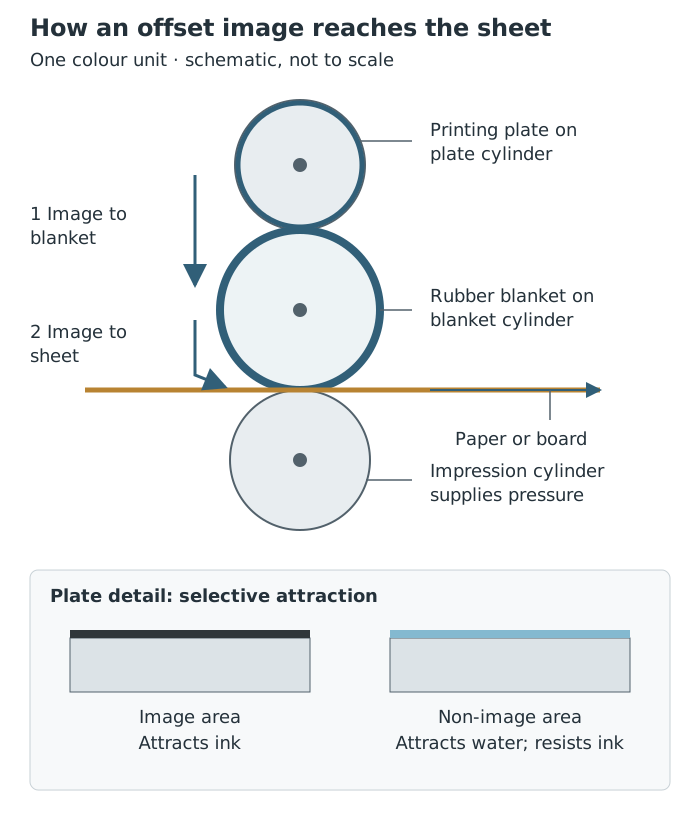
One colour unit: the image reaches the sheet through the rubber blanket, not directly from the printing plate.
Full-colour offset printing commonly uses CMYK: cyan, magenta, yellow and black. A separate plate is prepared for each colour, so a standard CMYK image uses four plates. Each colour is printed as a pattern of dots; together, these patterns form the finished picture or graphic.
The colour layers must line up accurately. This alignment is called registration. Registration marks provide reference points for checking the alignment: if the layers are displaced, details and edges will not match correctly.
Offset lithography is used for magazines, books, leaflets and printed packaging. Preparing the plates and setting up the press costs money, but the press then produces high-quality, consistent prints quickly. For a run of 50,000 colour leaflets, the initial set-up cost is spread across many copies, reducing its contribution to the cost of each leaflet. This makes the process particularly suitable for large print runs.
Die cutting uses a specially made tool called a die to press the required outline into paper or board. Shaped steel cutting rules are mounted in a base, such as plywood, to match the design. For packaging, this design is often a net: the flat shape that will later fold into a carton.
The sheet is positioned using guides or registration marks. A press then forces the die against it. Depending on the tooling fitted, the operation can create:
After pressing, the unwanted material is removed. The remaining component can then be folded or assembled.
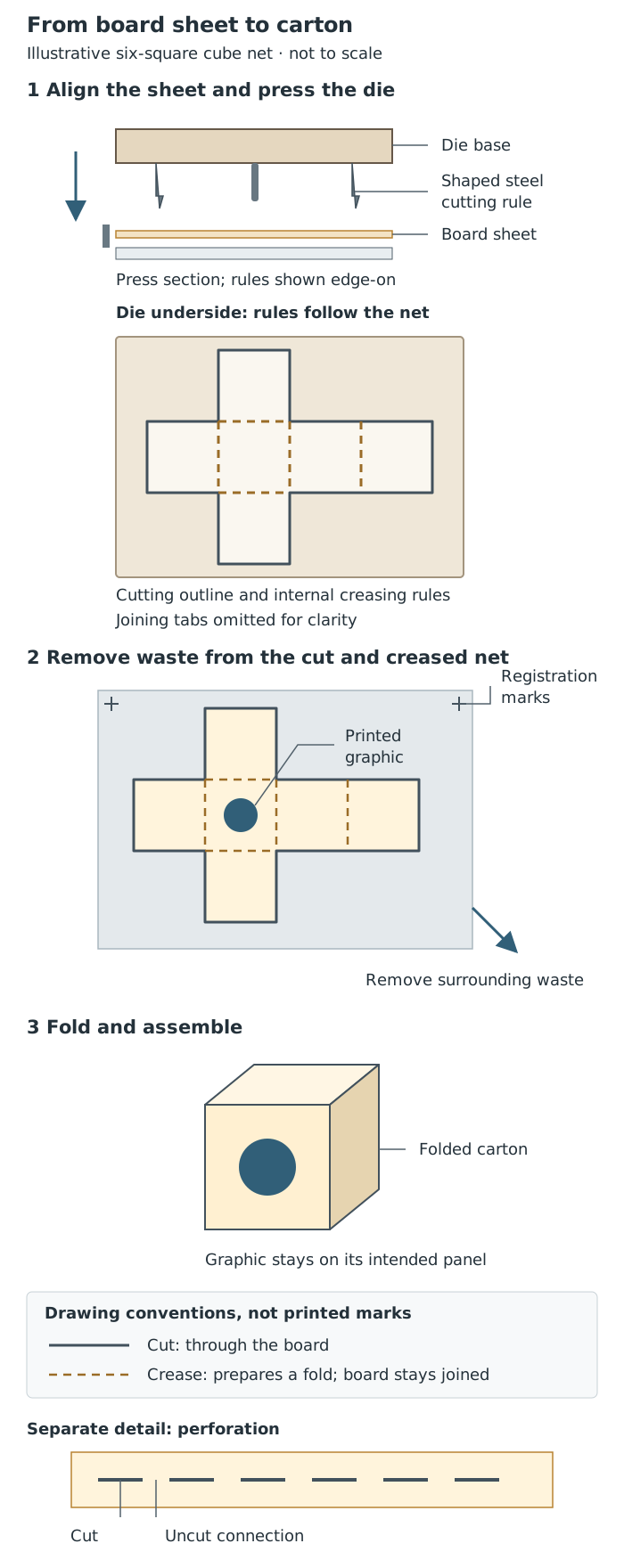
The die produces a repeatable outline and fold lines; waste is removed before the six-square net is folded. Joining tabs are omitted for clarity.
Die cutting is used for carton nets, greetings cards, labels, folders and display products. Making the die involves set-up and tooling costs, but the same die can produce identical shapes repeatedly. Compared with hand cutting 2,000 cartons, this reduces the time and labour needed for each component while maintaining a consistent shape.
For printed packaging, the sheet must be registered accurately before cutting. A correctly shaped net is not enough if the cut is displaced from the printed design. Printing registration aligns the colours with one another; die-cutting registration aligns the physical shape with the graphics.
Get unlimited access to all revision notes, key terms, and exam tips.
Offset lithography prints the design; die cutting shapes the sheet. Both spread their initial set-up costs across repeated production.
Get unlimited access to all revision notes, key terms, and exam tips.
For offset lithography, state the transfer sequence: printing plate → rubber blanket → paper or board. The plate does not print directly onto the sheet.
Explain suitability using the process: repeated printing or cutting gives consistent products quickly, while set-up costs are spread across a large quantity.
Distinguish cutting, creasing and perforating: they separate the material, prepare a fold and create a line of small cuts respectively.
Link registration to the task: colour layers must align during printing, and cuts must align with printed graphics during die cutting.
Offset lithography
A commercial printing process that transfers an inked image from a printing plate to a rubber blanket and then onto paper or board.
CMYK
The four colours commonly used for full-colour printing: cyan, magenta, yellow and black. K stands for key and refers to black.
Registration
Accurate alignment of separate colour layers, or of a cutting outline with printed graphics.
Die cutting
A process that presses a specially shaped die against paper or board to repeatedly produce the required cuts, creases or perforations.
Net
A flat, two-dimensional layout that can be folded and assembled into a three-dimensional product.
Crease
A line pressed into paper or board to make it easier to fold accurately without cutting it apart.
Perforation
A line of small cuts separated by uncut material, which can make paper or board easier to tear or fold.
Unit cost
The cost of producing one item.
Put your knowledge into practice — try past paper questions for Design and Technology
Offset lithography
A commercial printing process that transfers an inked image from a printing plate to a rubber blanket and then onto paper or board.
CMYK
The four colours commonly used for full-colour printing: cyan, magenta, yellow and black. K stands for key and refers to black.
Registration
Accurate alignment of separate colour layers, or of a cutting outline with printed graphics.
Die cutting
A process that presses a specially shaped die against paper or board to repeatedly produce the required cuts, creases or perforations.
Net
A flat, two-dimensional layout that can be folded and assembled into a three-dimensional product.
Crease
A line pressed into paper or board to make it easier to fold accurately without cutting it apart.
Perforation
A line of small cuts separated by uncut material, which can make paper or board easier to tear or fold.
Unit cost
The cost of producing one item.