Loading…


Loading…
Loading…
Loading…
AQA GCSE Combined Science Trilogy · 8464
AQA 8464 · 4.1.1.2 Animal and plant cells Check the specification (PDF) (opens in a new tab)
A cell is the basic unit of a living organism, but it is not just a bag of material. Its sub-cellular structures carry out different functions that work together to keep the cell alive. Some control its activities, some make proteins, and others allow reactions such as respiration or photosynthesis to take place.
Most animal cells contain a nucleus, cytoplasm, a cell membrane, mitochondria and ribosomes. Plant cells also contain these structures, but often have chloroplasts and a permanent vacuole as well. Plant and algal cells have a cellulose cell wall.
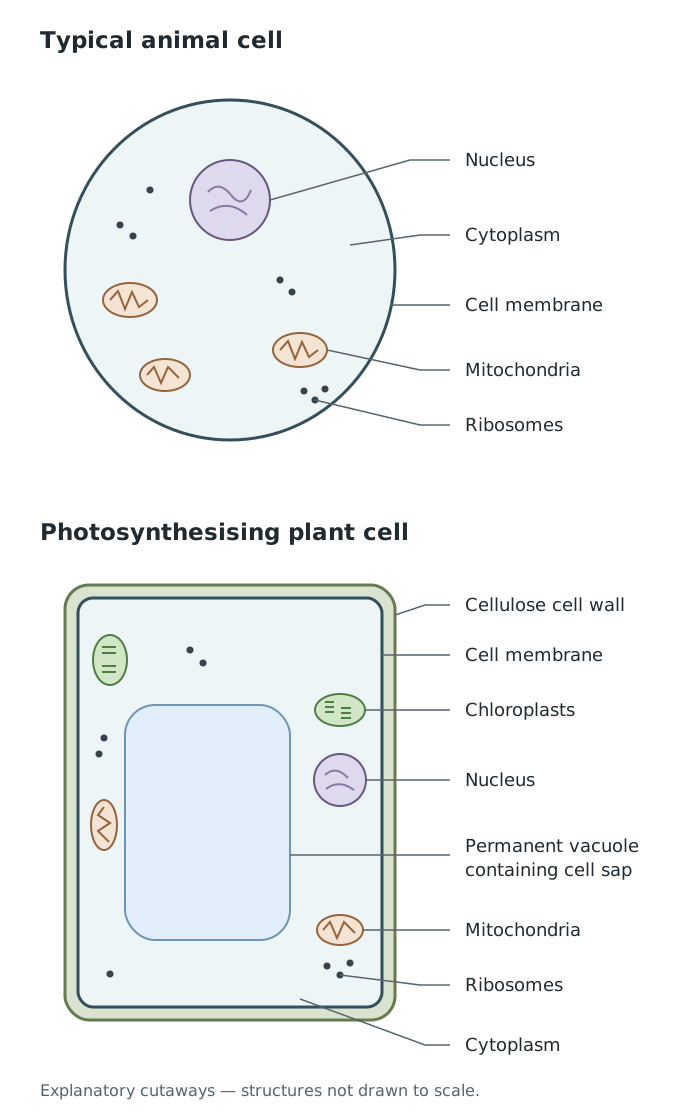
A typical animal cell and a photosynthesising plant cell share several structures. The plant cell also has chloroplasts, a permanent vacuole and a cellulose cell wall. Not drawn to scale.
The nucleus contains the cell’s genetic material, DNA, enclosed within a nuclear membrane. Genes are sections of DNA that provide instructions for making proteins. These proteins help determine what the cell does, so the nucleus controls the cell’s activities through the information in its DNA.
The cytoplasm is the gel-like material inside the cell. It supports the internal structures and is where many chemical reactions happen. It contains enzymes: proteins that speed up chemical reactions. These reactions allow cells to make and break down substances needed for life.
The cell membrane surrounds the cell, separating its contents from the surroundings. It controls which substances enter and leave. This lets a cell take in substances it needs and remove waste products while maintaining suitable internal conditions.
Ribosomes are small structures where proteins are made. This process is called protein synthesis. Ribosomes are found in the cytoplasm. The nucleus and ribosomes therefore have connected roles: DNA contains the instructions for proteins, while ribosomes make them. Some of these proteins become enzymes that help reactions take place in the cell.
Mitochondria are the sites of the reactions of aerobic respiration. Aerobic respiration uses oxygen and releases energy that the cell can use for processes such as movement and making substances.
Cells with high energy demands tend to contain many mitochondria. For example, muscle cells need energy for contraction, so having many mitochondria helps meet this demand. Plant cells also need energy for their activities and contain mitochondria: respiration is not restricted to animals.
Chloroplasts are structures where photosynthesis takes place. They contain chlorophyll, a green pigment that absorbs light energy. This absorbed energy is used in photosynthesis to make food for the plant.
The pigment and the structure have linked functions: chlorophyll absorbs the light energy, and photosynthesis takes place in the chloroplast. Chloroplasts are found in photosynthesising cells, such as many cells in leaves. They are not present in every plant cell.
Chloroplasts and mitochondria do different jobs. Chloroplasts allow photosynthesis to make food using light energy; mitochondria allow aerobic respiration to release energy for cellular processes. A photosynthesising plant cell needs both.
A plant cell’s permanent vacuole contains cell sap, a solution of sugars and salts dissolved in water. The vacuole stores materials and helps keep the cell firm, supporting its shape.
The cell wall lies outside the cell membrane. In plant and algal cells it is made of cellulose, which strengthens and supports the cell. Its position and role differ from those of the membrane: the wall provides support, while the membrane controls which substances enter and leave.
Together, the permanent vacuole and cell wall help a plant cell maintain its shape. Animal cells do not have a cellulose cell wall or a large permanent vacuole filled with cell sap.
Bacterial cells do not have a nucleus. Their main DNA is found in the cytoplasm, and some bacteria also contain plasmids: small rings of DNA separate from the main bacterial chromosome.
Plasmids carry additional genes that can give a bacterium useful characteristics. For example, a plasmid may carry a gene for resistance to a particular antibiotic. This can help the bacterium survive when that antibiotic is present. Not every bacterium contains plasmids, and not every plasmid carries antibiotic-resistance genes.
Get unlimited access to all revision notes, key terms, and exam tips.
Plant cells also have mitochondria and carry out respiration.
Small rings of DNA separate from the main bacterial chromosome. Carry additional genes, such as antibiotic-resistance genes; not found in every bacterium.
Get unlimited access to all revision notes, key terms, and exam tips.
Link each named structure to its function: for example, chloroplasts carry out photosynthesis, rather than simply making a cell green.
Say that respiration releases energy, not that mitochondria create or produce energy.
Distinguish the cell membrane, which controls movement of substances, from the cellulose cell wall, which strengthens plant and algal cells.
Remember the qualifiers: most animal cells have the listed structures, and not all plant cells contain chloroplasts.
For plasmids, give both their structure and role: small rings of DNA carrying additional genes.
Sub-cellular structure
A part of a cell that carries out a particular function.
Nucleus
A structure containing genetic material (DNA) that controls the activities of a cell.
Cytoplasm
The gel-like material inside a cell where many chemical reactions take place.
Cell membrane
The boundary around a cell that controls which substances enter and leave it.
Mitochondrion
A sub-cellular structure where the reactions of aerobic respiration take place, releasing energy for cellular processes.
Ribosome
A small sub-cellular structure where proteins are made.
Chloroplast
A sub-cellular structure where photosynthesis takes place, containing chlorophyll to absorb light energy.
Chlorophyll
The green pigment in chloroplasts that absorbs light energy for photosynthesis.
Permanent vacuole
A fluid-filled compartment in a plant cell that contains cell sap and helps support the cell.
Cell sap
The solution of sugars and salts dissolved in water inside a plant cell’s permanent vacuole.
Cell wall
A layer outside the cell membrane that strengthens a cell; in plant and algal cells it is made of cellulose.
Plasmid
A small ring of DNA, separate from the main bacterial chromosome, that can carry additional genes such as those for antibiotic resistance.
Put your knowledge into practice — try past paper questions for Combined Science Trilogy
Sub-cellular structure
A part of a cell that carries out a particular function.
Nucleus
A structure containing genetic material (DNA) that controls the activities of a cell.
Cytoplasm
The gel-like material inside a cell where many chemical reactions take place.
Cell membrane
The boundary around a cell that controls which substances enter and leave it.
Mitochondrion
A sub-cellular structure where the reactions of aerobic respiration take place, releasing energy for cellular processes.
Ribosome
A small sub-cellular structure where proteins are made.
Chloroplast
A sub-cellular structure where photosynthesis takes place, containing chlorophyll to absorb light energy.
Chlorophyll
The green pigment in chloroplasts that absorbs light energy for photosynthesis.
Permanent vacuole
A fluid-filled compartment in a plant cell that contains cell sap and helps support the cell.
Cell sap
The solution of sugars and salts dissolved in water inside a plant cell’s permanent vacuole.
Cell wall
A layer outside the cell membrane that strengthens a cell; in plant and algal cells it is made of cellulose.
Plasmid
A small ring of DNA, separate from the main bacterial chromosome, that can carry additional genes such as those for antibiotic resistance.