Loading…


Loading…
Loading…
Loading…
OCR GCSE Physical Education · J587
OCR J587 Check the specification (PDF) (opens in a new tab)
• Identify the name and anatomical location of the major muscle groups in the human body. • Locate the deltoid, trapezius, latissimus dorsi, pectorals, biceps, triceps, and abdominals. • Locate the muscles of the lower body, including the quadriceps, hamstrings, gluteals, and gastrocnemius. • Apply knowledge of these muscle groups to practical movements in physical activity and sport.
Skeletal muscles are attached to bones by tendons. When a muscle contracts, it produces a pulling force on the bones, helping to move the body at a joint. Knowing where a muscle is makes it easier to understand its use in physical activity: muscles in the upper arm move the elbow, for example, while muscles in the thigh move the knee or hip.
For this topic, connect each of the eleven named muscles or muscle groups with a precise location and a particular sporting movement. Flexion means bending at a joint; extension means straightening it. Abduction moves a limb away from the body's midline, while adduction brings it towards the midline.
Some muscles are easiest to locate from the front, while others are clearer from behind. The upper arm lies between the shoulder and elbow; the thigh lies between the hip and knee. These distinctions help you locate muscles accurately rather than simply saying ‘arm’ or ‘leg’.
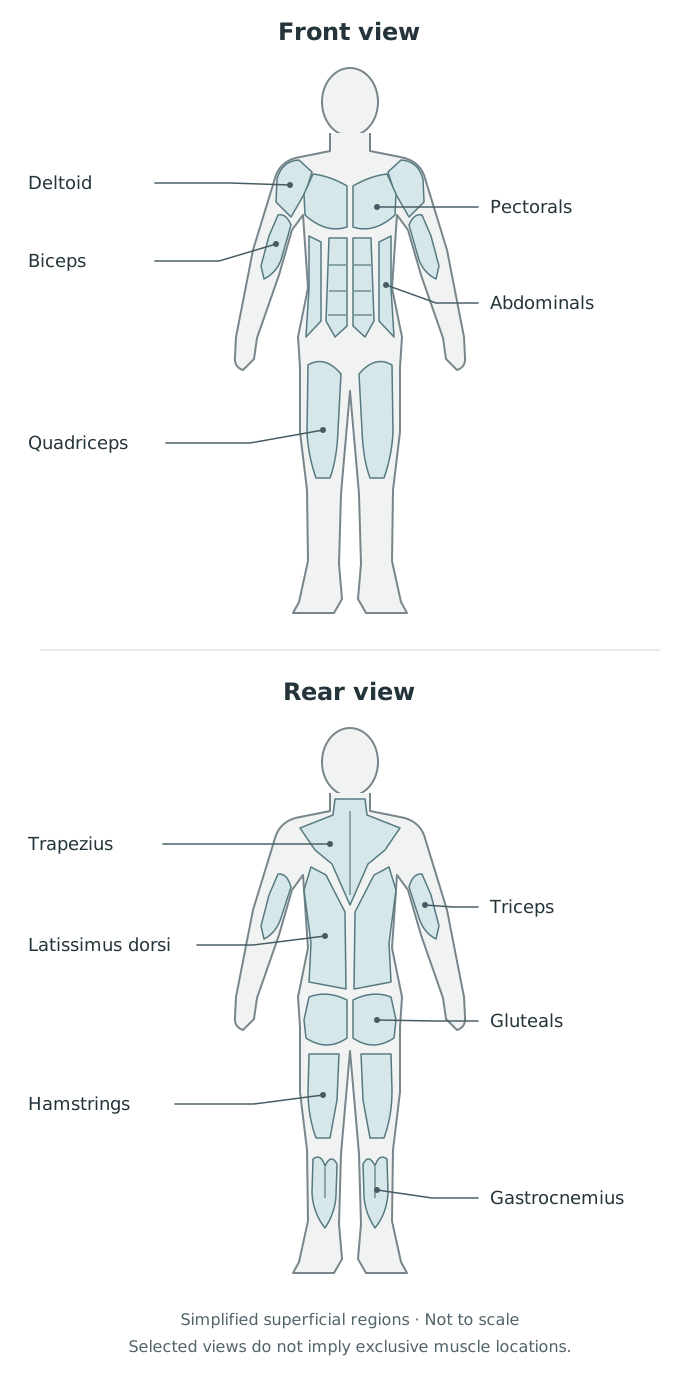
Front and rear views locate the eleven muscle groups. Notice the contrasting positions of biceps and triceps, and quadriceps and hamstrings.
The deltoid covers the top and outer part of the shoulder, giving it its rounded shape. It raises the arm sideways at the shoulder: during the outward phase of a star jump, the deltoids help lift the arms away from the body.
The pectorals lie at the front of the chest. They help move the arms forwards and across the body, as when bringing the racket arm across the chest during a tennis forehand.
Two important muscles are visible from behind. The trapezius spreads across the back of the neck and upper back towards the shoulders. It moves and stabilises the shoulder blades. Pulling the shoulder blades together during a rowing stroke uses the trapezius.
The latissimus dorsi is a broad, flat muscle across the middle and lower back. It pulls the arm down towards the body and backwards at the shoulder. During the pulling phase of front crawl, it helps draw the arm through the water.
The biceps is at the front of the upper arm. It bends the elbow, as during the lifting phase of a biceps curl. The triceps is at the back of the upper arm. It straightens the elbow, as when pushing upwards during a press-up. Although both are in the upper arm, their movements occur at the elbow.
The abdominals lie at the front and sides of the trunk, between the ribcage and pelvis. They help bend the trunk forwards during a sit-up and rotate it during a cricket batting stroke. This shows why a muscle group can contribute to more than one kind of movement.
The gluteals are the muscles of the buttocks. They help extend the hip, moving the thigh backwards. During sprinting, they contribute to the powerful backward drive of the leg.
The quadriceps lie at the front of the thigh and straighten the knee. During the striking phase of a football kick, they extend the knee to swing the lower leg towards the ball.
The hamstrings lie at the back of the thigh and bend the knee. They help draw the lower leg back when preparing to kick a football. They also help move the thigh backwards at the hip.
The gastrocnemius lies at the back of the lower leg, forming part of the calf. It points the foot downwards at the ankle and raises the heel. This action helps a runner push off the ground or a jumper push upwards at take-off.
A sporting action usually uses several muscle groups. When rising from a squat, the quadriceps straighten the knees while the gluteals extend the hips. To explain a muscle's use clearly, identify the body part that moves and the phase of the action: ‘quadriceps straighten the knees as the performer stands up’ is more informative than ‘quadriceps are used in squats’.
Get unlimited access to all revision notes, key terms, and exam tips.
| Muscle group | Location |
|---|---|
| Deltoid | Top and outer shoulder |
| Trapezius | Back of neck and upper back |
| Latissimus dorsi | Middle and lower back |
| Pectorals | Front of chest |
| Biceps | Front of upper arm |
| Triceps | Back of upper arm |
| Abdominals | Front and sides of trunk |
| Quadriceps | Front of thigh |
| Hamstrings | Back of thigh |
| Gluteals | Buttocks |
| Gastrocnemius | Back of lower leg: calf |
Application pattern: muscle → movement → specific phase of a sporting action.
Get unlimited access to all revision notes, key terms, and exam tips.
Give a precise location: ‘front of the upper arm’ identifies the biceps more clearly than ‘in the arm’.
Link a muscle to a particular movement and phase of an action, not just a sport: quadriceps straighten the knee during the striking phase of a football kick.
Check whether a body diagram shows the front or back before labelling it. Distinguish the shoulder, upper arm, thigh and lower leg.
Do not confuse the trapezius in the upper back and neck with the latissimus dorsi across the middle and lower back.
Deltoid
A muscle covering the top and outer shoulder that helps raise the arm sideways away from the body.
Trapezius
A muscle across the back of the neck and upper back that moves and stabilises the shoulder blades.
Latissimus dorsi
A broad muscle across the middle and lower back that pulls the arm down towards the body and backwards at the shoulder.
Pectorals
Muscles at the front of the chest that help bring the arm forwards and across the body.
Biceps
A muscle at the front of the upper arm that bends the elbow.
Triceps
A muscle at the back of the upper arm that straightens the elbow.
Abdominals
Muscles at the front and sides of the trunk that help bend the trunk forwards and rotate it.
Quadriceps
A muscle group at the front of the thigh that straightens the knee.
Hamstrings
A muscle group at the back of the thigh that bends the knee and helps move the thigh backwards at the hip.
Gluteals
Muscles of the buttocks that help move the thigh backwards and outwards at the hip.
Gastrocnemius
A calf muscle at the back of the lower leg that points the foot downwards and raises the heel.
Put your knowledge into practice — try past paper questions for Physical Education
Deltoid
A muscle covering the top and outer shoulder that helps raise the arm sideways away from the body.
Trapezius
A muscle across the back of the neck and upper back that moves and stabilises the shoulder blades.
Latissimus dorsi
A broad muscle across the middle and lower back that pulls the arm down towards the body and backwards at the shoulder.
Pectorals
Muscles at the front of the chest that help bring the arm forwards and across the body.
Biceps
A muscle at the front of the upper arm that bends the elbow.
Triceps
A muscle at the back of the upper arm that straightens the elbow.
Abdominals
Muscles at the front and sides of the trunk that help bend the trunk forwards and rotate it.
Quadriceps
A muscle group at the front of the thigh that straightens the knee.
Hamstrings
A muscle group at the back of the thigh that bends the knee and helps move the thigh backwards at the hip.
Gluteals
Muscles of the buttocks that help move the thigh backwards and outwards at the hip.
Gastrocnemius
A calf muscle at the back of the lower leg that points the foot downwards and raises the heel.