

Loading…
Loading…
Loading…
OCR GCSE Combined Science A · J250
OCR J250 · B3.3b Check the specification (PDF) (opens in a new tab)
Glucose is a sugar carried in the blood to cells, where it can be used in respiration. Blood glucose concentration means the amount of glucose in a given volume of blood. This concentration needs to stay within a suitable range rather than continually rising or falling.
After a meal, glucose absorbed into the blood can increase its concentration. Insulin helps bring a high blood glucose concentration back towards its normal level.
Cells in the pancreas detect an increase in blood glucose concentration. In response, the pancreas releases insulin into the bloodstream.
Insulin is a hormone: a chemical messenger carried in the blood to cells where it produces a response. The pancreas acts as an endocrine gland because it releases hormones directly into the blood. Insulin therefore links detection of the change in the pancreas with a response elsewhere in the body.
Insulin stimulates liver and muscle cells to take up glucose from the bloodstream. It also stimulates the storage of glucose as glycogen in these cells.
Glycogen is a large carbohydrate made from many glucose units joined together. Unlike glucose, it is insoluble, making it suitable for storage for later use. Insulin acts as the signal for these changes; it does not itself chemically convert glucose into glycogen.
As glucose is removed from the blood and stored, blood glucose concentration falls back towards the normal range.
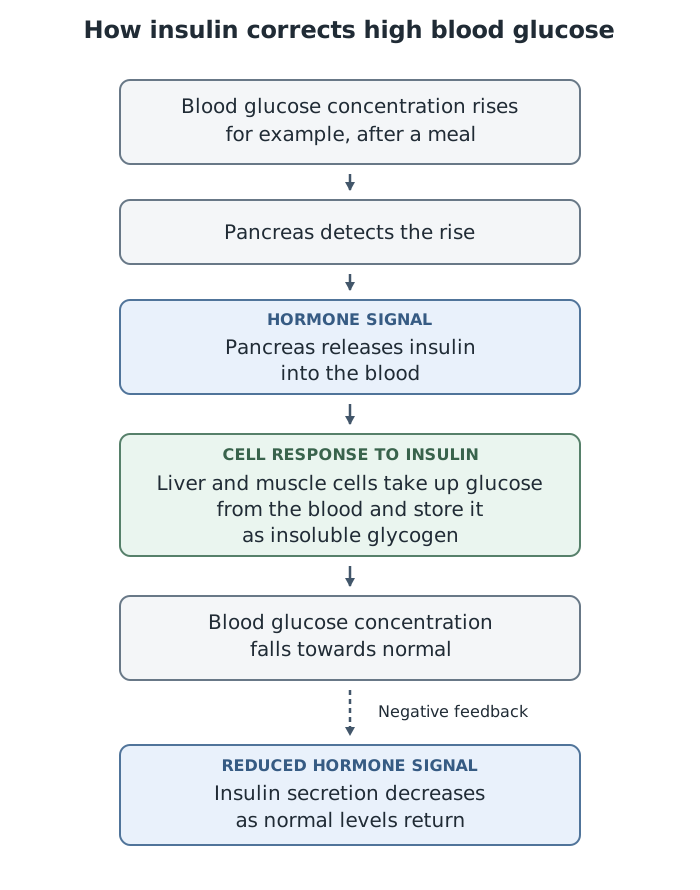
Insulin lowers a raised blood glucose concentration by stimulating glucose uptake and storage.
As blood glucose returns towards its normal level, insulin secretion is reduced, so the glucose-lowering response decreases. This prevents the response from continuing at the same strength once the original rise has been corrected.
This is negative feedback: the response opposes the original change. Here, a rise in blood glucose triggers a response that lowers it. The aim is not to remove all glucose from the blood, but to maintain a suitable concentration.
High blood glucose → detected by the pancreas → insulin released into the blood → liver and muscle cells take up glucose and store it as glycogen → blood glucose falls towards normal.
The response opposes the original rise in blood glucose. As normal levels return, insulin secretion is reduced.
Give the complete sequence: blood glucose rises → pancreas releases insulin → liver and muscle cells take up glucose and store it as glycogen → blood glucose falls.
Distinguish glucose, the sugar carried in the blood, from glycogen, its storage form.
Insulin is a hormone, not an enzyme: it stimulates cells to take up and store glucose rather than converting glucose itself.
It can see this note and what your specification asks for.
Answers are free with an account.
1 free note left this week
Get more free notesYour answer sets when this note comes back for review, or marks it complete.
Was this note helpful?
Log in to tell us whether it helped, or to report a problem.
Last updated
Blood glucose concentration
The amount of glucose in a given volume of blood.
Hormone
A chemical messenger released by a gland into the blood and carried to cells where it produces a response.
Insulin
A hormone released by the pancreas that lowers blood glucose concentration by stimulating glucose uptake and storage.
Pancreas
An organ that detects changes in blood glucose concentration and releases insulin when the concentration rises too high.
Glycogen
An insoluble carbohydrate made from many glucose units joined together, used to store glucose in liver and muscle cells.
Negative feedback
A control process in which a change triggers a response that opposes the original change, returning conditions towards their normal level.
Put your knowledge into practice — try past paper questions for Combined Science A
Blood glucose concentration
The amount of glucose in a given volume of blood.
Hormone
A chemical messenger released by a gland into the blood and carried to cells where it produces a response.
Insulin
A hormone released by the pancreas that lowers blood glucose concentration by stimulating glucose uptake and storage.
Pancreas
An organ that detects changes in blood glucose concentration and releases insulin when the concentration rises too high.
Glycogen
An insoluble carbohydrate made from many glucose units joined together, used to store glucose in liver and muscle cells.
Negative feedback
A control process in which a change triggers a response that opposes the original change, returning conditions towards their normal level.