

Loading…
Loading…
Loading…
OCR GCSE Combined Science A · J250
OCR J250 · B6.3f Specific Infections and Diseases Check the specification (PDF) (opens in a new tab)
An infection occurs when a pathogen enters the body and multiplies. A pathogen is an agent that causes infectious disease. Human infections can be caused by viruses, bacteria or fungi. These are different types of pathogen, so identifying the type matters when choosing a treatment.
A communicable disease can spread between organisms. To describe an infection clearly, connect three things: what causes it, how the pathogen reaches another person, and what effects it has on the body. Pathogens can cause harm by damaging cells, producing toxins or preventing tissues from functioning normally. The resulting effects may produce symptoms, but an infected person does not always have obvious symptoms.
Influenza, often called flu, is caused by influenza viruses. It spreads through the air and through direct transmission between people. For example, coughing can release droplets carrying the virus, allowing it to reach another person.
Influenza commonly causes fever, coughing, a sore throat, headache and muscle pains. Its effects therefore extend beyond the airways: someone with flu may also feel generally unwell and achy. Antibiotics do not treat influenza because they act against bacteria, not viruses.
Salmonella food poisoning is caused by Salmonella bacteria. The bacteria enter the body when someone consumes contaminated food or water. This is a different transmission route from breathing in an airborne pathogen.
The infection affects the digestive system, causing abdominal cramps, diarrhoea and vomiting. The name Salmonella refers to the bacteria responsible, rather than to a virus or a fungus.
Athlete's foot is caused by fungi, including species of Trichophyton. It can spread through direct contact with an infected person.
The infection affects the skin of the feet, causing itching and redness, and sometimes ulcers. This provides a useful contrast with influenza and Salmonella: a fungal infection can affect the skin rather than causing a respiratory or digestive illness.
A sexually transmitted infection, or STI, is an infection that can pass between people through sexual contact. STI describes a route of transmission, not a pathogen type: some STIs are bacterial and others are viral.
Gonorrhoea is a bacterial STI. It commonly spreads through sex without a condom, including vaginal, anal and oral sex. It can also spread through shared sex toys.
Symptoms can include pain or burning when urinating and unusual discharge, which may be yellow or greenish. Some people have no obvious symptoms. Untreated gonorrhoea can damage the reproductive system and cause infertility, meaning difficulty or inability to have children. It can be treated with antibiotics because its pathogen is a bacterium.
HIV, human immunodeficiency virus, is a viral STI. It spreads when infected body fluids, such as blood, semen or vaginal fluids, enter another person's bloodstream. Routes include sex without a condom and sharing equipment used to inject drugs. HIV can also pass from a pregnant person to their baby during pregnancy or birth.
HIV does not spread through ordinary everyday contact such as hugging, shaking hands or sharing cups and cutlery. The important distinction is between contact that allows infected fluids into the bloodstream and normal social contact.
The immune system normally protects the body against pathogens. White blood cells are central to this defence. HIV attacks and destroys some of these cells, progressively weakening the body's ability to fight other infections.
Some people develop a short flu-like illness around two to six weeks after infection, but there may then be no further symptoms for years. A person can therefore have HIV without knowing it.
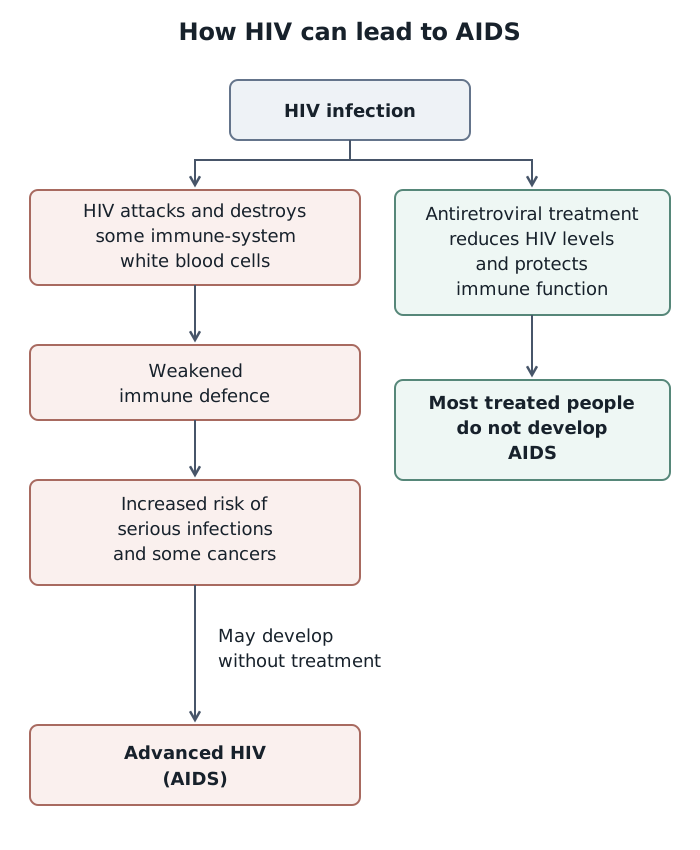
HIV weakens immune defence. Effective treatment can prevent progression to AIDS.
AIDS, acquired immune deficiency syndrome, is an advanced stage of HIV infection. It involves serious illnesses that develop after the immune system has been badly damaged. These may include tuberculosis, pneumonia and some cancers. HIV is the virus responsible; AIDS is not a separate pathogen.
Without treatment, HIV may eventually lead to AIDS. However, this is not inevitable. Antiretroviral medicines reduce the amount of HIV in the body, protecting the immune system. There is currently no cure, but with effective treatment most people with HIV can live long, healthy lives and do not develop AIDS. People whose treatment maintains an undetectable viral load do not transmit HIV through sex.
| Infection | Pathogen type | Transmission | Main effects |
|---|---|---|---|
| Influenza | Virus | Airborne and direct transmission | Fever, cough, sore throat, headache, muscle pains |
| Salmonella food poisoning | Bacterium | Contaminated food or water | Abdominal cramps, diarrhoea, vomiting |
| Athlete's foot | Fungus | Direct contact | Itching, redness and sometimes ulcers on the feet |
HIV → damage to immune-system white blood cells → weakened defence → increased risk of serious illness.
For each infection, link the disease to its pathogen type, how it spreads and its effects on the body.
Distinguish HIV, the virus, from AIDS, the advanced condition that can develop after severe immune-system damage.
Do not assume that an infected person must have symptoms: both HIV and gonorrhoea can be present without obvious symptoms.
Antibiotics treat bacterial infections, not viral infections such as influenza or HIV.
It can see this note and what your specification asks for.
Answers are free with an account.
1 free note left this week
Get more free notesYour answer sets when this note comes back for review, or marks it complete.
Was this note helpful?
Log in to tell us whether it helped, or to report a problem.
Last updated
Pathogen
An agent, such as a virus, bacterium or fungus, that causes infectious disease.
Communicable disease
A disease caused by a pathogen that can spread between organisms.
Transmission
The passing of a pathogen from one organism to another.
Symptom
A change experienced by an infected person, such as pain or tiredness, that indicates illness.
Sexually transmitted infection
An infection that can pass between people through sexual contact.
HIV
Human immunodeficiency virus: a virus that damages cells of the immune system and weakens the body's defence against disease.
AIDS
Acquired immune deficiency syndrome: an advanced stage of HIV infection involving serious illnesses after severe damage to the immune system.
Put your knowledge into practice — try past paper questions for Combined Science A
Pathogen
An agent, such as a virus, bacterium or fungus, that causes infectious disease.
Communicable disease
A disease caused by a pathogen that can spread between organisms.
Transmission
The passing of a pathogen from one organism to another.
Symptom
A change experienced by an infected person, such as pain or tiredness, that indicates illness.
Sexually transmitted infection
An infection that can pass between people through sexual contact.
HIV
Human immunodeficiency virus: a virus that damages cells of the immune system and weakens the body's defence against disease.
AIDS
Acquired immune deficiency syndrome: an advanced stage of HIV infection involving serious illnesses after severe damage to the immune system.