

Loading…
Loading…
Loading…
Eduqas GCSE Geography A · C111
Eduqas C111 · 6.3.2 Sustainable Water Management Check the specification (PDF) (opens in a new tab)
Groundwater is water stored beneath the surface in spaces and cracks within soil and rock. An aquifer is a permeable layer that stores this water and allows it to move through it. Wells provide access to groundwater, which can be pumped to the surface for use.
Aquifers are replenished through recharge: rainwater infiltrates the ground and moves down into the groundwater store. Abstraction means removing water. If abstraction exceeds recharge over time, the amount stored decreases. This is over-abstraction. Groundwater is therefore not an unlimited reserve: a supply can support people today while being used at a rate that threatens its future.
Mexico City provides a case study of groundwater over-abstraction. A 2018 water-policy study described a metropolitan population of over 20 million relying on dwindling water resources. The city occupies a former lakebed; lakes and canals that once surrounded settlements were drained as the city developed.
This helps explain an apparent contradiction. Heavy rain can produce flash flooding, yet many residents lack a reliable water supply. Floodwater on the surface is not automatically available as clean water in household taps or as recharge to underground stores. Large drainage systems remove stormwater, while the city still needs dependable supplies for its population.
Growing demand puts pressure on the aquifers. Urban sprawl also restricts recharge as development covers land through which rainwater could enter the ground. The city increasingly imports water from other basins to support its supply. This meets an immediate need but creates further costs and dependence.
The direct environmental consequence of over-abstraction is aquifer depletion: groundwater reserves decline. Mexico City also experiences ground subsidence, meaning that the ground surface sinks. Removing groundwater can allow water-bearing sediments to compact, lowering the land surface. Reducing extraction has helped the city manage both depletion and subsidence, but these remain important water-management challenges.
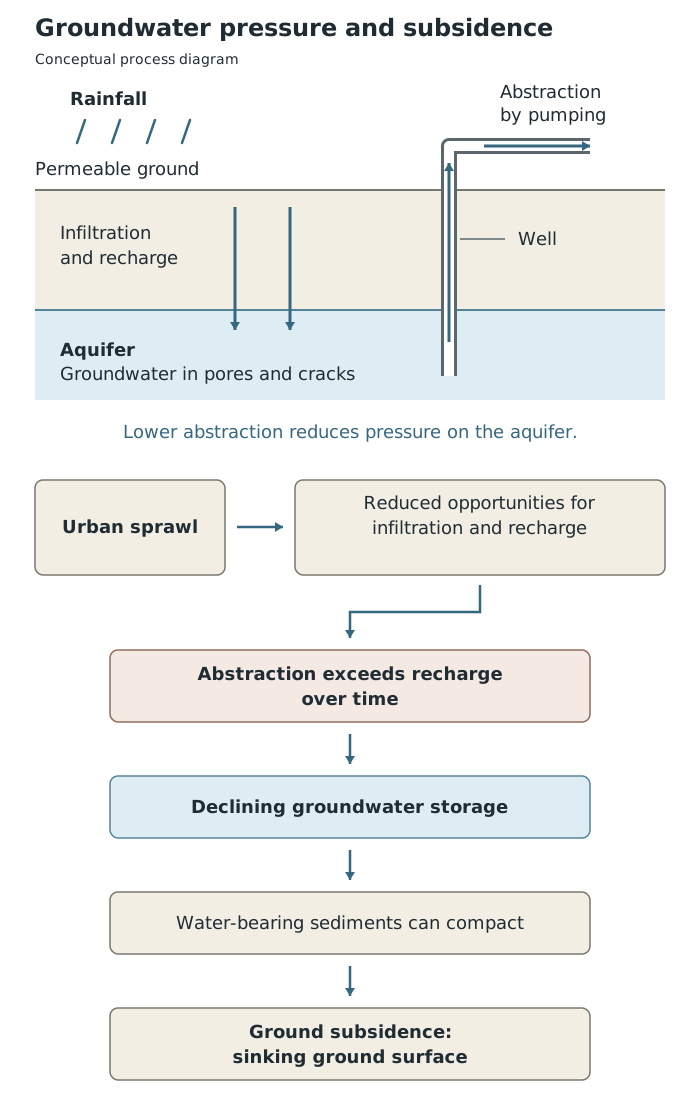
Groundwater stores decline when abstraction exceeds recharge. Urban development can restrict replenishment, while reduced extraction eases pressure on the aquifer.
The social consequences concern both access and health. An intermittent supply makes it difficult for residents to obtain water reliably, and the 2018 study identified problems ensuring reliable water quality. Water insecurity is not experienced equally: poorer households have fewer resources to cope with unreliable supplies. If the crisis worsens, economically vulnerable residents are likely to bear a particularly heavy health and financial burden.
The economic consequences include the expense of maintaining water supplies. Importing water from other basins is costly and energy-intensive. It also reduces the city's control over its own supply because it depends on resources from elsewhere.
Over-abstraction is part of a wider management problem rather than the cause of every difficulty. Ageing infrastructure also wastes water: the 2018 study reported 40% water-supply losses in the distribution system. These losses increase the amount that must be supplied to deliver usable water to consumers, adding pressure to already stretched resources.
One possible future is to continue relying on groundwater alongside increasing imports and large engineering schemes. This can maintain supplies and help meet growing demand. Mexico City has already improved access to tap water and developed major drainage and pumping systems to reduce flood impacts.
However, expanding supply alone does not solve over-abstraction or waste. Continued pressure on aquifers threatens groundwater reserves, while greater dependence on imports increases energy use and costs. This approach can address immediate shortages without securing a sustainable long-term water balance.
A different future combines lower demand, reduced losses and protection of groundwater stores. Repairing leaks would allow more of the water already supplied to reach consumers. Water-saving education and financial incentives could reduce consumption, making lower abstraction more achievable. Charges intended to discourage waste would need to account for poorer households' ability to afford essential water.
Green infrastructure, such as stormwater-retaining pavements, could hold back rainfall rather than rapidly draining it away. Measures designed to increase infiltration could help recharge aquifers, while rainwater harvesting could provide water for suitable local uses and reduce pressure on other supplies. These approaches complement rather than simply replace pipes, treatment facilities and pumping systems.
There are limits and disagreements. The 2018 study identified uncertainty about aquifer recharge rates and disagreement among stakeholders over infiltration and recharge proposals. Recharge schemes therefore need investigation and monitoring. Rainwater use also raises questions about water quality and appropriate uses. Investment, cooperation and effective implementation are necessary; announcing an environmental policy does not guarantee that it works.
The strongest approach is a combination of measures, not a single solution. Leak repairs and reduced demand can ease pressure on groundwater, while carefully planned recharge and local water collection can improve the use of rainfall. Existing supply infrastructure remains important for dependable access.
This is more sustainable than continually expanding extraction and imports because it addresses both water demand and the depletion of stores. Its success should be judged by whether groundwater pressure falls, supplies become more reliable, costs remain manageable and poorer residents share in the benefits.
Link each consequence to its cause: explain how excessive groundwater abstraction reduces stored water and contributes to ground subsidence.
Use Mexico City evidence, such as the 40% distribution losses reported in 2018, rather than relying only on general statements about water shortages.
Distinguish consequences of over-abstraction from other connected problems, such as ageing infrastructure and urban sprawl.
When considering geographical futures, compare benefits, costs and effects on different groups, then justify which approach is more sustainable.
It can see this note and what your specification asks for.
Answers are free with an account.
1 free note left this week
Get more free notesYour answer sets when this note comes back for review, or marks it complete.
Was this note helpful?
Log in to tell us whether it helped, or to report a problem.
Last updated
Groundwater
Water stored below the ground in spaces and cracks within soil and rock.
Aquifer
A layer of permeable rock or sediment that stores groundwater and allows it to move through it.
Recharge
The replenishment of groundwater stores as water infiltrates the ground and moves down into an aquifer.
Over-abstraction
The removal of groundwater faster than it is replenished over time, causing the stored supply to decline.
Subsidence
The sinking or settling of the ground surface.
Geographical future
Possible future conditions of a place resulting from different decisions, actions and changes.
Sustainable water management
Managing water to meet present needs without undermining future supplies or causing unacceptable social, economic or environmental harm.
Put your knowledge into practice — try past paper questions for Geography A
Groundwater
Water stored below the ground in spaces and cracks within soil and rock.
Aquifer
A layer of permeable rock or sediment that stores groundwater and allows it to move through it.
Recharge
The replenishment of groundwater stores as water infiltrates the ground and moves down into an aquifer.
Over-abstraction
The removal of groundwater faster than it is replenished over time, causing the stored supply to decline.
Subsidence
The sinking or settling of the ground surface.
Geographical future
Possible future conditions of a place resulting from different decisions, actions and changes.
Sustainable water management
Managing water to meet present needs without undermining future supplies or causing unacceptable social, economic or environmental harm.