Loading…


Loading…
Loading…
Loading…
Edexcel GCSE Combined Science · 1SC0
Edexcel 1SC0 · Acids Acids Check the specification (PDF) (opens in a new tab)
Recall that acids in solution provide hydrogen ions, while alkalis in solution provide hydroxide ions.
Recall that neutral solutions have a pH of 7, acidic solutions have pH values below 7, and alkaline solutions have pH values above 7.
Recall the specific colour changes of indicators, including litmus, methyl orange, and phenolphthalein, when exposed to acids and alkalis.
Understand the inverse relationship between hydrogen ion concentration and pH in acidic solutions, and the direct relationship between hydroxide ion concentration and pH in alkaline solutions.
Recall that a tenfold increase in hydrogen ion concentration corresponds to a decrease of 1 on the pH scale.
Investigate the change in pH when adding powdered calcium hydroxide or calcium oxide to a fixed volume of dilute hydrochloric acid.
Explain the terms dilute and concentrated concerning the amount of solute in a solution.
Explain the difference between weak and strong acids based on their degree of dissociation into ions in solution.
Understand that a base is a substance that reacts with an acid to produce only a salt and water.
Recall that alkalis are defined as soluble bases.
Explain the general reactions of aqueous acids with metals, metal oxides, metal hydroxides, and metal carbonates to produce specific salts.
Describe the standard chemical tests for hydrogen gas and carbon dioxide gas (using limewater).
Describe a neutralisation reaction as the chemical interaction between an acid and a base.
Explain acid-alkali neutralisation as the reaction where hydrogen ions from the acid combine with hydroxide ions from the alkali to form water.
Explain the steps and reasoning for preparing soluble salts from an acid and an insoluble reactant, including adding excess reactant, removing the excess, and isolating the salt and water.
Explain the steps and reasoning for preparing soluble salts from an acid and a soluble reactant using titration methods.
Investigate the preparation of pure, dry hydrated copper sulfate crystals from copper oxide, utilizing a water bath.
Describe the procedure for conducting an acid-alkali titration using a burette, pipette, and indicator to prepare a pure, dry salt.
Recall the general solubility rules for common substances in water, covering sodium, potassium, ammonium salts, nitrates, chlorides, sulfates, carbonates, and hydroxides.
Predict the formation of a precipitate when specific solutions are mixed, using solubility rules, and identify the resulting precipitate.
Describe the experimental method required to prepare a pure, dry sample of an insoluble salt.
A soluble salt dissolves in water. When it is made by reacting an acid with a base, the immediate product is a salt solution, not dry crystals. Preparing the crystals therefore involves two jobs: making a solution without leftover reactants, then removing enough water for the salt to crystallise.
The method depends on whether the reactant added to the acid is soluble. An insoluble solid can be added in excess and the leftover solid filtered out. A soluble reactant cannot be removed this way: it passes through filter paper along with the salt solution. Instead, a titration finds the correct reacting volumes.
Copper(II) oxide is a black, insoluble solid. It acts as a base and reacts with dilute sulfuric acid to produce copper(II) sulfate and water. This is a neutralisation reaction.
Copper(II) oxide + sulfuric acid → copper(II) sulfate + water
Initially, added copper oxide reacts and disappears, producing a blue solution. Adding more until some black solid remains after stirring makes the copper oxide excess. This ensures that all the acid has reacted: leftover acid would contaminate the salt solution.
The excess copper oxide is insoluble, so filtration removes it. The black residue stays on the filter paper, while the blue filtrate passes through. The filtrate contains dissolved copper sulfate and water, with neither excess acid nor excess copper oxide.
The apparatus includes a measuring cylinder, conical flask, water bath, spatula, stirring rod, filter funnel and paper, beaker, evaporating basin and Petri dish or watch glass. For heating the evaporation water bath, use a Bunsen burner, tripod, gauze and heat mat. Tongs allow hot apparatus to be handled safely.
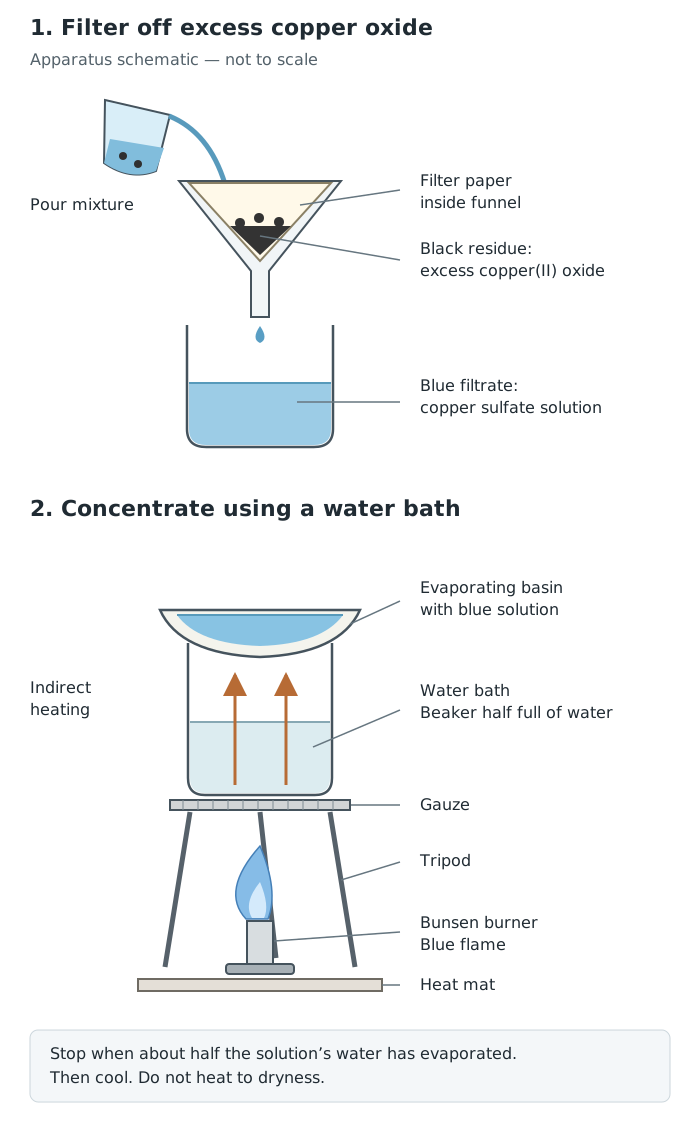
Filtration removes insoluble copper oxide; a water bath then gently concentrates the copper sulfate solution.
Evaporation makes the solution more concentrated. Cooling and further evaporation allow dissolved copper sulfate to form solid crystals. Do not keep heating until the basin is dry: strong heating can damage the hydrated product, and concentrated solutions can spit.
The final crystals are blue hydrated copper sulfate. Hydrated means that water molecules are part of the crystal structure; this is called water of crystallisation. A dry hydrated crystal has no liquid water coating its surface, but still contains its water of crystallisation. Leaving the remaining liquid to evaporate produces dry crystals without strong heating.
Record the appearance of the starting materials and the final solution, then the colour, shape and size of the crystals. The acid is colourless, copper oxide is black, and the copper sulfate solution and hydrated crystals are blue. Describe the crystal shapes and sizes actually obtained rather than assuming every preparation produces identical crystals.
Wear eye protection throughout. Avoid contact with the acid and copper compounds, keep the water bath stable, and handle hot apparatus carefully. Tie back long hair and keep flammable materials away from the Bunsen flame.
To prepare sodium chloride, hydrochloric acid can react with sodium hydroxide solution:
Sodium hydroxide is an alkali: a soluble base. If it is added in excess, the extra sodium hydroxide remains dissolved. Filtration cannot separate it from the sodium chloride. Nor can the correct proportions be judged from the appearance of these colourless solutions.
A titration solves this problem by measuring the volume of acid needed to neutralise a fixed volume of alkali. A suitable indicator makes the end point visible. For hydrochloric acid added to sodium hydroxide, phenolphthalein changes from pink to colourless at the end point.
A pipette measures a fixed volume accurately. A burette delivers a variable volume accurately, controlled by a tap.
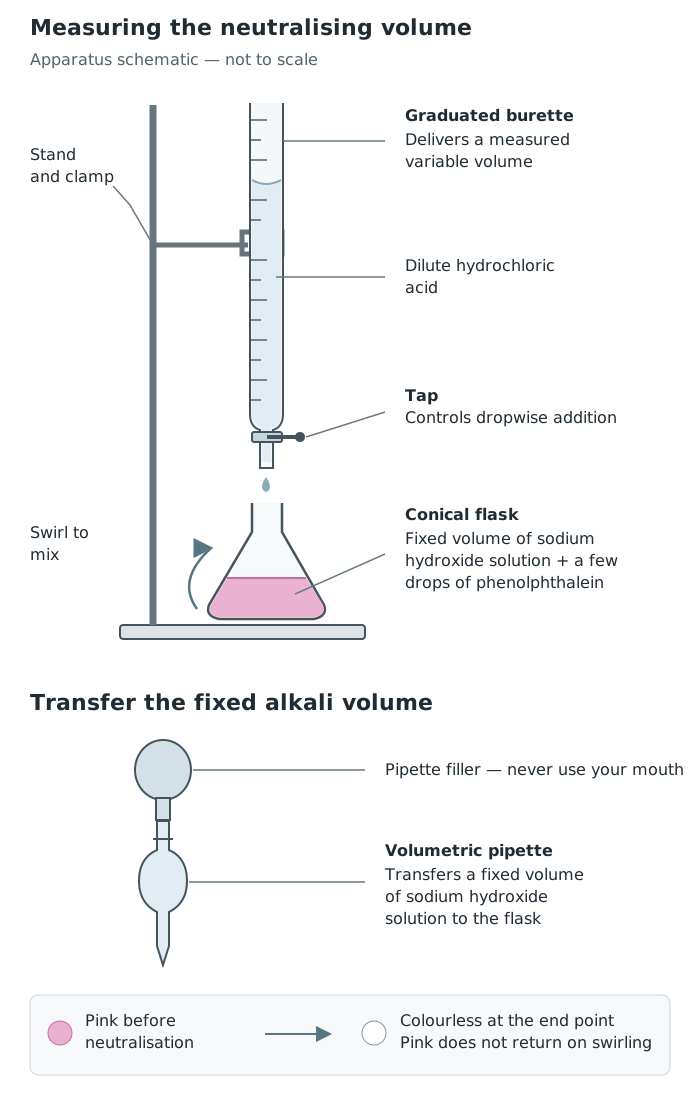
A pipette fixes the alkali volume; the burette measures the acid needed to reach the indicator's end point.
Repeat the titration to check the volume needed. The correct reacting proportions depend on the solutions used; they are not necessarily equal volumes.
The solution from the titration contains indicator, so it is not suitable for making a pure salt. Prepare a fresh mixture using the same fixed volume of alkali and the measured neutralising volume of acid, but no indicator.
These proportions use up both reactants, leaving only sodium chloride and water. Gently evaporate some water, then allow the concentrated solution to cool and crystallise. Let the remaining liquid evaporate to obtain dry salt. Sodium chloride crystals, unlike hydrated copper sulfate crystals, contain no water of crystallisation.
Get unlimited access to all revision notes, key terms, and exam tips.
Link excess insoluble reactant to using up all the acid, then link filtration to removing the unreacted solid.
The copper sulfate is in the filtrate, not the residue: dissolved salts pass through filter paper.
For titration, use the measured reacting volumes, not necessarily equal volumes of acid and alkali.
Repeat the titration reaction without indicator when preparing the salt; otherwise the indicator contaminates the product.
Dry hydrated crystals have no liquid water on their surface but still contain water of crystallisation. Do not heat them strongly to remove this water.
Salt
A substance formed when the hydrogen in an acid is replaced by a metal or ammonium ion.
Excess reactant
A reactant supplied in a greater amount than is needed to react completely with the other reactant, so some remains unreacted.
Filtrate
The liquid that passes through filter paper during filtration.
Residue
The insoluble solid left on filter paper during filtration.
Crystallisation
The formation of solid crystals from a solution, for example as water evaporates or a concentrated solution cools.
Hydrated
Containing water molecules as part of a crystal's structure.
Water of crystallisation
Water molecules incorporated into the structure of a hydrated crystal.
Titration
A method of finding the volume of one solution needed to react completely with a measured volume of another solution.
End point
The point in a titration at which the indicator shows its lasting colour change.
Titre
The volume of solution delivered from a burette during a titration, calculated as final reading minus initial reading.
Put your knowledge into practice — try past paper questions for Combined Science
Salt
A substance formed when the hydrogen in an acid is replaced by a metal or ammonium ion.
Excess reactant
A reactant supplied in a greater amount than is needed to react completely with the other reactant, so some remains unreacted.
Filtrate
The liquid that passes through filter paper during filtration.
Residue
The insoluble solid left on filter paper during filtration.
Crystallisation
The formation of solid crystals from a solution, for example as water evaporates or a concentrated solution cools.
Hydrated
Containing water molecules as part of a crystal's structure.
Water of crystallisation
Water molecules incorporated into the structure of a hydrated crystal.
Titration
A method of finding the volume of one solution needed to react completely with a measured volume of another solution.
End point
The point in a titration at which the indicator shows its lasting colour change.
Titre
The volume of solution delivered from a burette during a titration, calculated as final reading minus initial reading.
Reasons: warming speeds the reaction; excess oxide uses up all acid; filtration removes excess solid; evaporation concentrates the solution.
Dry ≠ anhydrous: hydrated crystals retain water of crystallisation. Avoid strong heating or heating to dryness. Wear eye protection and take care with hot apparatus.
Repeat to check the volume. Mix fresh solutions in the measured proportions without indicator, then concentrate, crystallise and dry.
Excess soluble reactant cannot be filtered out. Correct proportions leave only salt and water.
Get unlimited access to all revision notes, key terms, and exam tips.