Loading…


Loading…
Loading…
Loading…
Edexcel GCSE Combined Science · 1SC0
Edexcel 1SC0 · Ecosystems and Interdependence Check the specification (PDF) (opens in a new tab)
Ecologists study organisms in relation to their surroundings. An organism is one living thing, such as an individual oak tree. To understand its surroundings, we can consider progressively broader levels of organisation.
A population consists of organisms of the same species living in the same place at the same time. All the oak trees in a woodland form an oak population. The deer in that woodland form a different population: sharing a place does not make different species one population.
A community includes all the populations living in the same area at the same time. A woodland community can therefore include oak trees, deer, badgers and ants, alongside its other living organisms.
An ecosystem includes this living community, the non-living environment and the interactions between them. Light intensity, water availability and mineral ions are non-living components; plants and animals are living components. An ecosystem is therefore more than a collection of organisms.
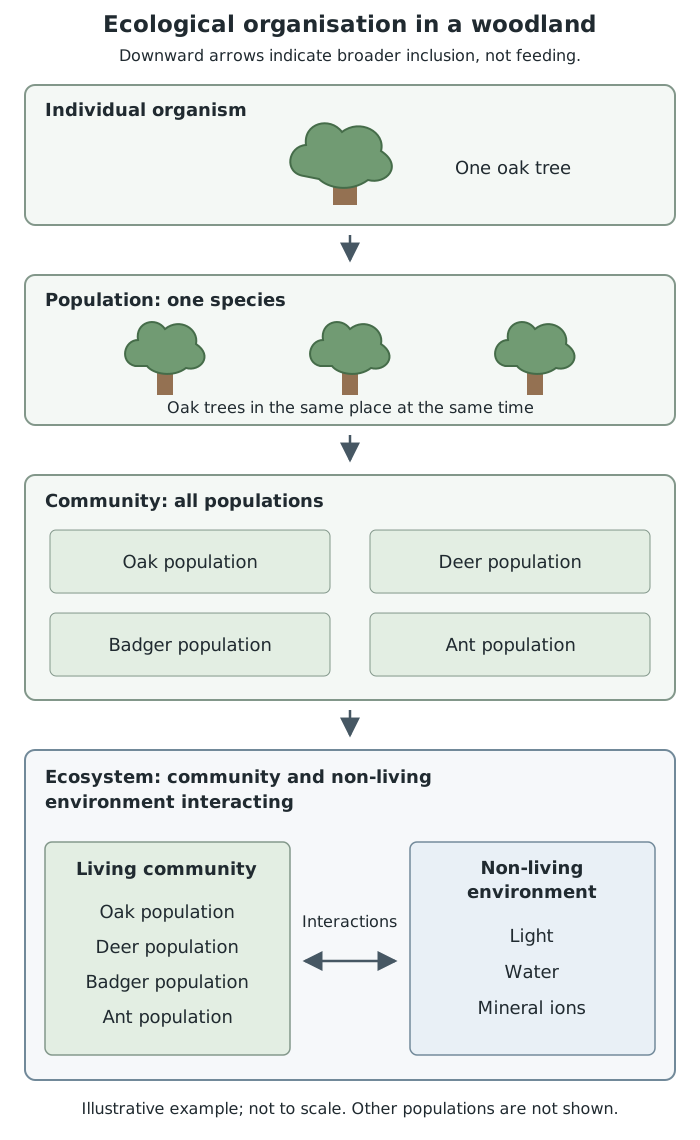
A community contains multiple populations; an ecosystem also includes the non-living environment and its interactions with the community.
These levels describe what is included, rather than a fixed physical size. An ecosystem can be as small as a garden pond or as extensive as Antarctica. A habitat, by contrast, is the place where an organism lives: woodland is a habitat for the organisms described above.
An abiotic factor is a non-living environmental factor. Examples include temperature, light intensity, water availability and the presence or concentration of pollutants. Biotic factors involve the living components of the environment, including competition and predation.
Environmental changes can affect both population size and distribution. Population size means the number of organisms; distribution means where they occur. A change can increase the population of one species while decreasing that of another, so a community does not necessarily respond as a single unit.
Temperature affects enzyme activity and therefore processes such as respiration and growth. Organisms have a range of temperatures in which they can survive and reproduce successfully. Conditions outside this range can reduce their population size or restrict where they live. Different species tolerate different temperatures, so a temperature change can alter the mixture of species in a community.
Light intensity affects photosynthesis. Where light limits photosynthesis, plants make less glucose, which can reduce their growth. Some plants grow well in shade, whereas others require brighter conditions. Light therefore influences which plants grow in an area and how much food and shelter they provide for animals.
Water availability also affects plant growth: plants need water for photosynthesis and other cell processes. A shortage of water can reduce plant growth, leaving less food for plant-eating animals. Too much water can also be harmful. In waterlogged soil, roots may receive too little oxygen for aerobic respiration. Species differ in their tolerance of dry or waterlogged conditions, affecting their distribution.
Pollutants can harm sensitive organisms. For example, lichens sensitive to sulphur dioxide cannot grow where the concentration of this air pollutant becomes too high. Such pollution can restrict where these lichens occur and reduce their population size.
These effects can spread through feeding relationships. If dry conditions reduce grass growth, rabbits may have less food; a decline in rabbits can then leave less food for foxes. An abiotic change can therefore affect animals indirectly through its effect on plants.
Competition occurs when organisms need the same resources and there is not enough for all of them. It can occur between individuals of the same species or between different species.
Plants compete for light, water, mineral ions and space to grow. Animals compete for food, water and territory; animals of the same species can also compete for mates. Organisms that obtain fewer resources may grow less well, be less likely to survive or produce fewer offspring. Their population can consequently decrease.
Red and grey squirrels provide a real example. Grey squirrels were introduced to Britain from America in the nineteenth century. They share habitats and food sources with native red squirrels and can outcompete them for food. Competition has contributed to reductions in red squirrel numbers and distribution. Grey squirrels can also carry squirrelpox virus, which can be deadly to red squirrels: more than one biotic factor can affect the same population.
Predation is the killing and eating of one organism by another. The organism doing the eating is the predator, and the organism eaten is the prey. For example, foxes are predators of rabbits.
More predation can reduce the number of prey. This may happen when a new predator enters a community. The effects can extend to other species: if prey become scarce, existing predators may have less food and their populations may also decline. Conversely, fewer predators can allow prey numbers to increase, potentially increasing the amount of vegetation those prey consume.
Organisms in a community do not live independently of all the other species around them. They can depend on other species for food, shelter, pollination and seed dispersal. This dependence is called interdependence.
Each relationship connects populations. If a species that provides food or shelter is removed, organisms that depend on it may also be affected. Likewise, losing organisms that carry pollen or disperse seeds can affect the plants that depend on those services. Removing one species can therefore have consequences beyond that species, changing the wider community.
In parasitism, a parasite lives in or on another organism, called its host, and obtains resources from it. These resources may include food, shelter or a suitable place to reproduce. The parasite benefits, but the host is harmed rather than benefiting.
For example, fleas live on mammals such as dogs and feed on their blood. The flea gains nutrients and depends on the host as its food source. The dog loses blood and may suffer irritation. This is a form of dependence, but not one in which both participants benefit.
In mutualism, both species benefit from their relationship. Bees and many flowering plants are an example.
Bees obtain nectar from flowers as food, providing energy. As a bee visits a flower, pollen can attach to its body. When it visits another flower of the same species, it can transfer that pollen, helping to pollinate the plant. The bee gains food, while the plant gains help with reproduction.
If these pollinators decline, plants that depend on them may reproduce less successfully. If the flowering plants decline, bees may have less food. The relationship shows how the continued survival of organisms can depend on the presence of other species.
Get unlimited access to all revision notes, key terms, and exam tips.
Individual organism → population → community → ecosystem
Changes can affect population size and distribution differently for different species.
Abiotic factors:
Biotic factors:
Species depend on others for food, shelter, pollination and seed dispersal. Changes to one population can affect the wider community.
Get unlimited access to all revision notes, key terms, and exam tips.
A population contains organisms of one species; a community contains all the populations in an area.
When describing an ecosystem, include the non-living environment and its interactions with the living community.
Distinguish population size, meaning how many organisms there are, from distribution, meaning where they occur.
For interdependence, explain what one species provides for another, such as food, shelter, pollination or seed dispersal.
When explaining an environmental change, link the factor to survival, growth or reproduction, then to its effect on populations.
For mutualism, state the benefit to each species. For parasitism, identify the parasite and host and explain how the parasite benefits while the host is harmed.
Organism
A single living thing.
Population
A group of organisms of the same species living in the same place at the same time.
Community
All the populations of different species living in the same area at the same time.
Ecosystem
A community of organisms and the non-living components of its environment, interacting within an area.
Habitat
The place where an organism lives.
Abiotic factor
A non-living environmental factor, such as temperature, light intensity or water availability.
Biotic factor
A living component of an environment, or an influence involving living organisms.
Interdependence
The dependence of organisms on other organisms in their community.
Population size
The number of organisms in a population.
Distribution
Where organisms occur within an area.
Competition
The struggle between organisms for the same limited resources.
Predation
An interaction in which one organism, the predator, kills and eats another organism, the prey.
Parasitism
A relationship between species in which a parasite benefits by obtaining resources from a host, which is harmed.
Parasite
An organism that lives in or on a host and obtains resources from it, harming the host.
Host
An organism in or on which a parasite lives and from which the parasite obtains resources.
Mutualism
A relationship between two species in which both benefit.
Put your knowledge into practice — try past paper questions for Combined Science
Organism
A single living thing.
Population
A group of organisms of the same species living in the same place at the same time.
Community
All the populations of different species living in the same area at the same time.
Ecosystem
A community of organisms and the non-living components of its environment, interacting within an area.
Habitat
The place where an organism lives.
Abiotic factor
A non-living environmental factor, such as temperature, light intensity or water availability.
Biotic factor
A living component of an environment, or an influence involving living organisms.
Interdependence
The dependence of organisms on other organisms in their community.
Population size
The number of organisms in a population.
Distribution
Where organisms occur within an area.
Competition
The struggle between organisms for the same limited resources.
Predation
An interaction in which one organism, the predator, kills and eats another organism, the prey.
Parasitism
A relationship between species in which a parasite benefits by obtaining resources from a host, which is harmed.
Parasite
An organism that lives in or on a host and obtains resources from it, harming the host.
Host
An organism in or on which a parasite lives and from which the parasite obtains resources.
Mutualism
A relationship between two species in which both benefit.