Loading…


Loading…
Loading…
Loading…
Edexcel GCSE Combined Science · 1SC0
Edexcel 1SC0 · Cell Division and Growth Check the specification (PDF) (opens in a new tab)
A specialised cell is adapted for a particular job, such as carrying oxygen or transmitting nerve impulses. A stem cell is undifferentiated: it has not yet developed the features needed for a particular specialised role.
Stem cells have two important abilities. They can divide to produce more stem cells, maintaining a supply of undifferentiated cells. They can also differentiate, becoming specialised cells. Producing more cells and giving those cells particular functions are different processes, but both are needed to build and maintain tissues.
An embryo is an organism at an early stage of development. Its cells must eventually produce the many different tissues and organs of the body. Embryonic stem cells can differentiate into any type of specialised body cell, allowing these different tissues to develop.
This wide range of possibilities also makes embryonic stem cells valuable in medical research. Cells grown in the laboratory can be stimulated to differentiate into the types needed to replace damaged tissue.
Adult stem cells remain in particular tissues after early development. They produce new cells for growth and replace cells that are damaged or lost. Unlike embryonic stem cells, they can differentiate into only a limited range of related cell types.
For example, bone marrow inside bones contains stem cells that continually produce new blood cells throughout life, including red blood cells and white blood cells. Stem cells in the skin help replace skin cells. Their narrower range of possible cell types suits their role in maintaining particular tissues rather than building an entire body.
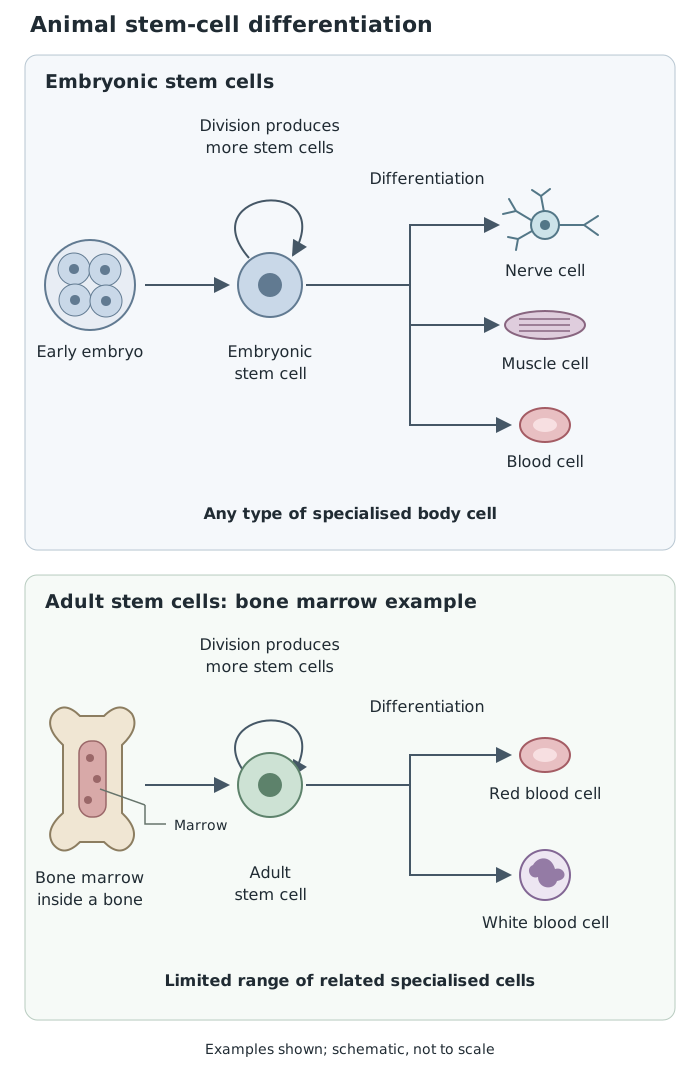
Both types can produce more stem cells, but embryonic stem cells have a wider range of possible specialised descendants. Bone marrow illustrates the more restricted range of adult stem cells.
Plants also retain unspecialised cells. These are found in regions of tissue called meristems, including the tips of roots and shoots and regions within stems and roots. Meristem cells divide by mitosis, maintaining a supply of unspecialised cells and producing cells that can differentiate into specialised plant cells.
At root and shoot tips, this supply of new cells enables continued growth in length. Cell division increases the number of cells; elongation increases their length; differentiation gives them the specialised features needed for their jobs. Meristems elsewhere in stems and roots also contribute to growth in width.
For example, cells produced by shoot meristems can form new leaves and flowers. Meristem cells also give rise to tissues such as xylem, which transports water, and phloem, which transports sugars. Meristems therefore do more than make a plant larger: they supply the specialised cells needed to build its growing structures.
Unlike adult animal stem cells, which produce a limited range of related cell types, meristem cells can give rise to any type of plant cell. Their continued activity allows plants to keep producing new growth.
The medical value of stem cells comes from their ability to produce specialised replacement cells. Scientists can grow stem cells in controlled laboratory conditions, a process called cell culture, and encourage them to differentiate. Suitable cells can then be transplanted into a patient.
Some uses are already established. Bone marrow transplants containing adult stem cells are used to treat some patients with leukaemia, a cancer affecting blood-forming cells. The transplanted stem cells can produce new blood cells.
Other uses have potential but should not be described as guaranteed cures:
Embryonic stem cells offer a wider range of possible replacement cells than adult stem cells. However, producing cells of the required type is only part of the challenge: a treatment must also work safely in the patient.
Replacing damaged cells could restore tissue function, reduce disability and improve quality of life. Growing replacement tissue could also reduce reliance on donated organs. Using a patient's own stem cells can reduce the risk of immune rejection.
There are important biological risks. A patient's immune system may recognise donor cells as non-self and attack them: this is immune rejection. Cells grown in culture could become contaminated with viruses, which might be transmitted to the patient. Changes in cultured cells could also lead to uncontrolled cell division and cancer.
Adult stem cells have already demonstrated benefits in some treatments, but success with one disease does not prove that a proposed treatment for another disease will be safe or effective. Claims about new treatments need reliable clinical evidence.
Obtaining embryonic stem cells can involve destroying an embryo. Some people object because they believe an embryo has a right to life. Others argue that the potential to relieve suffering justifies using very early embryos, including unused embryos from fertility treatment. Questions about who can give permission to use these embryos are also important.
Adult stem cells avoid the specific ethical objection of destroying an embryo, although they cannot produce as wide a range of cell types. Treatments and cell storage can also be expensive, raising questions about who can access them, while suitable donors may be limited.
A balanced judgement considers the particular treatment: how strong is the evidence that it helps, what biological risks remain, and how were the cells obtained? A promising benefit does not remove a risk or settle an ethical disagreement.
Get unlimited access to all revision notes, key terms, and exam tips.
Get unlimited access to all revision notes, key terms, and exam tips.
Distinguish cell division, which produces more cells, from differentiation, which produces specialised cells.
Compare the range of cells produced: embryonic stem cells can form any type of body cell, whereas adult stem cells form a limited range of related cell types.
For plant meristems, link their location to their function: cells at root and shoot tips divide and differentiate to support growth.
Distinguish established treatment, such as bone marrow transplantation for leukaemia, from potential treatments for type 1 diabetes or paralysis.
When discussing stem-cell medicine, explain benefits and risks before reaching a justified conclusion. Separate biological risks from ethical objections.
Immune rejection can affect donor adult stem cells as well as donor embryonic stem cells.
Stem cell
An undifferentiated cell that can divide to produce more stem cells and can differentiate into specialised cells.
Differentiation
The process by which a cell becomes specialised to carry out a particular function.
Embryonic stem cell
A stem cell in an early embryo that can differentiate into any type of specialised body cell.
Adult stem cell
A stem cell found in particular tissues of the body that can differentiate into a limited range of related specialised cells.
Meristem
A region of plant tissue containing unspecialised cells that divide by mitosis and can give rise to specialised plant cells.
Bone marrow
Soft tissue inside bones that contains stem cells which produce new blood cells.
Cell culture
Growing cells in controlled laboratory conditions.
Immune rejection
An immune response in which a patient's immune system recognises transplanted cells as non-self and attacks them.
Ethical issue
A question about whether an action and its consequences are right or wrong.
Put your knowledge into practice — try past paper questions for Combined Science
Stem cell
An undifferentiated cell that can divide to produce more stem cells and can differentiate into specialised cells.
Differentiation
The process by which a cell becomes specialised to carry out a particular function.
Embryonic stem cell
A stem cell in an early embryo that can differentiate into any type of specialised body cell.
Adult stem cell
A stem cell found in particular tissues of the body that can differentiate into a limited range of related specialised cells.
Meristem
A region of plant tissue containing unspecialised cells that divide by mitosis and can give rise to specialised plant cells.
Bone marrow
Soft tissue inside bones that contains stem cells which produce new blood cells.
Cell culture
Growing cells in controlled laboratory conditions.
Immune rejection
An immune response in which a patient's immune system recognises transplanted cells as non-self and attacks them.
Ethical issue
A question about whether an action and its consequences are right or wrong.