Loading…


Loading…
Loading…
Loading…
AQA GCSE Religious Studies A · 8062
AQA 8062 Check the specification (PDF) (opens in a new tab)
Jewish festivals do more than commemorate the past. Through worship, meals and changes to daily routines, they help Jews put beliefs into practice. For Jews living in Great Britain today, festivals can strengthen relationships with God, bring families and synagogue communities together, and pass Jewish identity to another generation.
Rosh Hashanah and Yom Kippur are often called the High Holy Days. They focus on judgement, repentance and forgiveness. Pesach remembers liberation from slavery and explores what freedom means. These festivals therefore connect religious belief with both personal responsibility and shared history.
Rosh Hashanah is the Jewish New Year festival. It usually falls in September or October and is traditionally celebrated for two days. It commemorates God's creation of the world, recognising God as creator and looking ahead to the coming year.
It is also a time of judgement. Jews traditionally believe that God considers their deeds over the past year. The image of being written in the Book of Life expresses their hope for a good year. Judgement begins at Rosh Hashanah and is understood to be sealed at Yom Kippur.
This makes the new year a serious opportunity for change, not simply a celebration. Rosh Hashanah begins the Ten Days of Repentance, which end with Yom Kippur. Repentance means recognising wrongdoing, turning away from it and committing to behave differently. Jews reflect on their actions, seek forgiveness from people they have hurt and may give to charity or make amends.
At synagogue, the shofar, a ram's horn, is sounded as a call to repentance. Its striking sound encourages worshippers to pay attention to their conduct. At home, apples dipped in honey express hope for a sweet new year, while a round challah loaf symbolises the cycle of the year.
Some Jews also observe Tashlich, praying beside flowing water and symbolically casting away their sins. These actions express a desire to change; they do not replace the responsibility to repair harm done to others.
Yom Kippur means the Day of Atonement. Atonement concerns making amends and restoring a damaged relationship, especially the relationship with God. It is regarded as the holiest day in the Jewish year and brings the Ten Days of Repentance to their conclusion.
Its biblical basis lies in the Torah's commands concerning the Day of Atonement. Leviticus 16:30 states: “On this day atonement will be made for you, to cleanse you.” Leviticus 23:27 also calls for self-denial. These teachings connect the festival with cleansing from sin and renewing one's relationship with God.
Many Jews fast from food and drink for about 25 hours, from before sunset until nightfall the following day. Those who are ill or vulnerable are exempt from fasting. Traditional observance also involves avoiding washing for pleasure, perfume, leather shoes and sexual relations. Setting aside physical comforts helps worshippers concentrate on repentance rather than ordinary routines.
Much of the day is spent at synagogue in prayer and confession. White clothing and white coverings for Torah scrolls symbolise purity. The story of Jonah is read, reminding worshippers of God's willingness to forgive those who repent sincerely.
The closing service, Neilah, expresses the urgency of seeking forgiveness before the symbolic closing of the gates of heaven. A final shofar blast marks the end of the fast.
Rosh Hashanah and Yom Kippur belong together: the first begins reflection and the second brings it to a climax. Seeking God's forgiveness is connected with seeking forgiveness from other people, so the festivals can encourage real changes in relationships and behaviour.
Pesach, or Passover, remembers the Israelites' release from slavery in Egypt. Its origins are narrated in Exodus. According to this account, Moses asked Pharaoh to release the Israelites, but Pharaoh refused and God sent plagues upon Egypt.
Before the final plague, the death of the firstborn, the Israelites were instructed to mark their doorposts with lamb's blood. Their homes were passed over and their firstborn were spared. This gives Passover its name. Pharaoh then allowed the Israelites to leave, and Moses led them out of slavery.
For Jews, the story shows God's power and care for their ancestors. Celebrating it also fulfils a commandment: Exodus 12:14 describes the day as a festival to be kept “for all generations”. Pesach therefore joins remembrance with obedience to God.
Before Pesach, observant Jews clean their homes and remove chametz, leavened grain foods. During the festival they eat matzah, unleavened bread. This recalls the hurried departure from Egypt, when there was no time for bread to rise.
The Seder is a ritual meal at which the Exodus story is retold using the Haggadah. Its symbolic foods allow participants to encounter the story through taste as well as words.
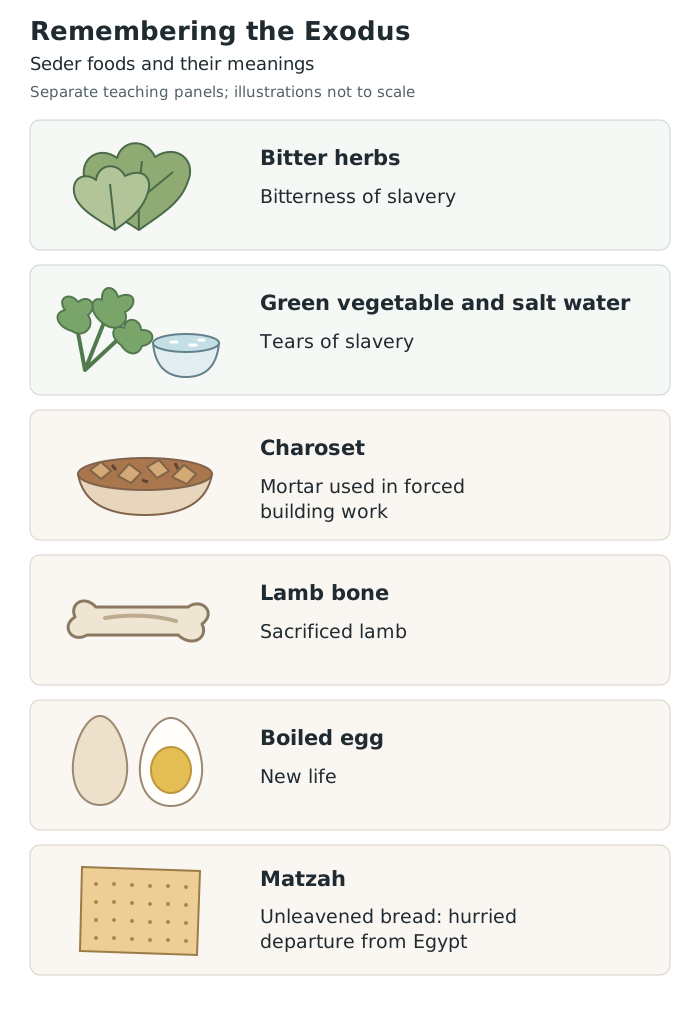
Symbolic foods help participants remember slavery, sacrifice and the journey to freedom during the Seder.
Bitter herbs recall the bitterness of slavery. A green vegetable dipped in salt water recalls the slaves' tears. Charoset, a sweet mixture commonly made with fruit, nuts and wine, represents the mortar used in forced building work. A lamb bone recalls the sacrificed lamb, while an egg symbolises new life. Matzah recalls the hurried journey to freedom.
Four cups of wine are drunk during the Seder, expressing joy, and a separate cup is set aside for Elijah, associated with the announcement of the Messiah's coming. Synagogue prayers and Torah readings also form part of Pesach observance.
Retelling the story helps younger generations understand their heritage. Remembering slavery can also encourage Jews to consider people who are oppressed or denied freedom today, making the festival relevant beyond the ancient event.
For religiously observant Jews, festivals are important because they fulfil God's commandments and renew their relationship with God. Shared worship also strengthens synagogue communities. Home celebrations, especially the Seder, bring religious teaching into family life and help preserve Jewish identity within Britain's diverse society.
Observance is not identical across Jewish communities or individuals. Some place particular emphasis on detailed traditional practices, while others attach greater importance to the festivals' ethical lessons, family gatherings or cultural identity. For example, some Orthodox Jews practise the additional pre-Yom Kippur ritual of Kapparah; this is not a practice of all Jews. Differences in observance do not necessarily mean that a festival has no importance to someone.
There are good reasons for different judgements about which festival matters most. Yom Kippur may be considered most important because of its holiness and focus on forgiveness. Rosh Hashanah is essential preparation for that renewal and celebrates creation. Pesach preserves the story of liberation, fulfils a Torah command and teaches the value of freedom. Alternatively, their different purposes may make them complementary rather than rivals.
Get unlimited access to all revision notes, key terms, and exam tips.
Get unlimited access to all revision notes, key terms, and exam tips.
Link each practice to its meaning: for example, the shofar calls Jews to repentance, rather than simply marking a celebration.
Distinguish Rosh Hashanah, which begins the Ten Days of Repentance, from Yom Kippur, which ends them.
For questions about importance in Great Britain today, explain present-day effects such as repairing relationships, strengthening Jewish identity and passing beliefs to younger generations.
When evaluating which festival is most important, compare reasons for different views and reach a justified conclusion. Use relevant Jewish teachings, not just descriptions of celebrations.
Avoid claiming that all Jews observe festivals identically or that Pesach prohibits all grain: matzah is unleavened bread.
Rosh Hashanah
The Jewish New Year festival, commemorating creation and beginning a period of reflection, judgement and repentance.
Yom Kippur
The Day of Atonement, the holiest day of the Jewish year, devoted to repentance and seeking God's forgiveness.
Repentance
Recognising wrongdoing, turning away from it and sincerely committing to change.
Atonement
Making amends for wrongdoing and restoring a damaged relationship, especially the relationship with God.
Shofar
A ram's horn sounded during Jewish worship, notably as a call to repentance at Rosh Hashanah.
Ten Days of Repentance
The ten-day period beginning with Rosh Hashanah and ending with Yom Kippur, devoted to reflection and repentance.
Pesach
Passover: the Jewish festival remembering the Israelites' liberation from slavery in Egypt.
Exodus
The departure of the Israelites from slavery in Egypt under Moses' leadership; also the name of the Torah book containing this account.
Seder
The ritual meal at Pesach in which the Exodus story is retold through readings, symbolic foods and actions.
Haggadah
The text used at the Pesach Seder to guide its rituals and retell the Exodus story.
Matzah
Unleavened bread eaten at Pesach, recalling the Israelites' hurried departure from Egypt.
Chametz
Leavened food made from certain grains, removed from the home and not eaten during Pesach.
Put your knowledge into practice — try past paper questions for Religious Studies A
Rosh Hashanah
The Jewish New Year festival, commemorating creation and beginning a period of reflection, judgement and repentance.
Yom Kippur
The Day of Atonement, the holiest day of the Jewish year, devoted to repentance and seeking God's forgiveness.
Repentance
Recognising wrongdoing, turning away from it and sincerely committing to change.
Atonement
Making amends for wrongdoing and restoring a damaged relationship, especially the relationship with God.
Shofar
A ram's horn sounded during Jewish worship, notably as a call to repentance at Rosh Hashanah.
Ten Days of Repentance
The ten-day period beginning with Rosh Hashanah and ending with Yom Kippur, devoted to reflection and repentance.
Pesach
Passover: the Jewish festival remembering the Israelites' liberation from slavery in Egypt.
Exodus
The departure of the Israelites from slavery in Egypt under Moses' leadership; also the name of the Torah book containing this account.
Seder
The ritual meal at Pesach in which the Exodus story is retold through readings, symbolic foods and actions.
Haggadah
The text used at the Pesach Seder to guide its rituals and retell the Exodus story.
Matzah
Unleavened bread eaten at Pesach, recalling the Israelites' hurried departure from Egypt.
Chametz
Leavened food made from certain grains, removed from the home and not eaten during Pesach.