Loading…


Loading…
Loading…
Loading…
AQA GCSE Combined Science Trilogy · 8464
AQA 8464 · 4.2.3.2 Plant organ system Check the specification (PDF) (opens in a new tab)
A plant needs to move substances between organs that may be far apart. Its roots absorb water and mineral ions from the soil, while its leaves use water and carbon dioxide for photosynthesis. The sugars made in the leaves must then reach other parts of the plant, including roots and growing shoots.
The roots, stem and leaves form an organ system for transport. Two transport tissues connect these organs: xylem carries water and mineral ions, and phloem carries dissolved sugars. The stem provides the connecting route between roots and leaves.
Root hair cells have long, hair-like extensions that reach between soil particles. Each extension increases the cell’s surface area, allowing efficient absorption of water and mineral ions.
Water enters by osmosis. This is the net movement of water through a partially permeable membrane from a dilute solution to a more concentrated solution. When the soil solution is more dilute than the cell sap, water moves into the root hair cell through its membrane.
Mineral ions, such as nitrate ions, are taken up by active transport. This allows ions to enter even when their concentration is lower in the soil than inside the root cell: they move against their concentration gradient. Active transport requires energy released by respiration. Root hair cells contain many mitochondria, helping to supply this energy.
After absorption, water and mineral ions pass into the root’s xylem. Xylem vessels form hollow tubes extending through the roots and stem into the leaves.
Their hollow interiors contain no cell contents obstructing the flow, and the absence of end walls allows water to move continuously along the vessels. The walls are strengthened by lignin, which helps prevent the tubes from collapsing as water is pulled through them.
The continuous upward movement of water from roots to stems and leaves is the transpiration stream. Mineral ions travel dissolved in this water.
Transpiration is the loss of water vapour from leaves through their stomata. It involves a sequence of movements:
As water is lost from the leaves, more water is drawn upwards through the xylem to replace it. This links water loss at the leaves to water uptake at the roots.
A stoma is a small pore in the leaf surface; the plural is stomata. Stomata are mainly found on the underside of leaves. Each pore is surrounded by a pair of guard cells, which control whether it is open or closed.
Open stomata allow carbon dioxide to diffuse into the leaf for photosynthesis and oxygen to diffuse out. However, they also provide an escape route for water vapour. Guard cells therefore regulate both gas exchange and water loss.
Stomata usually open during the day, allowing gas exchange for photosynthesis. In dry conditions, plants may close their stomata to conserve water. Closing the pores reduces water loss, but also restricts carbon dioxide entry.
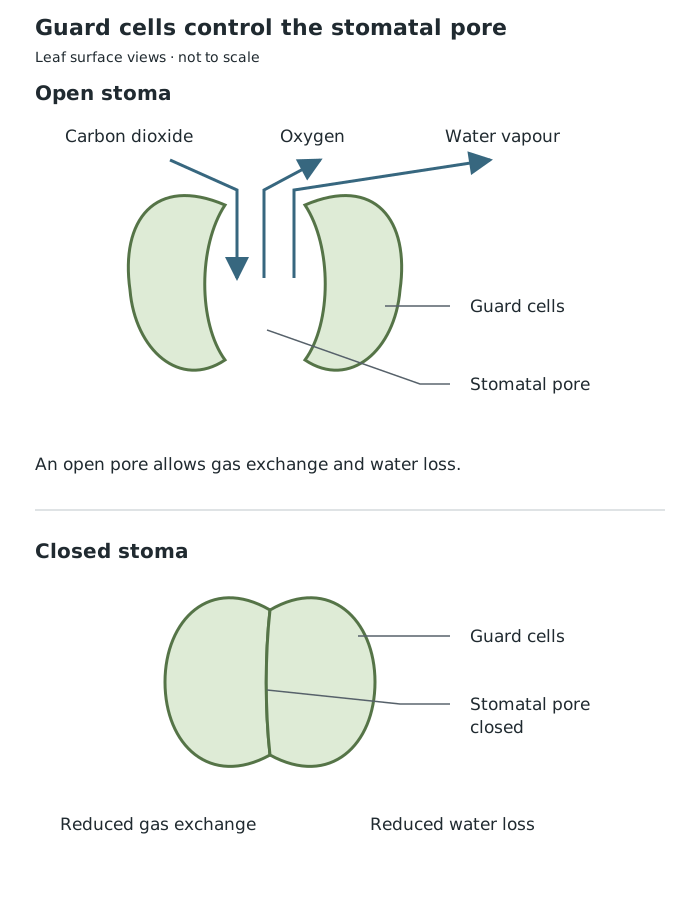
Guard cells control the pore: opening allows gas exchange but also permits water vapour to escape.
Photosynthesis produces sugars in the leaves, but cells throughout the plant need them. Translocation is the movement of dissolved sugars through phloem tissue to other parts of the plant.
The sugars may be used immediately, for example in respiration, or stored for later use. Sugars made in a leaf can move downwards to roots or upwards to growing shoots. Phloem transport is therefore not restricted to the upward direction of the transpiration stream.
Phloem consists of tubes of elongated cells joined end to end. Unlike xylem vessels, these cells have end walls, but the walls contain pores. Cell sap containing dissolved sugars passes through these pores from one cell to the next.
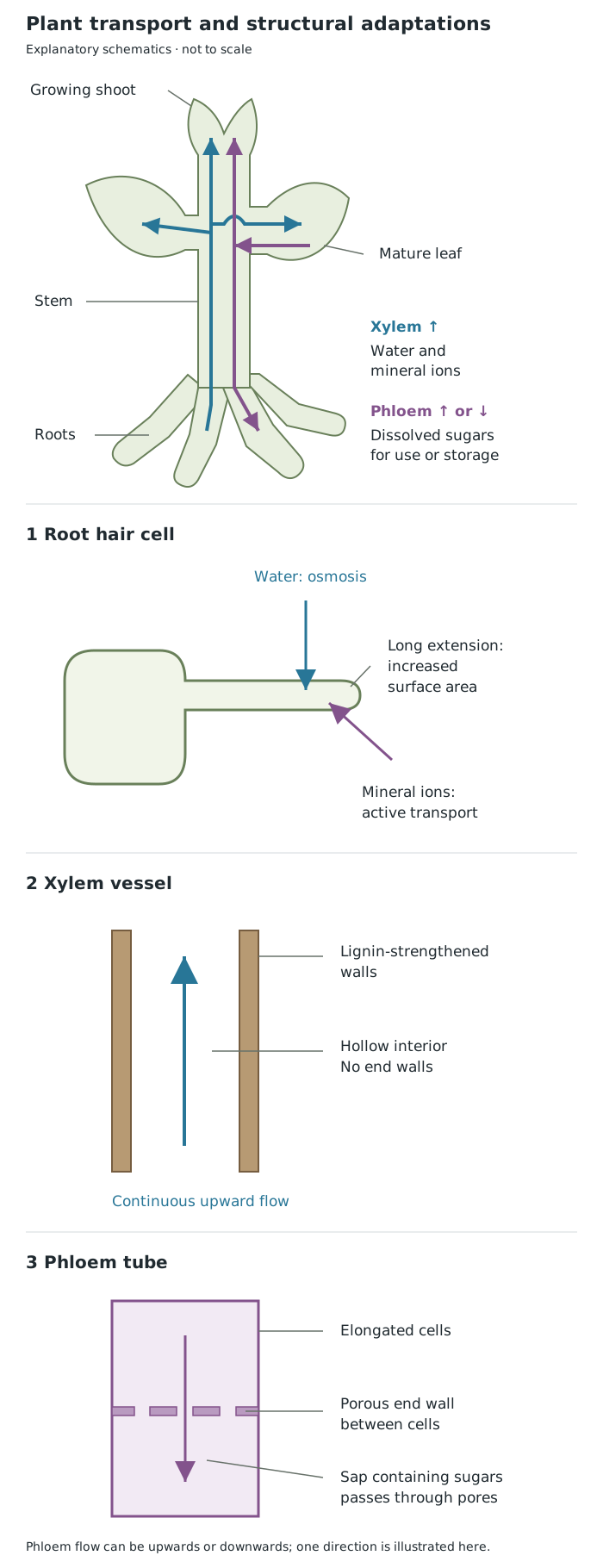
Root hairs absorb substances, xylem carries water and mineral ions upwards, and phloem distributes dissolved sugars.
Get unlimited access to all revision notes, key terms, and exam tips.
| Feature | Xylem | Phloem |
|---|---|---|
| Carries | Water and mineral ions | Dissolved sugars |
| Route | Roots → stem → leaves | Leaves → parts needing sugars for use or storage; upwards or downwards |
| Adaptations | Hollow tubes, no end walls, lignin-strengthened walls | Elongated cells with pores in end walls |
| Movement | Transpiration stream | Translocation |
Water leaves xylem → evaporates from internal leaf surfaces → water vapour diffuses out through stomata. Water lost from leaves is replaced by water drawn up the xylem.
Guard cells control stomatal opening: open pores allow gas exchange but also water loss; closing them conserves water but limits carbon dioxide entry.
Roots, stem and leaves work together as the plant’s transport organ system.
Get unlimited access to all revision notes, key terms, and exam tips.
Link each adaptation to its function: a root hair increases surface area for absorption; pores in phloem end walls allow sap to pass between cells.
Distinguish water uptake by osmosis from mineral-ion uptake by active transport. Active transport requires energy released by respiration.
Transpiration is water loss from leaves; the transpiration stream is the movement of water through the xylem.
Name the substances transported: water and mineral ions in xylem, dissolved sugars in phloem. Avoid describing phloem contents simply as ‘food’.
Root hair cell
A specialised root cell with a long extension that increases its surface area for absorbing water and mineral ions from soil.
Osmosis
The net movement of water through a partially permeable membrane from a dilute solution to a more concentrated solution.
Active transport
The movement of substances against their concentration gradient, from a lower to a higher concentration, using energy released by respiration.
Xylem
Plant transport tissue made of hollow tubes strengthened by lignin, carrying water and mineral ions from roots to stems and leaves.
Transpiration
The loss of water vapour from a plant’s leaves through the stomata.
Transpiration stream
The continuous upward movement of water and mineral ions from roots to leaves through xylem.
Stoma
A pore in the leaf surface through which gases and water vapour can diffuse; its opening is controlled by guard cells.
Guard cell
A specialised cell that works with another guard cell to control the opening and closing of a stoma, regulating gas exchange and water loss.
Phloem
Plant transport tissue consisting of tubes of elongated cells with pores in their end walls, carrying dissolved sugars.
Translocation
The movement of dissolved sugars through phloem tissue to parts of a plant where they are used or stored.
Put your knowledge into practice — try past paper questions for Combined Science Trilogy
Root hair cell
A specialised root cell with a long extension that increases its surface area for absorbing water and mineral ions from soil.
Osmosis
The net movement of water through a partially permeable membrane from a dilute solution to a more concentrated solution.
Active transport
The movement of substances against their concentration gradient, from a lower to a higher concentration, using energy released by respiration.
Xylem
Plant transport tissue made of hollow tubes strengthened by lignin, carrying water and mineral ions from roots to stems and leaves.
Transpiration
The loss of water vapour from a plant’s leaves through the stomata.
Transpiration stream
The continuous upward movement of water and mineral ions from roots to leaves through xylem.
Stoma
A pore in the leaf surface through which gases and water vapour can diffuse; its opening is controlled by guard cells.
Guard cell
A specialised cell that works with another guard cell to control the opening and closing of a stoma, regulating gas exchange and water loss.
Phloem
Plant transport tissue consisting of tubes of elongated cells with pores in their end walls, carrying dissolved sugars.
Translocation
The movement of dissolved sugars through phloem tissue to parts of a plant where they are used or stored.