Loading…


Loading…
Loading…
Loading…
AQA GCSE Combined Science Trilogy · 8464
AQA 8464 · 4.2.2.1 Human digestive system Check the specification (PDF) (opens in a new tab)
Food contains carbohydrates, proteins and lipids that supply materials and energy for the body. However, large, insoluble food molecules such as starch and proteins cannot be absorbed directly into the bloodstream. Digestion breaks them down into small, soluble molecules that can pass through the intestinal wall. Their movement into the body is called absorption.
Digestive enzymes are biological catalysts: they speed up the chemical reactions that break down food molecules. Chewing also helps, but in a different way. It breaks food into smaller pieces, increasing the surface area available to enzymes without chemically changing the food molecules.
The digestive system is an organ system because several organs cooperate to digest and absorb food. Some organs form the route that food follows; others supply substances needed for digestion.
In the mouth, teeth break food into smaller pieces and saliva mixes with it. The salivary glands produce amylase, so starch digestion begins here. Swallowed food travels down the oesophagus to the stomach, pushed along by contractions of the tube's muscular walls.
The stomach churns food and produces proteases that begin protein digestion. It also releases hydrochloric acid, providing acidic conditions suitable for its proteases.
Food then enters the small intestine, where enzymes complete digestion and the small, soluble products are absorbed. Its lining has projections called villi, which provide a large surface area for absorption. The blood carries absorbed nutrients to cells around the body.
The pancreas produces digestive enzymes and releases them into the small intestine. The liver makes bile, which is stored in the gall bladder before being released into the small intestine. Food does not need to pass through these organs for them to contribute to digestion.
The large intestine absorbs remaining water. Undigested material forms faeces, which are stored in the rectum and leave through the anus.
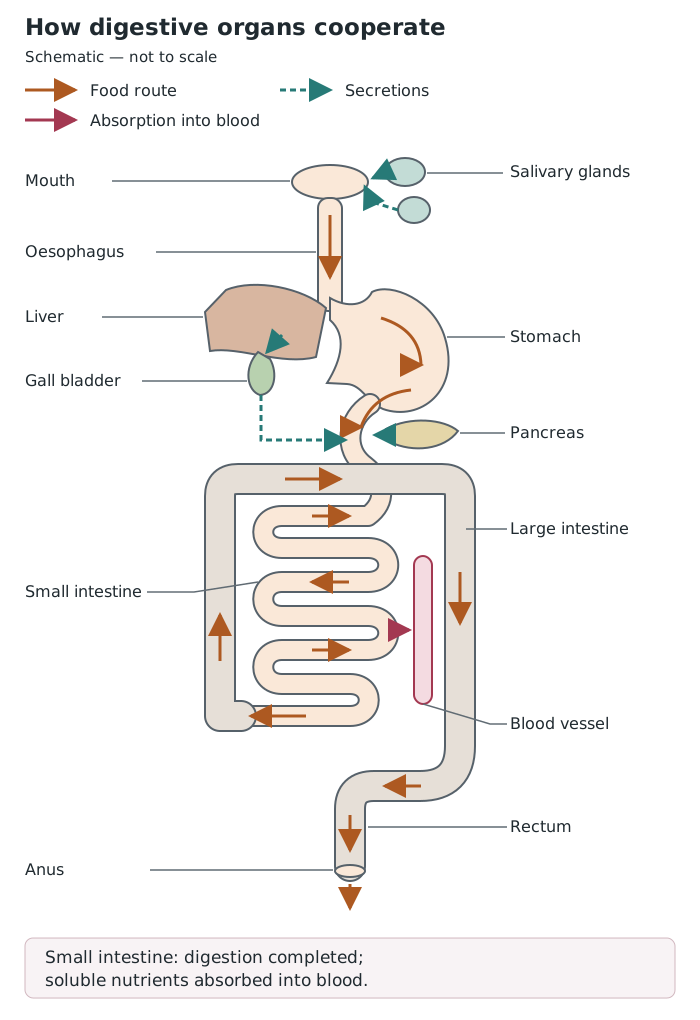
Food follows the digestive tract, while other organs supply enzymes and bile. Absorbed nutrients enter the body's transport system.
Different digestive enzymes catalyse the breakdown of different food molecules. Carbohydrases break down carbohydrates into simple sugars. Amylase is one particular carbohydrase: it breaks down starch into sugars. Other carbohydrases complete carbohydrate digestion to produce simple sugars such as glucose.
Proteases break down proteins into amino acids. Lipases break down lipids, also called fats, into glycerol and fatty acids.
These changes can be represented by simple word equations, with the enzyme named above the arrow:
The enzyme catalyses the reaction; it is not one of the products. The main production sites and sites of action are:
| Enzyme | Where it is produced | Where it acts |
|---|---|---|
| Amylase | Salivary glands, pancreas and small intestine | Mouth and small intestine |
| Proteases | Stomach, pancreas and small intestine | Stomach and small intestine |
| Lipases | Pancreas and small intestine | Small intestine |
For example, starch in bread begins to be digested by salivary amylase in the mouth. Digestion continues in the small intestine using enzymes supplied by the pancreas and the intestine itself. This shows how several organs contribute to processing the same food.
Bile contains no digestive enzymes, but it helps lipase work more quickly in the small intestine in two ways.
First, bile is alkaline, so it neutralises hydrochloric acid arriving from the stomach. This provides alkaline conditions suitable for enzymes such as lipase in the small intestine. The acidic conditions useful in the stomach would not be suitable for these enzymes.
Second, bile emulsifies fats: it divides large fat droplets into many smaller droplets. The amount of fat is unchanged, but its total surface area increases. Lipase acts at the surface of the droplets, so a larger surface area allows faster fat breakdown.
Emulsification and enzyme digestion are different processes. Bile changes the size of the droplets; lipase breaks down the lipid molecules within them into glycerol and fatty acids.
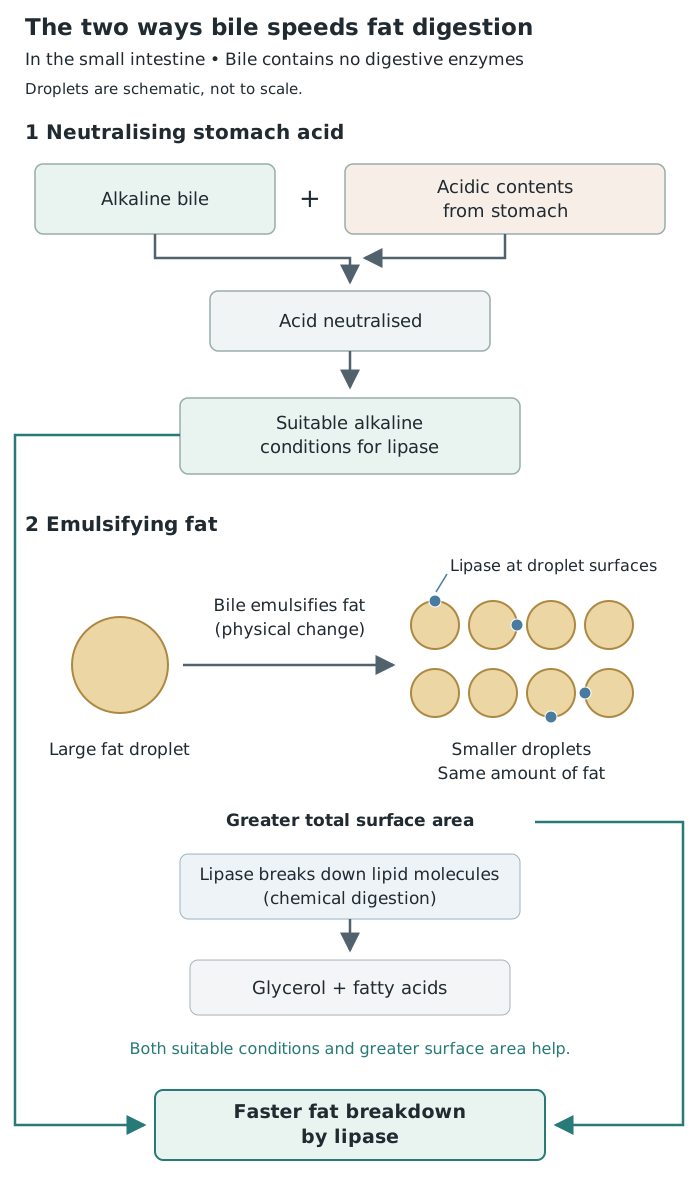
Bile improves conditions for lipase and increases the fat surface available for enzyme action.
Digestion supplies small molecules that cells can use as building materials. Simple sugars can be used to build new carbohydrates, amino acids to build new proteins, and glycerol and fatty acids to build new lipids. These products support growth, repair and the normal functioning of cells. For example, amino acids can be assembled into enzymes, while lipids are needed in cell membranes.
Some glucose is used in cellular respiration, releasing energy for cell activities rather than being used to build larger molecules. Digestion therefore connects to metabolism: the body's reactions include both breaking molecules down and building new molecules from their products.
Get unlimited access to all revision notes, key terms, and exam tips.
| Enzyme | Word equation | Produced in |
|---|---|---|
| Amylase, a carbohydrase | Starch → sugars | Salivary glands, pancreas, small intestine |
| Proteases | Proteins → amino acids | Stomach, pancreas, small intestine |
| Lipases | Lipids → glycerol + fatty acids | Pancreas, small intestine |
Carbohydrases break down carbohydrates into simple sugars.
Made in the liver → stored in the gall bladder → released into the small intestine.
Get unlimited access to all revision notes, key terms, and exam tips.
Distinguish where an enzyme is produced from where it acts: the pancreas releases enzymes into the small intestine; food does not pass through the pancreas.
For each digestive enzyme, name the food molecule it breaks down and the products formed.
Bile is made in the liver and stored in the gall bladder, not the other way round.
Explain both ways bile helps lipase: neutralisation provides suitable alkaline conditions, while emulsification increases the surface area of fat.
Do not describe bile as an enzyme. Emulsification forms smaller fat droplets; lipase chemically breaks down the fat molecules.
Organ system
A group of organs working together to carry out a particular function.
Digestion
The breakdown of large, insoluble food molecules into small, soluble molecules that can be absorbed.
Absorption
The movement of digested, soluble food molecules through the intestinal wall into the body, including the bloodstream.
Carbohydrase
An enzyme that breaks down carbohydrates into simple sugars.
Amylase
A carbohydrase enzyme that breaks down starch into sugars.
Protease
An enzyme that breaks down proteins into amino acids.
Lipase
An enzyme that breaks down lipids into glycerol and fatty acids.
Bile
An alkaline fluid made in the liver and stored in the gall bladder that neutralises stomach acid and emulsifies fats.
Emulsification
The breakdown of large fat droplets into smaller droplets, increasing the total surface area available to lipase.
Metabolism
The sum of all the chemical reactions in a cell or organism, including reactions that build molecules and reactions that break them down.
Put your knowledge into practice — try past paper questions for Combined Science Trilogy
Organ system
A group of organs working together to carry out a particular function.
Digestion
The breakdown of large, insoluble food molecules into small, soluble molecules that can be absorbed.
Absorption
The movement of digested, soluble food molecules through the intestinal wall into the body, including the bloodstream.
Carbohydrase
An enzyme that breaks down carbohydrates into simple sugars.
Amylase
A carbohydrase enzyme that breaks down starch into sugars.
Protease
An enzyme that breaks down proteins into amino acids.
Lipase
An enzyme that breaks down lipids into glycerol and fatty acids.
Bile
An alkaline fluid made in the liver and stored in the gall bladder that neutralises stomach acid and emulsifies fats.
Emulsification
The breakdown of large fat droplets into smaller droplets, increasing the total surface area available to lipase.
Metabolism
The sum of all the chemical reactions in a cell or organism, including reactions that build molecules and reactions that break them down.