Loading…


Loading…
Loading…
Loading…
AQA GCSE Combined Science Trilogy · 8464
AQA 8464 · 4.6.1.3 Check the specification (PDF) (opens in a new tab)
The nucleus of an animal or plant cell contains genetic information: instructions that help control how the cell develops and functions. This information is carried by a chemical called DNA, short for deoxyribonucleic acid.
DNA is a polymer, meaning a large molecule built from many smaller repeating units joined together. It consists of two strands twisted around each other into a double helix. Imagine a ladder twisted along its length: this gives a useful picture of the overall shape.
Long DNA molecules are packaged with proteins into structures called chromosomes. Chromosomes are therefore not separate from DNA: they contain it, organised so that long molecules fit inside the nucleus.
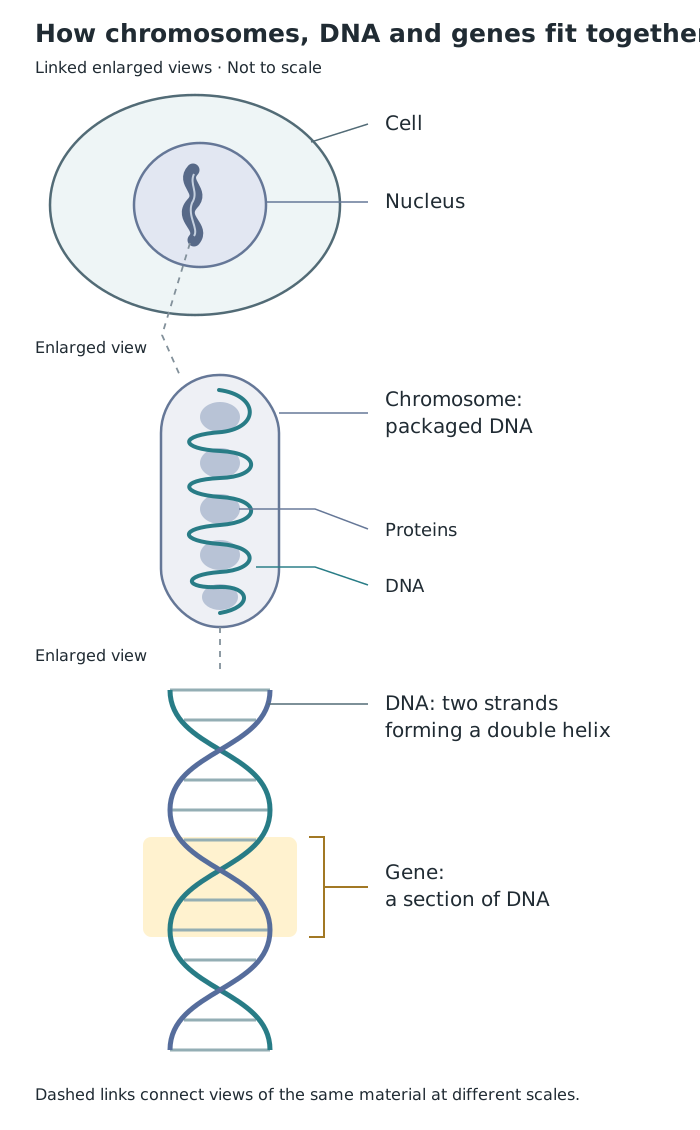
A chromosome contains a long DNA molecule. A gene is a small section of that DNA; the linked views are not to scale.
A gene is a small section of DNA on a chromosome. Each gene codes for a particular sequence of amino acids to make a specific protein.
Amino acids are the building blocks of proteins. They join together in an order specified by the gene. Different sequences produce different proteins, which perform different jobs in cells. For example, some proteins provide structure, while enzymes are proteins that speed up chemical reactions.
This explains how genes influence characteristics: genes provide instructions for proteins, and those proteins affect what cells do. A gene is not a whole chromosome; a chromosome contains many genes along its DNA.
The genome of an organism is its entire genetic material. A gene is one section of DNA, whereas the genome includes all the organism’s DNA, including sections that do not code for proteins.
An instruction-book comparison can help distinguish these ideas. DNA is the material carrying the written information, a gene is a particular set of instructions, and the genome is the complete collection. The comparison describes their relationship, not their physical shape.
Sequencing DNA means determining the order of its chemical building blocks. The international Human Genome Project, which ran from 1990 to 2003, produced the first human genome reference sequence. Later research filled gaps that the technology of the time could not resolve.
A reference sequence gives scientists a starting point for comparing human genomes and investigating how differences in DNA affect health. Understanding the genome has three important applications here.
Finding genes linked to disease. Researchers can compare genetic information from people with and without a disease to look for differences associated with it. Identifying disease-linked genes helps scientists investigate how genetic changes contribute to conditions such as cancer. A genetic link does not necessarily mean that everyone with that DNA difference will develop the disease.
Understanding and treating inherited disorders. Identifying the genetic change responsible for an inherited disorder helps explain what has gone wrong. Because genes code for proteins, a change in genetic instructions can affect a protein and its function. This understanding can help diagnose conditions and guide the development of treatments. However, identifying a gene is not the same as finding a cure: further research is needed to turn genetic knowledge into effective treatment.
Tracing past human migration. Human populations have small differences in their genomes. Comparing these differences and shared genetic features helps scientists investigate common ancestry and how populations spread and mixed in the past. Genetic patterns therefore provide evidence about migration over many generations, rather than a record of an individual person’s journey.
The importance of genome research lies in connecting genetic information to useful explanations: how disease develops, how inherited conditions might be treated, and how human populations are related.
Get unlimited access to all revision notes, key terms, and exam tips.
Finding a disease-linked gene does not automatically provide a cure.
Get unlimited access to all revision notes, key terms, and exam tips.
Describe DNA as a polymer of two strands forming a double helix, not as two chromosomes twisted together.
A gene codes for a particular sequence of amino acids to make a specific protein; it does not directly code for a characteristic.
The genome is all of an organism’s genetic material, not just its genes.
When discussing genome research, link each use to its benefit: identifying disease-linked genes, understanding and treating inherited disorders, or tracing past human migration.
DNA
The molecule that carries genetic information. It is a polymer made of two strands forming a double helix.
Polymer
A large molecule made from many smaller repeating units joined together.
Double helix
The shape formed by two strands wound around each other.
Chromosome
A structure containing a long DNA molecule packaged with proteins. Chromosomes are found in the nucleus of animal and plant cells.
Gene
A small section of DNA on a chromosome that codes for a particular sequence of amino acids to make a specific protein.
Genome
The entire genetic material of an organism.
Amino acid
A small molecule that can join with other amino acids to form a protein.
Inherited disorder
A condition caused by genetic information passed from parents to their offspring.
Put your knowledge into practice — try past paper questions for Combined Science Trilogy
DNA
The molecule that carries genetic information. It is a polymer made of two strands forming a double helix.
Polymer
A large molecule made from many smaller repeating units joined together.
Double helix
The shape formed by two strands wound around each other.
Chromosome
A structure containing a long DNA molecule packaged with proteins. Chromosomes are found in the nucleus of animal and plant cells.
Gene
A small section of DNA on a chromosome that codes for a particular sequence of amino acids to make a specific protein.
Genome
The entire genetic material of an organism.
Amino acid
A small molecule that can join with other amino acids to form a protein.
Inherited disorder
A condition caused by genetic information passed from parents to their offspring.