Loading…


Loading…
Loading…
Loading…
AQA GCSE Combined Science Trilogy · 8464
AQA 8464 · 4.1.2.2 Check the specification (PDF) (opens in a new tab)
A multicellular organism grows by increasing its number of cells. To produce new cells, an existing cell goes through the cell cycle: it grows, copies its genetic material and then divides. The result is two genetically identical daughter cells.
The nucleus contains chromosomes made of DNA. These carry the genetic instructions needed by the cell. Before dividing, the cell must copy these instructions so that both daughter cells receive a complete set.
First, the cell grows and increases the number of sub-cellular structures, including ribosomes and mitochondria. Ribosomes make proteins, while mitochondria are the sites of aerobic respiration. Increasing these structures prepares the cell to form two functioning cells rather than simply splitting an unprepared cell in half.
The DNA also replicates, forming two exact copies of each chromosome. These copies initially remain attached to each other. The genetic material has now doubled, ready to be shared between the two new cells.
During mitosis, the chromosome copies separate. One complete set of chromosomes is pulled to each end of the cell, and the nucleus divides. Each new nucleus therefore receives the same genetic information.
Copying first and separating the copies afterwards is what allows both daughter cells to receive a full set of chromosomes. For example, if a human body cell starts with 46 chromosomes, each daughter cell receives 46 chromosomes—not 23 and not 92.
Finally, the cytoplasm and cell membrane divide, producing two separate daughter cells. Each has its own nucleus containing a complete set of chromosomes. The daughter cells are genetically identical to each other and to the original cell.
Mitosis is therefore one stage within the cell cycle, rather than a name for everything that happens from growth to the final splitting of the cell.
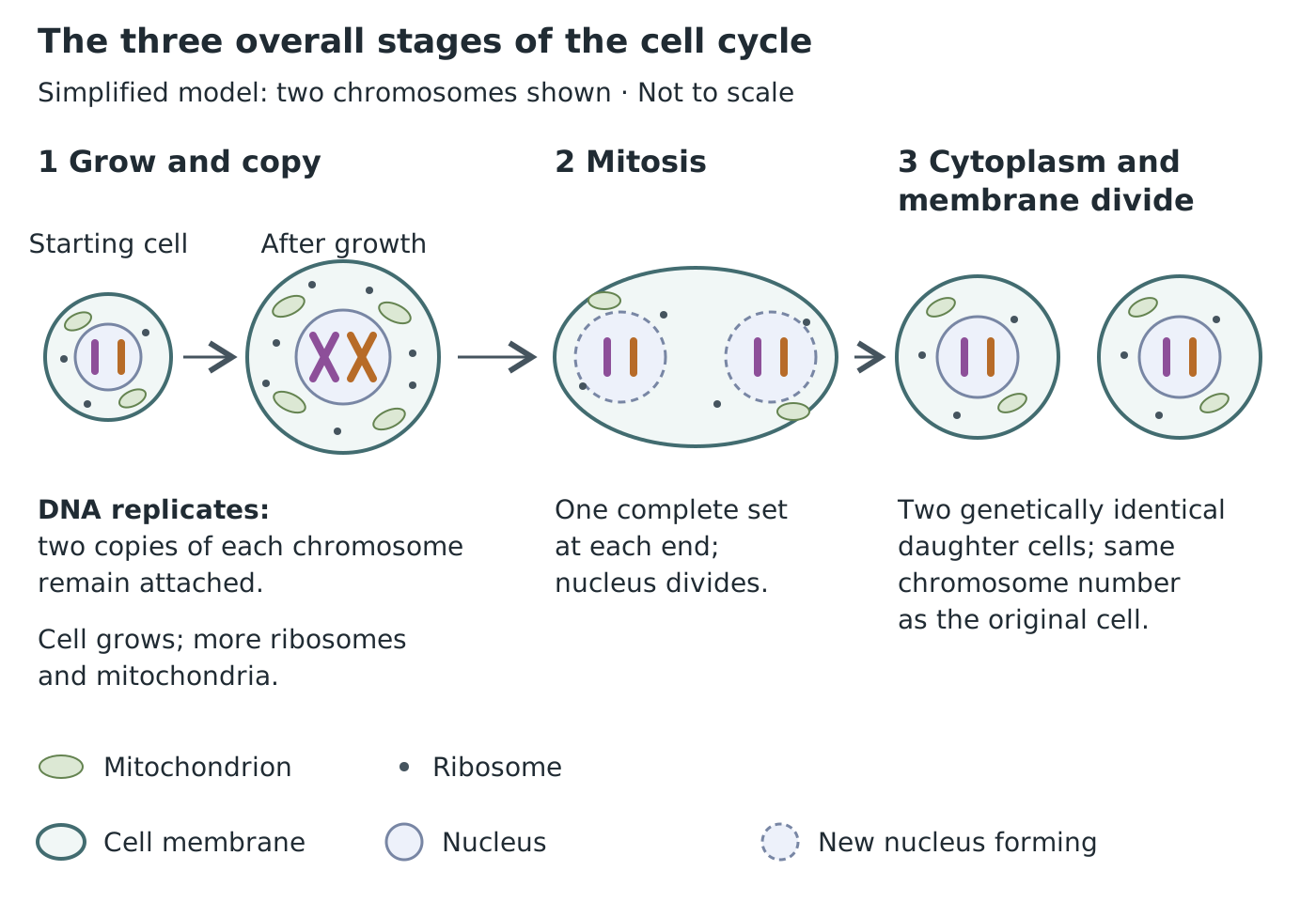
DNA is copied before mitosis, so each daughter cell receives a complete, identical set of chromosomes.
Following fertilisation, the single cell formed when a sperm joins an egg divides by mitosis. The new cells divide again, increasing cell number as an embryo develops. Continued cell division supports growth, while cells also become specialised for different functions.
If every cell divides in each round, the number of cells follows the sequence 1 → 2 → 4 → 8. This shows how repeated cell division can build a multicellular organism from one cell. Growth involves increasing cell number, not just making existing cells larger.
Mitosis also supplies new cells for repair and replacement. For example, replacing damaged cells during wound healing requires new cells with the same genetic instructions as the cells they replace.
Look for situations in which the number of cells is increasing: an embryo developing, a plant root tip growing or tissue being repaired. In each case, mitosis produces genetically identical cells to add to or replace existing tissue.
In microscope images, look at the arrangement of the chromosomes rather than just the size of the cell. Two groups of chromosomes at opposite ends of one cell are evidence that chromosome copies have separated during mitosis. Two new nuclei within a cell indicate that nuclear division has occurred, even if the cytoplasm has not yet finished dividing.
An intact nucleus on its own is not evidence of mitosis: the cell may be growing and preparing to divide. Use the visible features to describe what is happening, rather than assuming that every cell in growing tissue is dividing at that moment.
Get unlimited access to all revision notes, key terms, and exam tips.
Each daughter cell receives a complete set of genetic information and the same chromosome number as the original cell. A body cell with 46 chromosomes produces two cells with 46 chromosomes each.
Get unlimited access to all revision notes, key terms, and exam tips.
Describe the three overall stages of the cell cycle. AQA does not require the names of the individual phases of mitosis.
Place DNA replication before mitosis, not during it.
DNA copying does not mean that the daughter cells have twice the original chromosome number: each receives one complete set.
When identifying mitosis in an image, describe visible evidence such as two groups of chromosomes moving towards opposite ends of the cell.
Cell cycle
The series of stages in which a cell grows, copies its DNA and divides to produce two genetically identical daughter cells.
DNA replication
The copying of DNA to produce two exact copies of each chromosome before cell division.
Mitosis
The stage of the cell cycle in which one set of chromosomes is pulled to each end of the cell and the nucleus divides.
Daughter cell
A new cell produced when a parent cell divides.
Multicellular organism
An organism made of many cells.
Put your knowledge into practice — try past paper questions for Combined Science Trilogy
Cell cycle
The series of stages in which a cell grows, copies its DNA and divides to produce two genetically identical daughter cells.
DNA replication
The copying of DNA to produce two exact copies of each chromosome before cell division.
Mitosis
The stage of the cell cycle in which one set of chromosomes is pulled to each end of the cell and the nucleus divides.
Daughter cell
A new cell produced when a parent cell divides.
Multicellular organism
An organism made of many cells.