Loading…


Loading…
Loading…
Loading…
AQA GCSE Food Preparation and Nutrition · 8585
AQA 8585 · 3.3.2.2 Check the specification (PDF) (opens in a new tab)
Starch and sugars are carbohydrates, but they behave differently when heated. Starch in flour can thicken a white sauce, while sugars naturally present in vegetables can develop a brown colour and caramel flavour. These are functional properties: the useful jobs ingredients perform in a dish. Understanding the changes within the carbohydrates explains why those functions happen.
Three important processes are gelatinisation, dextrinisation and caramelisation. The starting ingredient and the cooking conditions determine which process occurs.
Starch is stored in tiny granules. When flour or cornflour is mixed into cold liquid, the granules are dispersed through it, but the mixture has not yet developed the thickness of a cooked sauce.
As the mixture heats, the structure within the granules loosens, allowing them to absorb more water and swell. With further heating, granules can burst and release starch into the surrounding liquid. The swollen granules and released starch make the mixture resist flowing: its viscosity increases. This thickening process is gelatinisation.
Both heat and liquid are needed. Milk can supply the water needed in a white sauce; stock can supply it in gravy. Gelatinisation also occurs when rice, pasta and potatoes cook in water. Some starch-thickened mixtures set into a gel as they cool.
A roux-based white sauce demonstrates gelatinisation. You need a saucepan, hob, weighing scales, measuring jug and wooden spoon or whisk, together with measured flour, butter and milk.
Distributing the flour evenly before and during heating helps prevent lumps. If flour clumps together, the outside can thicken before liquid reaches the flour inside.
An all-in-one sauce offers another method: combine the fat, flour and cold liquid at the start, then heat while stirring or whisking. The preparation differs, but the thickening still comes from starch gelatinisation.
A milk-based béchamel and a stock-based velouté are examples of sauces that use this principle. Milk can also be infused with flavourings before it is used in a sauce.
The starch-to-liquid ratio determines how much starch is available to thicken a given amount of liquid. With the same amount of liquid, more starch produces a thicker sauce. With the same amount of starch, more liquid produces a thinner sauce.
For a practical comparison, prepare two small sauces using the same measured volume of milk but different masses of flour. Keep the method and heating conditions the same, and compare the sauces at the same serving temperature. The sauce containing more flour should flow less readily from a spoon.
This relationship lets a cook choose a consistency suited to the dish: a pouring sauce needs to flow easily, whereas a thicker sauce may be needed to coat ingredients. Adding liquid can loosen an overly thick sauce.
The metal saucepan conducts heat from the hob through its base. Heat then passes by conduction into the sauce touching the hot pan.
Within the liquid, warmer regions rise and cooler liquid moves down to replace them. These convection currents help distribute heat through the sauce. As the sauce thickens, it moves less readily, so natural circulation becomes less effective.
Stirring or whisking is agitation. It moves the sauce around, distributes heat and starch more evenly, and reduces the risk of lumps, sticking and burning at the hot base. Convection does not remove the need to stir.
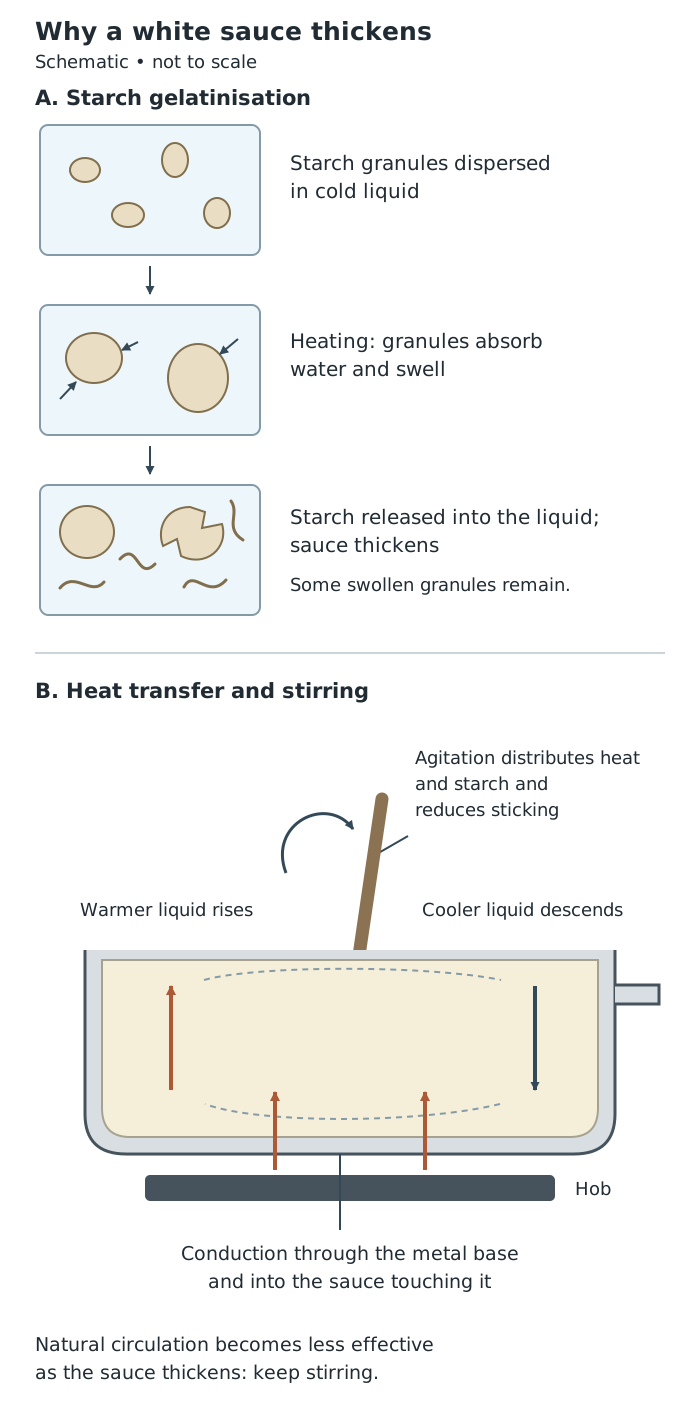
Heating starch with liquid thickens a sauce. Conduction and convection transfer heat, while stirring helps distribute it evenly.
Dextrinisation occurs when dry heat breaks starch down into smaller molecules called dextrins. It contributes to browning and can give starchy foods a crisper texture and sweeter flavour. Examples include bread, biscuits and pastry cooked by baking or toasting.
Bread provides a useful practical demonstration. Make and bake bread using a suitable recipe, then compare the browned crust with the softer interior. The outside is exposed to dry heat and loses moisture, allowing dextrinisation to occur at the surface. The moist interior does not develop the same dry, browned surface.
Longer heating increases the extent of dextrinisation, but excessive heating can burn the food. Other reactions also contribute to bread browning, so dextrinisation should not be treated as the only cause of its crust colour.
Caramelisation happens when sugars are heated sufficiently to break down and undergo chemical changes. Water is released, and brown colours and characteristic caramel flavours develop. Unlike dextrinisation, its starting material is sugar rather than starch.
Vegetables contain natural sugars, so they can caramelise without added sugar. Roasting vegetables can produce browned surfaces and a richer flavour. Caramelised onions are another practical example.
To prepare them, use a chopping board and knife to slice onions, then heat a little oil in a large frying pan over a low heat. Add the onions and a pinch of salt, and cook slowly for about 30–40 minutes, stirring occasionally. They become soft and golden; if they start to catch, add a splash of water and stir. The gentle hob setting allows controlled cooking rather than rapid scorching: it does not mean caramelisation happens in cold food.
Observe the change in colour and flavour as cooking progresses. Added sugar is not necessary for this basic demonstration. Control the heat carefully, because burnt sugar produces a bitter taste rather than the desired caramel flavour.
Get unlimited access to all revision notes, key terms, and exam tips.
| Process | Starting carbohydrate and conditions | Main result |
|---|---|---|
| Gelatinisation | Starch heated with liquid | Thickening |
| Dextrinisation | Starch exposed to dry heat | Dextrins form; browning, crisper texture and sweeter flavour |
| Caramelisation | Sugars heated sufficiently | Brown colour and caramel flavour |
Link each process to its starting carbohydrate and conditions: gelatinisation needs starch, liquid and heat; dextrinisation needs starch and dry heat; caramelisation involves heating sugars.
For a sauce explanation, connect swelling starch granules and released starch to increased viscosity. Do not just say that the sauce becomes thicker.
When comparing sauces, state what stays constant. More starch gives a thicker sauce only when the amount of liquid and cooking conditions are comparable.
Explain both heat-transfer processes in a saucepan, then explain why stirring or whisking is needed.
Do not identify every browned food as caramelised. Bread can undergo dextrinisation, while other browning reactions can also occur.
Starch
A carbohydrate made from many linked sugar units, stored in granules in foods such as flour, rice and potatoes.
Sugar
A carbohydrate that provides sweetness and can undergo caramelisation when heated sufficiently.
Gelatinisation
The process in which starch granules absorb liquid and swell when heated, releasing starch into the surrounding liquid and thickening it.
Viscosity
A liquid's resistance to flowing: a high-viscosity sauce flows less readily than a low-viscosity sauce.
Dextrinisation
The breakdown of starch into smaller molecules called dextrins under dry heat, contributing to browning.
Dextrin
A smaller carbohydrate molecule formed when starch is broken down by dry heat.
Caramelisation
The breakdown and chemical change of sugars when heated sufficiently, producing brown colour and characteristic caramel flavours.
Roux
A paste made by cooking flour with fat, used as the starting point for a starch-thickened sauce.
Conduction
Heat transfer through direct contact, passing from particle to particle from a hotter region to a cooler region.
Convection
Heat transfer through the movement of a liquid or gas, as warmer material rises and cooler material moves in to replace it.
Agitation
Movement of a mixture, such as stirring or whisking a sauce, to mix ingredients and distribute heat.
Put your knowledge into practice — try past paper questions for Food Preparation and Nutrition
Starch
A carbohydrate made from many linked sugar units, stored in granules in foods such as flour, rice and potatoes.
Sugar
A carbohydrate that provides sweetness and can undergo caramelisation when heated sufficiently.
Gelatinisation
The process in which starch granules absorb liquid and swell when heated, releasing starch into the surrounding liquid and thickening it.
Viscosity
A liquid's resistance to flowing: a high-viscosity sauce flows less readily than a low-viscosity sauce.
Dextrinisation
The breakdown of starch into smaller molecules called dextrins under dry heat, contributing to browning.
Dextrin
A smaller carbohydrate molecule formed when starch is broken down by dry heat.
Caramelisation
The breakdown and chemical change of sugars when heated sufficiently, producing brown colour and characteristic caramel flavours.
Roux
A paste made by cooking flour with fat, used as the starting point for a starch-thickened sauce.
Conduction
Heat transfer through direct contact, passing from particle to particle from a hotter region to a cooler region.
Convection
Heat transfer through the movement of a liquid or gas, as warmer material rises and cooler material moves in to replace it.
Agitation
Movement of a mixture, such as stirring or whisking a sauce, to mix ingredients and distribute heat.
Get unlimited access to all revision notes, key terms, and exam tips.