Loading…


Loading…
Loading…
Loading…
AQA GCSE Design and Technology · 8552
AQA 8552 Check the specification (PDF) (opens in a new tab)
A technical textile is a fabric engineered to perform a particular job, rather than being chosen mainly for its appearance. It might connect electronic components, protect someone from heat or help a sports garment manage moisture.
A fibre is a fine strand of material. Fibres can be spun together into a continuous yarn, which can then be woven or knitted into fabric. Technical textiles gain their enhanced performance through the choice of fibre, the way fibres are combined and the addition of treatments or other substances. Spinning alone does not give every fabric every useful property: the material and its construction must suit the intended function.
For example, incorporating metal fibres can provide an electrical pathway, while using very strong synthetic fibres can produce a lightweight protective fabric.
Conductive fabrics allow an electric current to pass through them. Metal fibres can be woven into ordinary textile fibres, or conductive threads can be woven or sewn into a textile design. These conductive strands act as flexible connections between electronic components.
In a health-monitoring garment, conductive threads can connect a sensor to an electronic device while remaining part of the clothing. This makes them useful for wearable technology and smart clothing, where rigid wiring would be less convenient. Their key functional property is electrical conductivity, not simply strength or softness.
Fire-resistant fabrics resist ignition or burn more slowly than ordinary fabrics. This performance can come from the fibres themselves or from a chemical treatment applied to the fibres.
They are used in firefighters’ protective clothing, racing drivers’ clothing, fire blankets and furnishings such as curtains and sofa coverings. The reason for selecting them is to reduce the danger from fire: a garment that resists ignition offers protection that an ordinary clothing fabric may not provide.
Resistance to burning is different from being unaffected by heat. A designer must choose a fabric with performance appropriate to the particular exposure and use.
Kevlar is a synthetic fibre with very high tensile strength: it resists breaking when pulled. Kevlar fibres can be woven into a fabric that is strong yet lightweight. It also offers resistance to cutting, impacts and heat.
These properties explain its use in body armour, motorcycle clothing and protective gloves. In body armour, its strength and impact resistance contribute to protection, while its low weight helps the wearer move. In a protective glove, cut resistance is especially relevant.
The useful connection is therefore not just ‘Kevlar is strong’. It is that a particular kind of strength or resistance meets a particular safety need, without making the product excessively heavy.
Microfibres are very fine synthetic fibres. They can make soft, lightweight fabrics and are used in sportswear. Suitable microfibre fabrics allow moisture and air to pass through, helping the wearer remain comfortable. Microfibres are also used in absorbent, fast-drying cloths and towels; cleaning cloths can pick up dust.
Micro-encapsulation is a separate enhancement. Tiny capsules containing another substance are incorporated into the textile. During use, the capsules can release their contents, giving the fabric an additional function. Depending on what is incorporated, this can help control odour, maintain hygiene or support temperature control.
A microfibre garment incorporating micro-encapsulation therefore combines two ideas: very fine fibres provide the fabric’s physical characteristics, while the capsules provide an additional function. Not every microfibre fabric contains capsules.
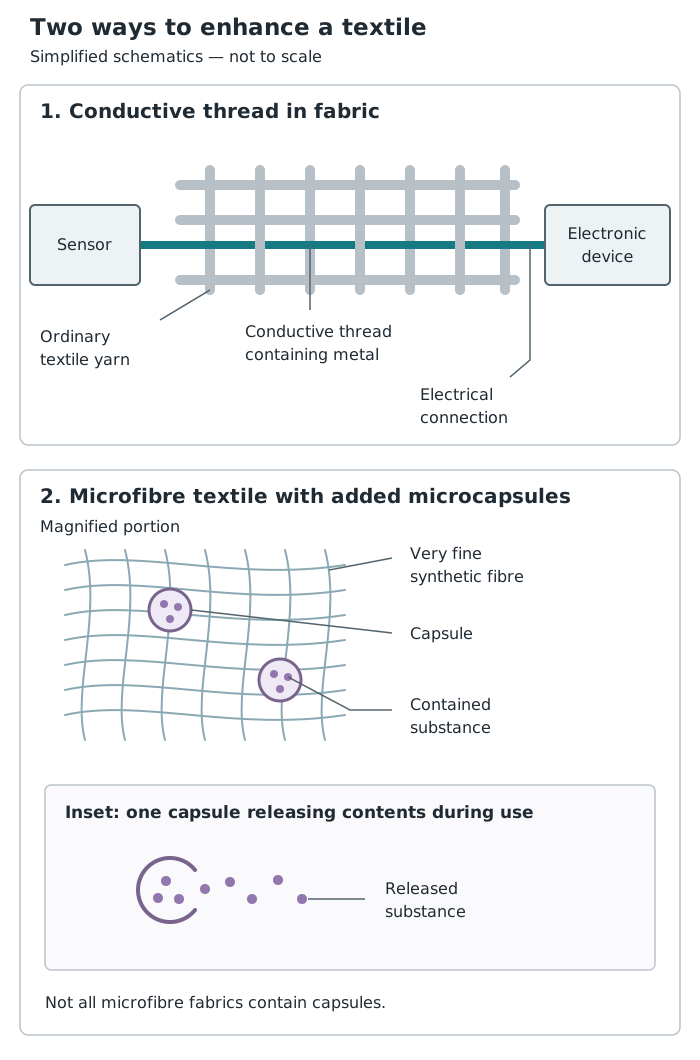
Conductive threads provide an electrical pathway; microcapsules add a substance-release function. These are different ways of enhancing a textile.
It is useful to group technical textiles by their functional properties. Conductive fabric has an electrical function; fire-resistant fabric provides protection against ignition and burning; Kevlar provides mechanical protection through strength and resistance to damage. Microfibre fabrics can provide moisture management or absorbency, while micro-encapsulation can add functions such as odour control.
These groups can overlap. Kevlar also offers heat resistance, and a garment can combine more than one textile enhancement. Classification helps identify useful properties; it does not mean that each fabric has only one function.
A technical specification describes a material’s performance. To use one, first identify what the product must do, then find the information that addresses those needs. If numerical results are supplied, check their units and compare like-for-like measurements.
Consider this comparison for a sports top designed to monitor the wearer’s health:
| Candidate | Stated features |
|---|---|
| A | Soft, lightweight microfibre fabric with odour-control microcapsules |
| B | Flexible fabric containing conductive threads for connecting electronic components |
Candidate A addresses comfort and odour control, but its description does not identify an electrical connection. Candidate B addresses the essential requirement to connect the monitoring components. A design might combine a comfortable base fabric with conductive threads rather than expect one enhancement to meet every need.
For protective clothing, the priority changes: resistance to burning, cutting or impact may be more important than odour control. A justified selection connects the stated material properties to the product’s actual requirements.
Get unlimited access to all revision notes, key terms, and exam tips.
Fibres → spun yarn → fabric. Performance depends on fibre choice, construction and added treatments or substances.
| Textile | Essential property or enhancement | Typical use |
|---|---|---|
| Conductive fabric | Conductive fibres or threads carry current | Connections in wearable technology and health-monitoring garments |
| Fire-resistant fabric | Special fibres or treatment resist ignition or slow burning | Firefighters’ clothing, fire blankets, furnishings |
| Kevlar | High tensile strength; lightweight; cut-, impact- and heat-resistant | Body armour, motorcycle clothing, protective gloves |
| Microfibre fabric | Very fine synthetic fibres; soft and lightweight; suitable fabrics manage moisture or absorb water | Sportswear, cleaning cloths, towels |
| Micro-encapsulated textile | Tiny capsules release substances during use | Odour control, hygiene or temperature-control functions |
Identify the product’s needs → extract relevant specification information → compare performance → justify the choice using property and benefit.
Get unlimited access to all revision notes, key terms, and exam tips.
Link a named property to the product’s purpose: Kevlar’s high tensile strength and low weight make it useful for protective clothing.
Distinguish microfibres, which are very fine fibres, from micro-encapsulation, which incorporates tiny capsules containing another substance.
Fire-resistant does not mean completely fireproof or suitable for every temperature.
When comparing technical specifications, use the stated properties and any values or units given, rather than assuming every fabric in a category performs identically.
Technical textile
A fabric engineered primarily to provide a particular functional performance, such as electrical conductivity or protection from heat.
Fibre
A fine strand of natural or synthetic material that can be used to make yarn and fabric.
Yarn
A continuous strand of fibres used to make fabric, for example by weaving or knitting.
Conductive fabric
A textile that allows an electric current to pass through conductive fibres or threads within it.
Fire-resistant fabric
A textile whose fibres or chemical treatment help it resist ignition or slow burning.
Kevlar
A strong, lightweight synthetic fibre used in products such as body armour and protective clothing.
Tensile strength
A material’s resistance to breaking when subjected to a pulling force.
Microfibre
A very fine synthetic fibre used to make fabrics such as lightweight sportswear and absorbent cleaning cloths.
Micro-encapsulation
The incorporation of tiny capsules containing a substance into a material, allowing that substance to be released during use.
Put your knowledge into practice — try past paper questions for Design and Technology
Technical textile
A fabric engineered primarily to provide a particular functional performance, such as electrical conductivity or protection from heat.
Fibre
A fine strand of natural or synthetic material that can be used to make yarn and fabric.
Yarn
A continuous strand of fibres used to make fabric, for example by weaving or knitting.
Conductive fabric
A textile that allows an electric current to pass through conductive fibres or threads within it.
Fire-resistant fabric
A textile whose fibres or chemical treatment help it resist ignition or slow burning.
Kevlar
A strong, lightweight synthetic fibre used in products such as body armour and protective clothing.
Tensile strength
A material’s resistance to breaking when subjected to a pulling force.
Microfibre
A very fine synthetic fibre used to make fabrics such as lightweight sportswear and absorbent cleaning cloths.
Micro-encapsulation
The incorporation of tiny capsules containing a substance into a material, allowing that substance to be released during use.