Loading…


Loading…
Loading…
Loading…
AQA GCSE Combined Science Trilogy · 8464
AQA 8464 · 4.4.2.2 Check the specification (PDF) (opens in a new tab)
Muscles contract to produce movement. These contractions require energy, which is transferred by respiration in muscle cells. During exercise, muscles contract more frequently, so their demand for energy increases.
Aerobic respiration uses oxygen to transfer energy from glucose. To support more aerobic respiration, active muscles need a greater supply of oxygen. Breathing and blood circulation work together to meet this demand: the lungs bring oxygen into the body, and the blood carries it to the muscles.
During exercise, breathing rate increases: you take more breaths each minute. Breath volume also increases: you move a greater volume of air with each breath. In everyday terms, you breathe both faster and more deeply.
These changes increase the amount of oxygen absorbed into the bloodstream by diffusion from the lungs. They also increase the removal of carbon dioxide, a product of aerobic respiration.
Heart rate increases too, meaning that the heart beats more times each minute. This helps deliver more oxygenated blood to the active muscles. Together, the increased breathing rate, breath volume and heart rate support the higher rate of aerobic respiration needed for muscle contraction.
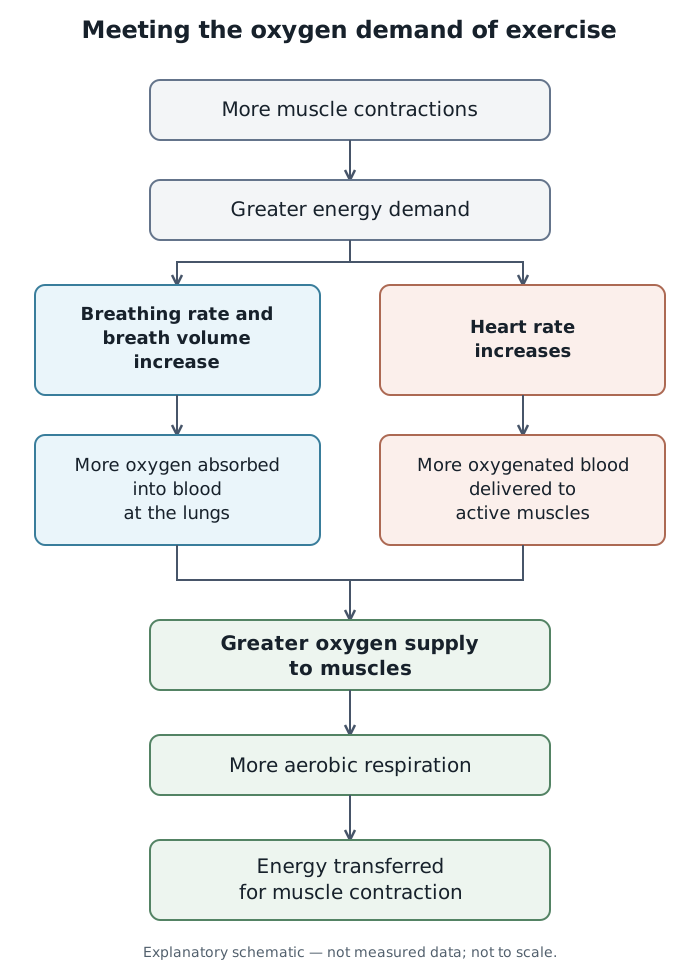
Faster, deeper breathing and a faster heartbeat work together to increase oxygen delivery to active muscles.
During vigorous exercise, such as sprinting, the muscles may need energy faster than the body can supply enough oxygen for aerobic respiration. Even though breathing and heart rate have increased, oxygen supply can still be insufficient.
Some of the energy then comes from anaerobic respiration, which does not require oxygen. In muscle cells, glucose is incompletely oxidised and lactic acid is formed. Anaerobic respiration transfers much less energy from each glucose molecule than aerobic respiration, but it allows muscles to continue contracting when oxygen is in short supply.
During long periods of vigorous activity, lactic acid builds up and muscles become fatigued: they stop contracting efficiently. This is a reduction in how effectively the muscles work, rather than simply a feeling of tiredness. The build-up of lactic acid also creates an oxygen debt.
Finishing exercise does not immediately remove the accumulated lactic acid. The body still needs extra oxygen during recovery, so breathing and heart rate can remain raised after the activity has stopped.
Oxygen debt is the amount of extra oxygen the body needs after exercise to react with the accumulated lactic acid and remove it from the cells. It is an additional oxygen requirement during recovery, not a quantity of oxygen stored in the muscles.
Blood flowing through the muscles transports lactic acid to the liver, where it is converted back into glucose. This connects recovery to circulation: blood carries oxygen to working muscles during exercise and carries accumulated lactic acid away afterwards.
Get unlimited access to all revision notes, key terms, and exam tips.
Greater muscle activity → greater energy demand → more oxygen needed for aerobic respiration.
Together, these changes supply muscles with more oxygenated blood. Increased breathing also removes carbon dioxide faster.
Insufficient oxygen → anaerobic respiration in muscles → incomplete oxidation of glucose → lactic acid build-up and an oxygen debt.
During prolonged vigorous activity, muscles become fatigued and stop contracting efficiently.
Get unlimited access to all revision notes, key terms, and exam tips.
Distinguish breathing rate (breaths per minute) from breath volume (air moved in one breath): both increase during exercise.
Link each response to its purpose: more oxygen reaches the muscles for aerobic respiration, which transfers energy for contraction.
Muscle fatigue means that muscles stop contracting efficiently, not simply that a person feels tired.
For Higher Tier, define oxygen debt as the extra oxygen needed after exercise, and name the liver as the organ where lactic acid is converted back into glucose.
Heart rate
The number of times the heart beats per minute.
Breathing rate
The number of breaths taken per minute.
Breath volume
The volume of air moved into or out of the lungs in one breath.
Oxygenated blood
Blood containing oxygen that can be delivered to body cells for aerobic respiration.
Anaerobic respiration
Respiration that transfers energy from glucose without using oxygen. In muscle cells, it produces lactic acid.
Lactic acid
A substance formed by the incomplete oxidation of glucose during anaerobic respiration in muscles.
Muscle fatigue
A condition in which muscles stop contracting efficiently during prolonged vigorous activity.
Oxygen debt
(HT only) The amount of extra oxygen the body needs after exercise to react with accumulated lactic acid and remove it from the cells.
Put your knowledge into practice — try past paper questions for Combined Science Trilogy
Heart rate
The number of times the heart beats per minute.
Breathing rate
The number of breaths taken per minute.
Breath volume
The volume of air moved into or out of the lungs in one breath.
Oxygenated blood
Blood containing oxygen that can be delivered to body cells for aerobic respiration.
Anaerobic respiration
Respiration that transfers energy from glucose without using oxygen. In muscle cells, it produces lactic acid.
Lactic acid
A substance formed by the incomplete oxidation of glucose during anaerobic respiration in muscles.
Muscle fatigue
A condition in which muscles stop contracting efficiently during prolonged vigorous activity.
Oxygen debt
(HT only) The amount of extra oxygen the body needs after exercise to react with accumulated lactic acid and remove it from the cells.